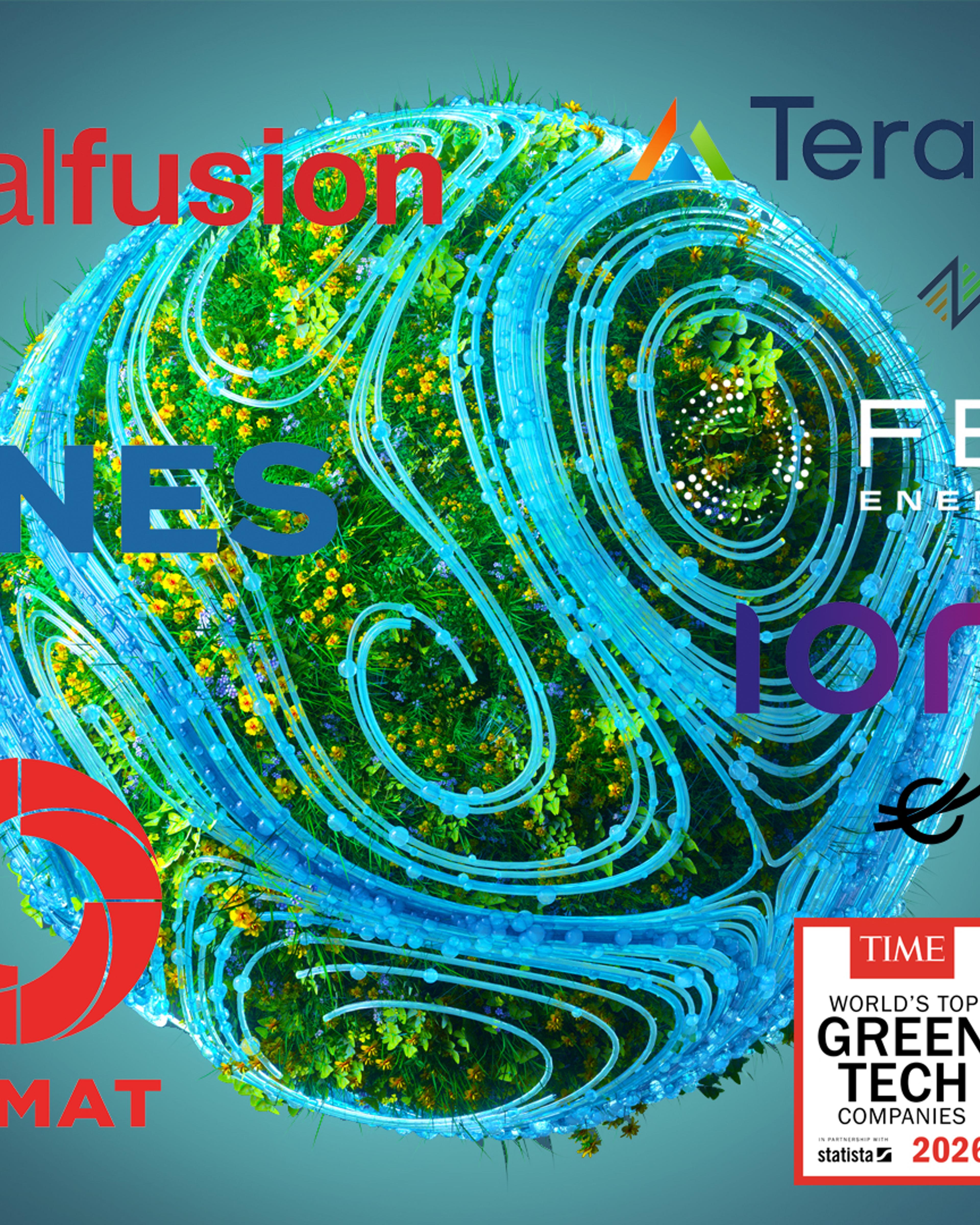
Tucked beneath a forested stretch of southern Germany, a network of underground wells hums quietly, drawing heat from Earth’s core without releasing a single gram of carbon—this is Eavor’s closed-loop geothermal system, now proving that clean, constant energy can come from beneath our feet. The Canadian company, ranked number two on TIME and Statista’s 2026 list of the World’s Top GreenTech Companies, is part of a new wave of innovators reshaping how the planet powers itself. As global energy demand surges—fueled by everything from AI data centers to expanding cities—these green tech pioneers are stepping in with scalable, sustainable solutions. The ranking, which evaluates 250 companies worldwide, highlights those developing technologies that directly combat climate change, from renewable generation to energy infrastructure and sustainable agriculture. Leading the pack is General Fusion, another Canadian firm, which claimed the top spot for its breakthrough work in magnetized target fusion—a cleaner, safer path to nuclear energy. The startup is set to go public in mid-2026 via a $1 billion SPAC deal, signaling growing investor confidence in fusion’s near-term potential.
The data reveals a global shift in clean energy leadership. The United States dominates the list, hosting 57.2% of the top green tech firms, including Fervo Energy at number four and agricultural innovator Pivot at five. Yet France is emerging as a European powerhouse, home to a growing cluster of sustainability startups and backed by a newly announced €240 million initiative to phase out fossil fuels. Renewable energy companies make up 34% of the list, the largest category, encompassing solar, wind, biomass, and next-generation geothermal and fusion technologies. Eavor’s success in Germany—where its pilot project demonstrated not only technical feasibility but cost competitiveness—has helped attract $365.3 million in funding, fueling plans for expansion across Europe and North America. Unlike traditional geothermal systems that rely on naturally occurring steam or hot water, Eavor’s closed-loop design circulates fluid through sealed underground circuits, making it viable in far more locations and with minimal environmental disruption.
What makes this year’s list especially telling is the convergence of innovation and investment. JP Morgan analysts note that climatetech is no longer a niche sector but a central pillar of global infrastructure planning. General Fusion’s ambitious timeline—aiming for a commercial fusion plant by 2030—reflects a broader trend: technologies once deemed decades away are now entering the market. These companies aren’t just reducing emissions—they’re redefining energy reliability, grid stability, and long-term sustainability. As AI and digital infrastructure drive up electricity needs, the solutions showcased in this ranking offer a hopeful blueprint: one where growth doesn’t come at the planet’s expense. With billions in funding, international pilots underway, and real-world results emerging, the green energy transition is no longer a distant goal—it’s being built, well by well, reactor by reactor.