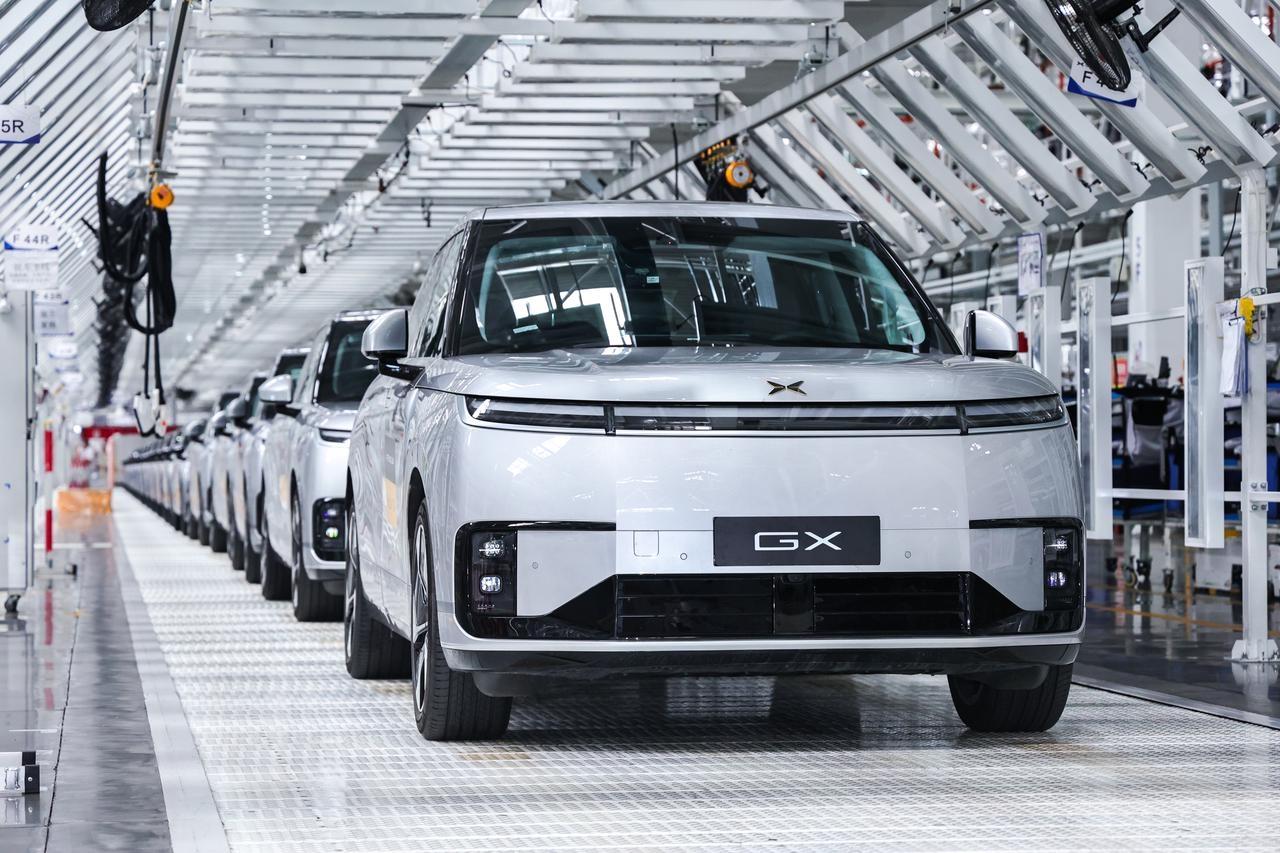
Within the first 12 hours of going on sale, XPENG's new GX electric vehicle attracted nearly 25,000 orders—not tentative reservations, but binding commitments—signaling a potential inflection point for the Chinese automaker. Deutsche Bank analysts are projecting that the GX's momentum will propel XPENG to around 50,000 vehicle sales in May 2026, a dramatic leap from April's tally of just above 31,000 units.
The GX's appeal lies in a potent combination of aggressive pricing and compelling specifications. At 269,800 yuan ($39,707) for a limited-time launch offer, the vehicle represents an unusually low entry point for what the company is delivering: a 100 kWh battery, a steer-by-wire chassis, hardware designed for Level 4 autonomous driving capability, and substantial computing power. That pricing strategy has clearly resonated—approximately 80 percent of orders are for the top-trim Ultra flagship editions, suggesting buyers are willing to step up despite the low base price.
For context on XPENG's trajectory, a 50,000-unit May would mark a significant acceleration beyond April's performance and a notable increase over May 2025, which itself had surged 230 percent compared to May 2024. The company is clearly riding a wave of momentum in China's fiercely competitive electric vehicle market. Current wait times for new orders stretch to approximately six months, a lag that will sustain delivery numbers for months as XPENG works through its production backlog.
Expectations suggest the GX will average around 5,000 units per month once the initial surge subsides. But that early burst matters enormously. The fact that XPENG converted 25,000 of those orders into non-cancellable commitments within a single day underscores the vehicle's appeal and the company's ability to generate consumer excitement at scale. This is not speculative interest—it is binding demand.
Beyond the GX, XPENG's product roadmap shows a carefully staggered launch strategy designed to maintain sales momentum. The ultra-large G9L SUV is scheduled for fall release, followed by the smaller Mona L05 and Mona L03 sometime in the second half of 2026, with the Mona M05 planned for 2027. The company currently has several models in market rotation, including the P7+, X9, G6, and Mona M03, giving it a diversified portfolio to sustain consumer interest across multiple price points and segments.
The GX launch also reflects a broader shift in China's EV market, where aggressive pricing and hardware-intensive specifications have become table stakes. XPENG is betting that its combination of autonomous driving hardware, battery capacity, and accessible pricing will secure market share even as competitors intensify. The German bank's projection of 50,000 May sales is not conservative—it reflects genuine momentum backed by real order data in the first hours of availability.
What happens next will depend partly on XPENG's production capacity and partly on whether the GX can sustain consumer interest beyond the launch honeymoon. The six-month wait times are a blessing and a curse: they guarantee delivery visibility for months, but they also mean demand figures will eventually plateau once the initial wave is satisfied. For now, though, the GX has announced itself as a meaningful new contender in China's crowded EV space.