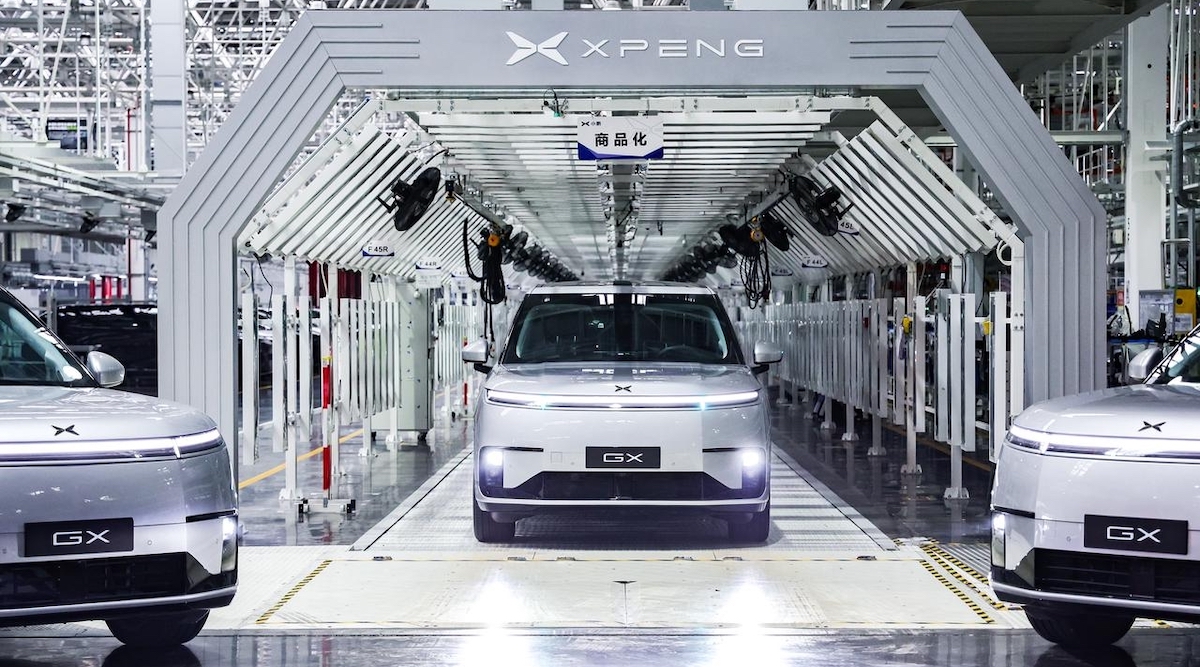
In Guangzhou, XPENG has just begun rolling out its first mass-produced robotaxis—a milestone that marks China's first time an automaker has achieved mass production of an autonomous vehicle through entirely in-house development. The company's robotaxi, built on the XPENG GX platform, meets Level 4 autonomous driving standards, a significant leap from the prototypes and limited deployments that have dominated the autonomous vehicle landscape so far.
This moment matters because it signals a fundamental shift in how self-driving technology reaches the road. While companies like Baidu and dedicated robotaxi firms have deployed autonomous vehicles in China, they've done so largely through partnerships or external technology. XPENG is different—it's a passenger car manufacturer that has developed the complete stack internally, from the software that makes driving decisions to the chips that power the vehicle's brain. The company's Robotaxi is powered by four self-developed Turing AI chips, delivering 3,000 TOPS of on-board computing power.
What makes XPENG's approach distinctive is its commitment to a "pure vision solution." The robotaxi operates without LiDAR or high-definition maps, instead relying on cameras and a visual language-action model called VLA 2.0. This end-to-end system makes decisions in under 80 milliseconds and can generalize across cities and even borders without requiring high-definition mapping for each location. It's a philosophy that echoes Tesla's approach to autonomous driving, yet XPENG has moved faster in bringing it to commercial production.
The vehicle itself is designed for passenger comfort, not just autonomous capability. The mass-produced robotaxi features privacy glass, gravity-focused seats, rear entertainment screens, and a voice assistant that lets passengers control the cabin environment during rides. These details matter because they suggest XPENG is thinking beyond the technology and toward the actual experience of being a robotaxi passenger.
XPENG's timeline is ambitious but grounded in specifics. The company plans to begin pilot robotaxi operations in the second half of 2024 to validate technical performance, user acceptance, and the business model itself. By early 2027, XPENG aims to launch fully autonomous operations without safety officers onboard—a major step toward truly driverless service. The company has a track record of meeting its automotive targets, which lends credibility to these claims, though autonomous systems present unprecedented challenges.
The broader context here is critical: the robotaxi sector is transitioning from research and validation to large-scale commercialization. XPENG's position as a full-stack automaker—controlling software, chips, and vehicle design—could give it advantages in moving quickly from technical validation to scaled deployment. Unlike companies that must integrate technologies from multiple suppliers, XPENG can iterate rapidly across its entire system.
What unfolds in the next two years will shape the future of urban transportation in China and beyond. If XPENG meets its 2027 timeline for fully autonomous operations, it could transform how people think about both robotaxis and Chinese automotive innovation. The company that was once criticized for following Tesla may have just leapfrogged toward a future the rest of the world is still chasing.