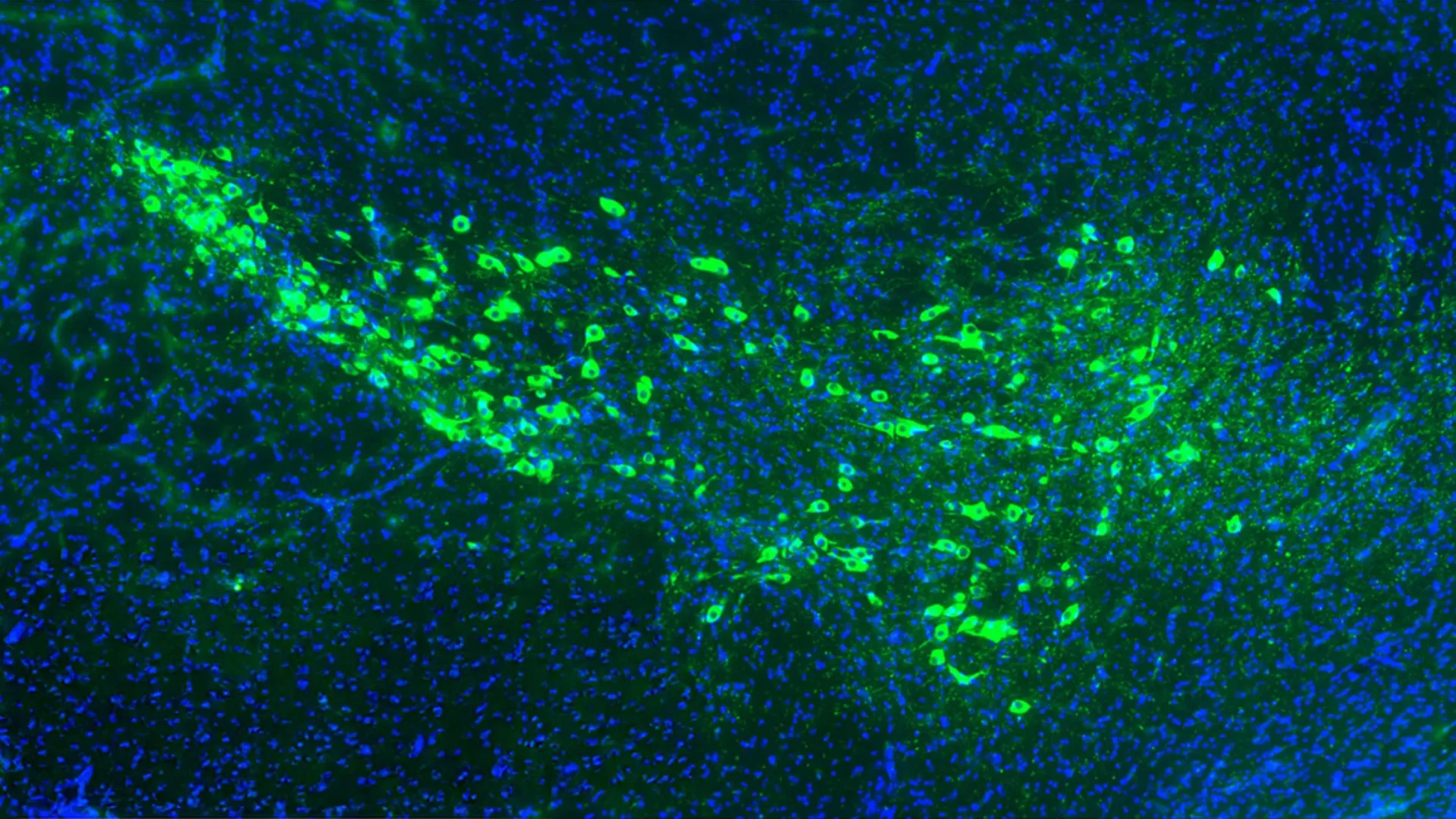
Two tiny proteins on the surface of brain cells may be responsible for how Parkinson's disease spreads through the nervous system — and scientists at Yale School of Medicine think blocking them could slow or even stop the disease. The discovery, published in the journal Nature Communications, offers a new direction for treatments that go beyond simply managing symptoms.
Parkinson's disease develops when brain cells that control movement gradually die off. A key culprit is a misfolded protein called alpha-synuclein, which builds up and travels from neuron to neuron, driving the disease's progression. For years, researchers have struggled to understand exactly how this toxic protein enters healthy brain cells after escaping from dying ones.
Dr. Stephen Strittmatter and his team at Yale took on that challenge by testing nearly 4,400 different proteins found on cell surfaces. They wanted to see which ones alpha-synuclein would latch onto. Only 16 showed any interaction — and two of them, called mGluR4 and NPDC1, stood out. Both proteins sit on dopamine-producing neurons in a brain region most damaged by Parkinson's disease.
The researchers then engineered mice lacking either mGluR4 or NPDC1 and exposed them to the misfolded protein. Normal mice developed the toxic buildup and showed Parkinson-like symptoms. The mice without working copies of either protein did not. In a separate experiment, removing the genes for these proteins also reduced symptom progression and lowered the risk of death.
The findings suggest mGluR4 and NPDC1 act as partners, helping alpha-synuclein slip into healthy neurons. Strittmatter calls this mechanism a promising target for new drugs.
"If we understood how it gets into neurons, we could perhaps block or slow down the progression of the disease," he said. "We have an aging population. How we can stop or slow neurons from dying is an enormous problem. This is really the time to make some inroads into figuring out how to slow it down."
The timing matters. According to the Parkinson's Foundation, about 1.1 million Americans currently live with the disease, and nearly 90,000 new cases are diagnosed each year. That number is expected to grow as the population ages. Existing medications mainly ease symptoms like tremors and stiffness but do not slow the underlying disease. A treatment that blocks the spread of alpha-synuclein could fundamentally change what patients and their families face.
The road from mouse experiments to human treatments is long and uncertain. But for the first time, scientists have a clear molecular door to try closing.