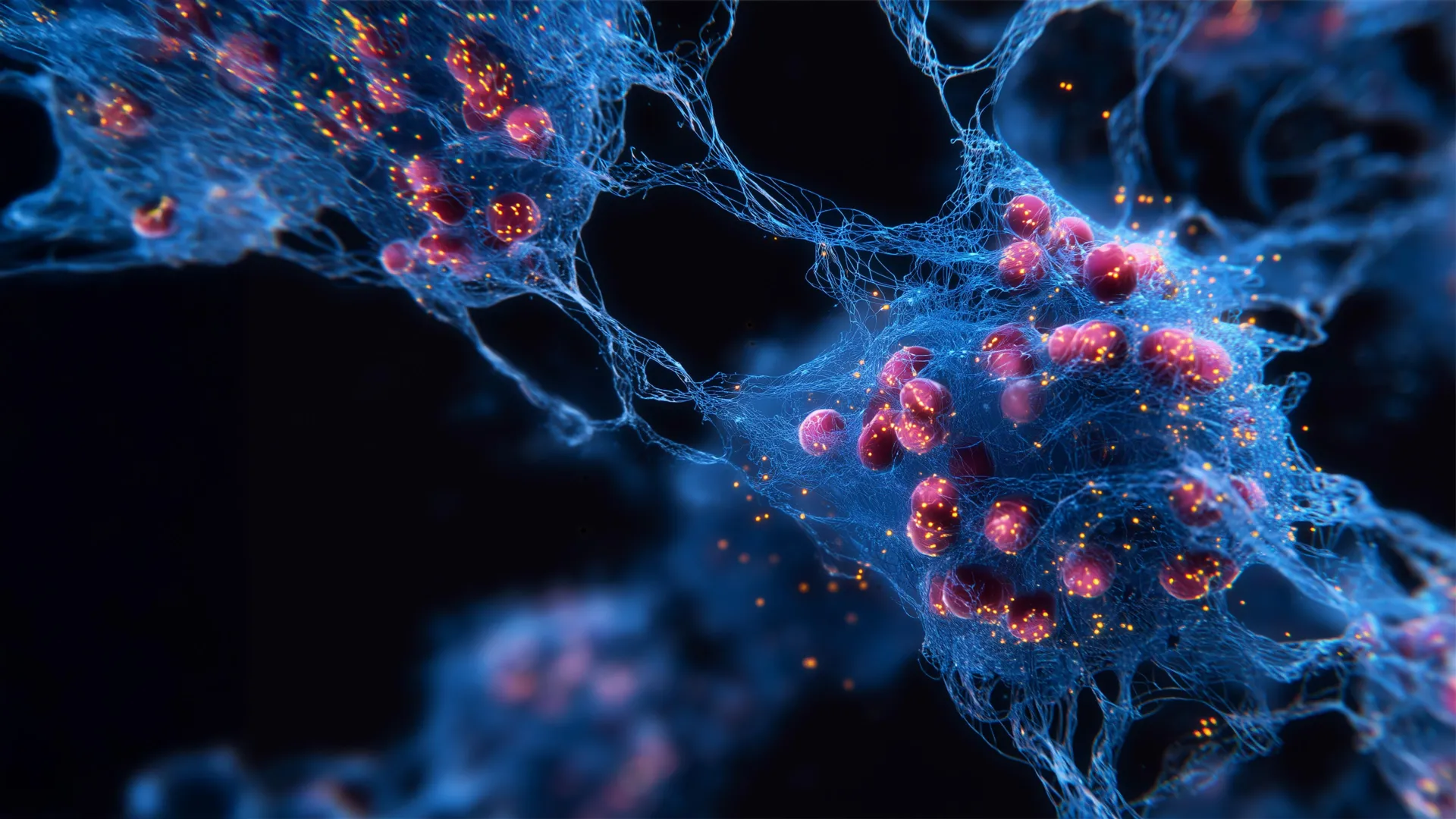
In the livers, lungs, and hearts of aging bodies, cells stop dividing and linger—the infamous "zombie cells" that scientists have long blamed for wrinkles, inflammation, and disease. But researchers at West China Hospital in Chengdu are overturning decades of anti-aging dogma with a startling discovery: some of these senescent cells actually protect us.
The rethinking began in earnest this May, when Jian Deng and Dong Yang, leading a team at Sichuan University's Department of Targeting Therapy and Immunology, published a sweeping review in Aging-US that challenges how the world thinks about cellular aging. For years, the narrative was simple: senescent cells accumulate with age, pump out inflammatory molecules, and damage nearby tissue. They've been linked to everything from declining organ function to cancer progression. Kill them all, the logic went, and you'd slow aging itself.
The evidence, however, tells a messier story. Senescent cells don't behave as a single villain. Depending on where they lodge in the body and how they interact with surrounding tissue, these cells can either harm or heal. Some appear to limit fibrosis and assist tissue repair. Others fuel chronic inflammation and metabolic decay. A senescent cell in wound healing might be a guardian; the same cell type in a different context might be a saboteur.
This discovery matters because it reshapes what precision medicine means for aging. Rather than deploying blunt-force drugs like dasatinib, quercetin, and fisetin—early senolytics designed to destroy all senescent cells indiscriminately—scientists are now designing smarter therapies. Researchers are investigating CAR-T cell immunotherapies that can recognize specific markers on senescent cells and selectively remove only the harmful ones. Others are exploring "senomorphic" approaches that reduce inflammatory signals without killing the cells at all. The unifying concept is "precision geroprotection": identify and eliminate only maladaptive senescent cells while preserving those that still contribute to tissue repair and stability.
The challenge is profound. Senescent cells accumulate across dozens of specialized cell types—hepatocytes in the liver, endothelial cells in blood vessels, fibroblasts in connective tissue, astrocytes in the brain, epithelial cells in skin. They arise from oxidative stress, DNA damage, telomere shortening, chronic inflammation, even ultraviolet radiation and environmental pollution. The body's response to aging isn't uniform; it's a landscape of subtle variations across organs.
The biggest hurdle facing precision anti-aging medicine is the lack of reliable biomarkers to distinguish helpful senescent cells from harmful ones. Delivering therapies to the right tissue without damaging healthy organs remains technically daunting. And there's a sobering caution embedded in the review: broad removal of senescent cells could potentially interfere with tissue repair, immune surveillance, blood vessel stability, and structural integrity. The cure, in other words, might inadvertently create new problems.
Yet the field is moving forward with hope. Emerging technologies—single-cell omics, lineage tracing, spatial profiling—promise to reveal the distinct subtypes of senescent cells and identify safer therapeutic targets. The zombie cells, it turns out, are far more nuanced than their nickname suggests. Understanding them deeply could transform not just anti-aging medicine, but our entire approach to aging itself.