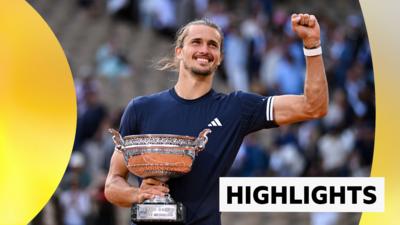
Alexander Zverev's long wait for tennis glory finally ended on the clay courts of Paris, where the world number three outlasted Italy's Flavio Cobolli in a grueling five-set marathon to claim his first Grand Slam title. After four hours of breathless tennis, Zverev prevailed 6-1 4-6 6-4 6-7 (5-7) 6-1, breaking through a barrier that has defined and haunted his career for years.
For any athlete, reaching the pinnacle of professional sport requires extraordinary talent, relentless discipline, and unwavering belief. For Zverev, it required something more: the resilience to keep fighting after three previous Grand Slam final defeats. Each runner-up finish—whether at Roland Garros, the US Open, or the Australian Open—could have fractured a lesser competitor's confidence. Instead, the German star used those painful losses as fuel, refining his craft and strengthening his mental fortitude with each campaign.
The match itself was a testament to both players' grit. Cobolli, rising through the ranks as one of tennis's promising talents, pushed Zverev to his limits on the red clay. The Italian battled back from losing the opening set decisively, taking the second set to level the match and signal that a coronation would not come easily. As the match unfolded across the afternoon, the momentum shifted repeatedly. Zverev seized control in the third set, but Cobolli refused to yield, forcing a tiebreaker in the fourth that remained taut and thrilling until the very end—a 7-5 decision in the breaker that could have gone either way. Only in the fifth and final set did Zverev pull clear, his experience and composure finally breaking Cobolli's stubborn resistance with a commanding 6-1 scoreline.
What makes Zverev's triumph significant extends beyond the trophy itself. The 27-year-old German has long been viewed as one of tennis's most talented players, yet the absence of a Grand Slam title created an asterisk next to his name. Now that barrier has been shattered. His three previous final appearances—losses that stung deeply—become part of a narrative of perseverance rather than futility. Cobolli, for his part, reaches the pinnacle of his career at just 22 years old, proving that the next generation of tennis is ready to compete at the sport's highest levels.
The victory also represents a shifting landscape in men's tennis, where the traditional dominance of the sport's old guard is gradually yielding to hungry young challengers. Zverev's breakthrough comes as a reminder that redemption in sports is possible, that setbacks can be reframed as stepping stones, and that sustained excellence across years of competition can finally translate into the championships that validate a career.
As Zverev raised the Grand Slam trophy in Paris, three years of disappointment dissolved into a moment of pure joy. The fourth time proved to be the charm.