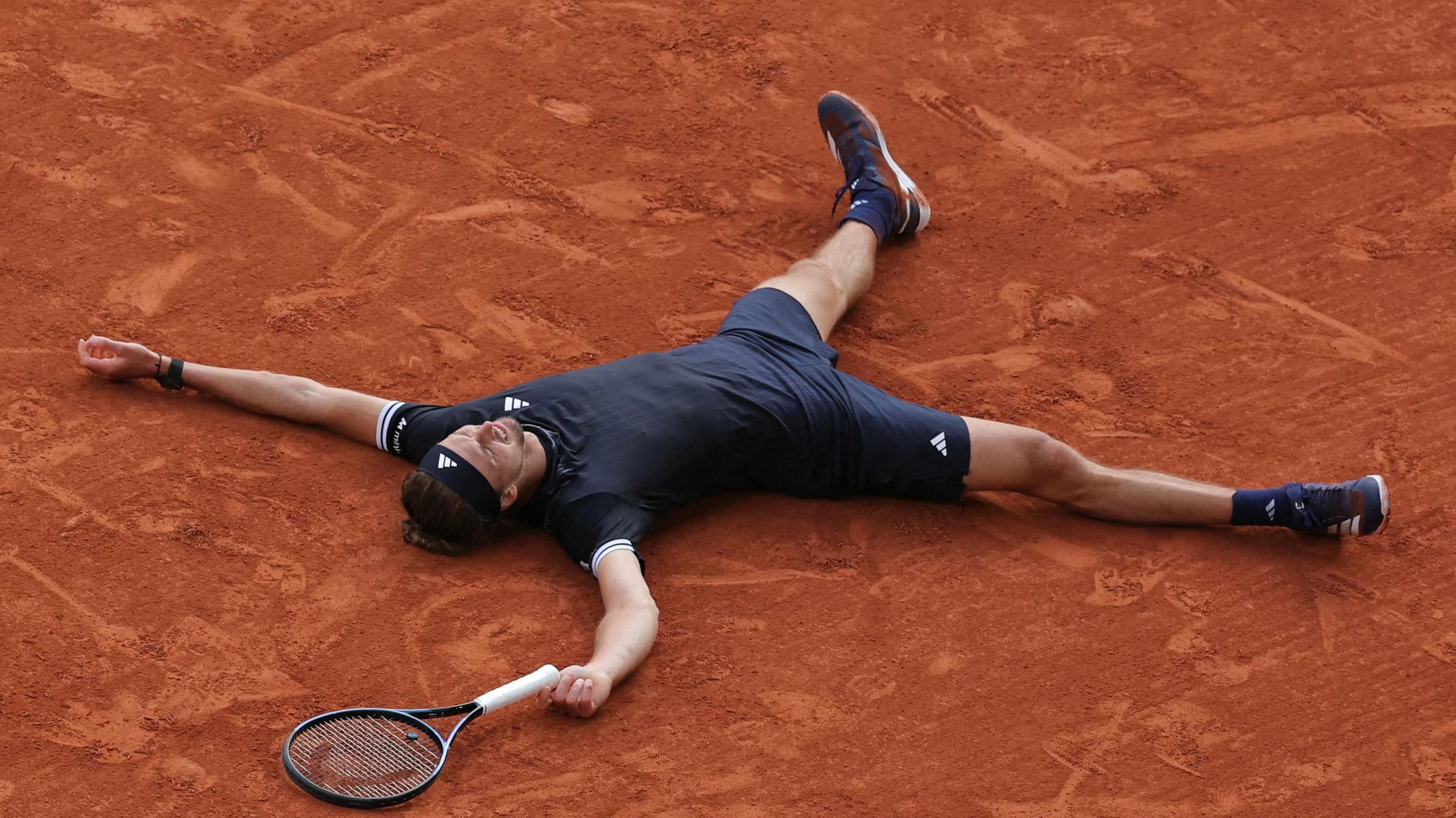
After three crushing defeats in Grand Slam finals, Alexander Zverev finally broke through on a tense Sunday evening in Paris, claiming his first major title with a 6-1 4-6 6-4 6-7 (5-7) 6-1 victory over 10th seed Flavio Cobolli in the French Open final. For the 29-year-old German second seed, the moment marked the end of a long, uncertain journey—one that had left many wondering whether his prodigious talent would ever translate into the sport's biggest prizes.
Zverev's path to this breakthrough has been anything but straightforward. Tipped since his teenage years as a future Grand Slam champion—even catching the eye of Roger Federer—the younger brother of Australian Open quarter-finalist Mischa inherited tennis from his parents, both former professionals. He described himself as being "born with a racquet in my hand," and indeed, he built a stellar career, comfortably inside the world's top 10 for nearly a decade and collecting multiple ATP Tour titles with relative ease. Yet the four majors remained elusive, blocked first by the towering presence of Federer, Nadal, and Djokovic, then by the emergence of younger stars like Jannik Sinner and Carlos Alcaraz. Technical weaknesses—a troublesome second serve and a tendency toward passive play against elite opponents—compounded the problem.
Sunday's final showcased both Zverev's strengths and the psychological weight he carried into the match. Against a nervous opponent making his first Grand Slam final appearance, Zverev exploded through the opening set in just 35 minutes, his powerful groundstrokes devastating on the clay. But as the match progressed, his own nerves tightened. In a dramatic fourth set, he fell a break down twice, double-faulted repeatedly, and even required electrolytes to fight off cramp. Cobolli, a 24-year-old Roman who had never advanced beyond the Paris third round until this year, fought back impressively—he even held a 5-4 lead in the fourth set and had a set point in the tie-break, which he squandered with a framing error on a simple forehand volley.
The final set became a study in tension and fatigue. Both men showed visible anxiety as the match veered between entertaining exchanges and excruciating passages. Zverev's steadier play in the critical moments proved decisive; he pulled ahead 3-0 with a double break and held on as Cobolli's energy drained away. When it was over, the weight of three failed attempts finally lifted.
Cobolli's journey to the final itself defied expectation. The Italian's path was eased by the shock second-round exit of Sinner, the tournament's overwhelming favorite. A former footballer in AS Roma's academy, Cobolli had stepped up dramatically in this French Open, making his maiden major final at an age when many players are still finding their rhythm. Despite the loss, his performance marked a coming of age. "I started playing when I was young and I never expected this kind of result," he said afterward. "Now that I'm here, I just want to make something special possible. For me, it's not done, it's only the start." His baseline power, touch, and athleticism suggest many more moments may indeed await him.
For Zverev, the first Grand Slam is unlikely to be his last. But after years of near-misses, this breakthrough in Paris stands as vindication—proof that patience, persistence, and a composed final set can finally transform a brilliant career into a complete one.