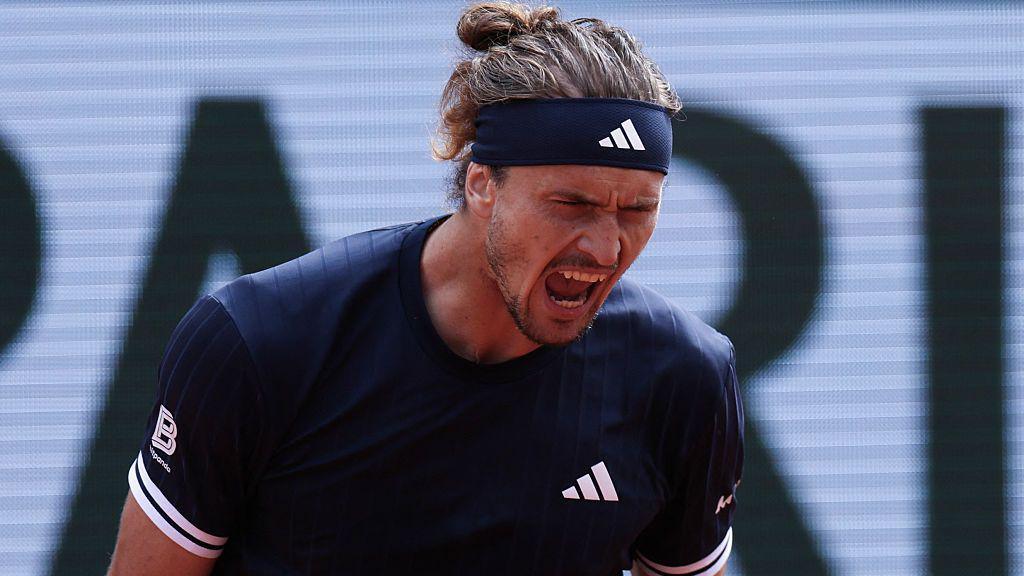
Alexander Zverev steadied his nerve in the fourth set, keeping his composure against first-time Grand Slam semi-finalist Jakub Mensik to claim a 7-5, 6-2, 3-6, 6-3 victory and reach the French Open final. The 29-year-old German second seed now stands just one match away from the title that has eluded him throughout his career—a maiden Grand Slam crown that would represent a watershed moment not just for him, but for German men's tennis itself.
This is Zverev's fourth major final appearance and his second crack at Roland Garros, where he fell to Carlos Alcaraz in five sets just last year. But the circumstances feel different this time. The tournament's landscape shifted dramatically in the first week when world number one Jannik Sinner and defending champion Novak Djokovic both suffered shock early exits, clearing a path for Zverev to become the front-runner for the Coupe des Mousquetaires. That weight of expectation could have crushed him, yet when Mensik pushed him to a fourth set—only the second time this fortnight that Zverev had been forced into one—he found the mental strength to power through, taking the final set 6-3.
Mensik, the 26th seed making his Grand Slam semi-final debut, provided a stern test for a player who has knocked on the door of major glory before. But Zverev's experience proved decisive. He controlled the opening two sets with clinical precision, breaking serve repeatedly to establish dominance, then weathered Mensik's third-set resurgence before reasserting his authority when it mattered most.
Sunday's final will pit Zverev against either 10th seed Flavio Cobolli or Matteo Arnaldi—a matchup that, on paper, represents his best realistic chance at a breakthrough major. If he can seal the victory, Zverev will become the seventh-oldest first-time Grand Slam men's singles champion in the Open era, a statistic that underscores both his long quest and his remaining window of opportunity. More significantly, he would become the first German man to win a major since Michael Stich's Wimbledon triumph in 1991—a gap spanning three decades and cementing his place in his nation's tennis history.
For Zverev, the narrative has always been complicated. A generational talent who has dominated Masters 1000 events and reached world number two, he has somehow remained absent from the sport's four biggest stages in terms of lifting the trophy. The talk has never been about whether he could win a Grand Slam, but when. Now, with Sinner and Djokovic unexpectedly sidelined and the final within his grasp, that "when" might finally arrive on Sunday in Paris. The 29-year-old carries the hopes of an entire generation of German players onto the court, and after years of near-misses and heartbreak at the majors, he has the chance to rewrite his legacy.