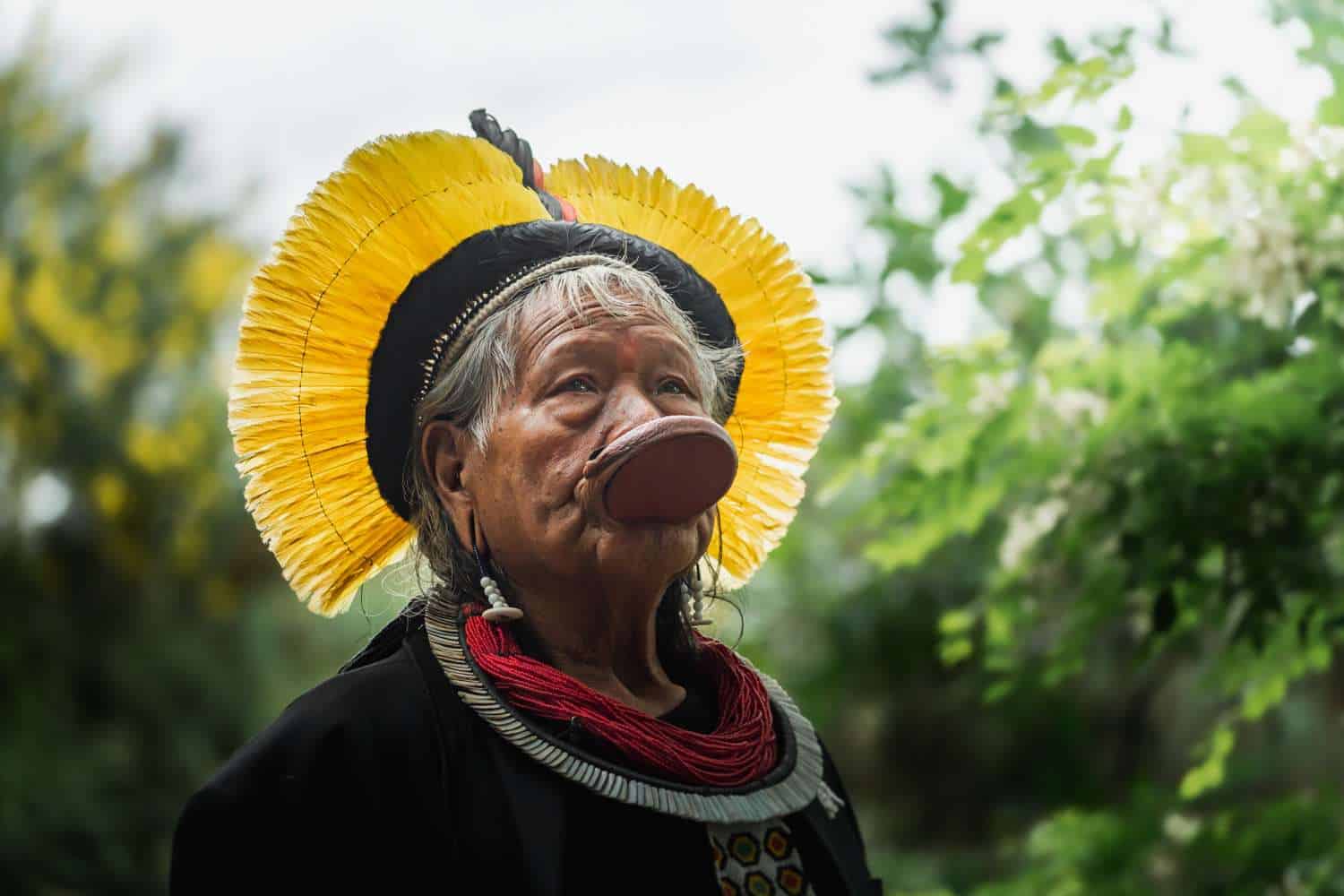
At 94, Kayapó leader Raoni Metuktire has spent decades fighting to protect the land where he was born. In November 2026, Brazil took a consequential step toward recognizing that place as Indigenous territory—and President Luiz Inácio Lula da Silva went to Mato Grosso to meet him in person.
The moment carried both urgency and unfinished business. Raoni, an internationally known defender of the Amazon, is receiving palliative care for cancer and recently endured a lung infection. Lula said he wanted to resolve the land issue while Raoni was still alive. Raoni’s grandson, Roiti Metuktire, described the decision as a surprise to the family—and as his grandfather’s last wish.
Recognition is a step, not the finish line
Brazil’s Justice Ministry declared the Kapot Nhinore Indigenous Territory to be in the permanent possession of the Mebengokre—also known as Kayapo—and Yudja peoples. The area, along the Xingu River on the border of Pará and Mato Grosso, covers about 362,243 hectares, or roughly 895,000 acres, and is home to around 60 people, according to the Associated Press report carried by myMotherLode.
The decision advances legal protection, but formal demarcation is not complete. Lula acknowledged that about 200 rural properties overlap the territory and that legal hurdles remain. The next test is whether the government can resolve those claims and carry the process through to a final decree.
That distinction matters. Recognition on paper is meaningful; secure boundaries and lasting protection are what make rights real in daily life. Lula argued that the size of a community should not determine whether its ancestral land is recognized. “It doesn’t matter if it’s one person,” he said. “We must never forget that Raoni’s ancestors were here before there were any Brazilians.”
Land, leadership and the long view
Raoni’s campaign has lasted decades, linking the protection of Indigenous land with the future of the rainforest. Lula called him a figure of the past, present and future of Indigenous peoples in Brazil. The words were a tribute, but the policy question is larger than one leader: can governments convert public promises into protections that endure beyond a ceremony or a presidency?
The timing also reflects the political weight of Indigenous communities. The LatinNews account describes Lula’s meeting as a gesture toward activist groups that supported his re-election bid. Political calculations may be part of the story, but so is the concrete advancement of a claim that Raoni and others have pressed for years. Both can be true.
The same month, another rights contest played out far from the Amazon. At the United Nations General Assembly’s Third Committee, the United States tried to amend draft resolutions addressing women and girls, trafficking, and reproductive rights, Human Rights Watch reported. Russia and Egypt also proposed changes touching on the International Criminal Court and references to sexual orientation and gender identity. The efforts failed to dilute the resolutions.
These stories are not identical, and the institutions involved have different powers. But both show how rights are defended through rules, language and persistent advocacy. A land designation can be challenged or delayed; a resolution’s protections can be weakened through edits. The details—who is named, whose claim is recognized, and what commitments survive negotiation—shape the outcome.
Leadership takes many forms
There is another kind of leadership in the headlines: Kenyan technology executive Edna Karijo won the Women in Tech Leadership Award at the Africa Tech Festival Awards 2026 in Cape Town, Capital FM reported. Her recognition offers a glimpse of women shaping institutions and industries, while the UN debate underscores that rights for women and girls still require active defense.
Taken together, the news is less a victory lap than a reminder of how progress is made: people organize, leaders take decisions, and institutions are pressed to honor them. Raoni’s land still faces legal obstacles. International language on rights still draws political resistance. Yet the recognition in Kapot Nhinore, the failed UN amendments and Karijo’s award each mark ground gained.
The next chapter will be measured in follow-through—in whether Brazil completes demarcation, whether communities can protect their territory, and whether commitments to women’s rights remain intact. For readers far from the Xingu, that work is not abstract: rights become durable when people insist that promises be translated into practice.
Sign in to join the conversation.
Comments (0)
No comments yet. Be the first to share your thoughts.