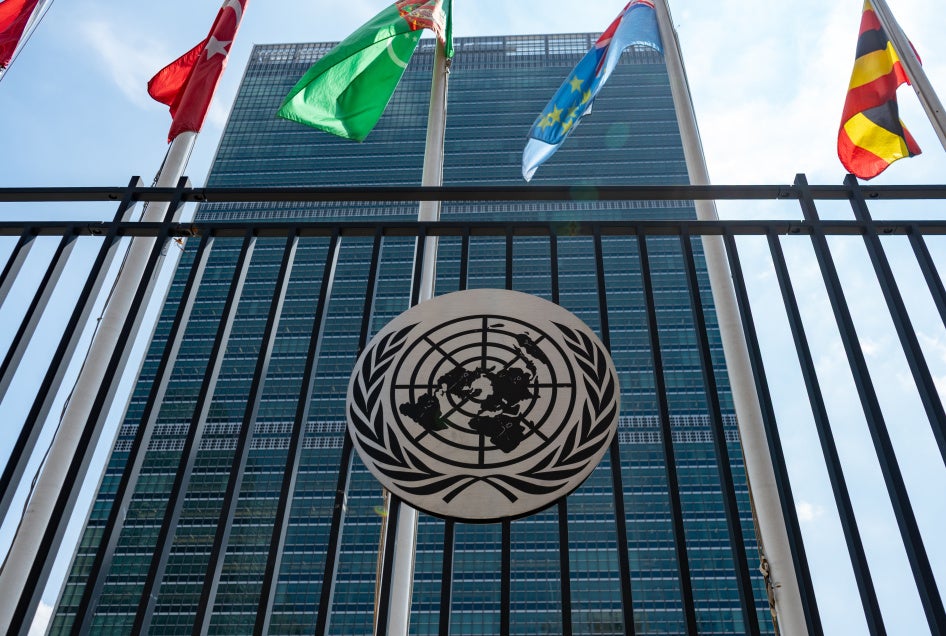
At the United Nations in New York, delegates rejected proposed changes that would have narrowed protections for women and girls and removed recognition of LGBTQ+ people from human rights resolutions. The General Assembly’s Third Committee adopted the resolutions without the amendments, leaving their original wording intact.
The votes matter because the General Assembly works differently from the UN Security Council. In the Security Council, the United States and four other permanent members can veto decisions. In the General Assembly, no single country can block a resolution. That gave other member countries a way to keep the human rights language in place despite pressure from Washington and other governments.
The United States sought changes to draft resolutions about violence against women and girls and trafficking in women and girls. It proposed adding the phrase “in accordance with national laws” after references to sexual and reproductive rights. Critics say such wording could let national governments limit rights that are protected under international agreements.
Other countries also proposed changes. Russia called for removing a reference to the International Criminal Court, or ICC, from the trafficking resolution. Egypt submitted amendments to the resolution on violence against women and girls and sought to delete the words “sexual orientation and gender identity” from a resolution on extrajudicial executions. Member countries rejected these proposals and passed the resolutions as written.
The United States also voted against a resolution supporting human rights defenders because it referred to gender and reproductive rights. It abstained on resolutions about human rights in North Korea, Myanmar and Ukrainian territories occupied by Russia, citing references to the ICC. Those measures passed too, despite the US abstentions.
The votes come amid broader tensions over international human rights and justice. The Trump administration has imposed sanctions on ICC judges and prosecutors, nongovernmental groups, a UN human rights expert and the court itself. It has also vowed to dismantle the ICC “brick by brick” to prevent investigations of US and Israeli officials. The recent General Assembly outcomes show that, in this forum, other countries can still stand together to defend agreed language and international accountability.
The decisions do not end the debate. Governments may bring new amendments in future sessions, and the same protections could face renewed pressure. For now, the resolutions have passed with their original wording, and the votes show that no single government can rewrite the General Assembly’s human rights agenda on its own.