A compost heap. A lunar crater. A clam's DNA. A recycled plastic bottle. These unlikely places share a hidden thread: microbes and machines that are quietly rewriting the rules of what's possible.
Microbes, it turns out, are the great recyclers of our age. At Aarhus University in Denmark, co-first author Rosie Graham and her colleagues went looking for an organism already using plastic as food. They found a bacterium in compost wielding an enzyme called CCPUR1 — and they engineered it to degrade polyurethane, the stuff in your running shoes, your mattress, your kitchen sponge. Roughly 22 million tons of polyurethane hit the market every year, more than 5% of all plastics. "We have flooded the environment with so much plastic of different kinds," Graham says. "But there are lots of organisms out there that are already using these materials as a source of energy." The study, published Sept. 11 in Chem Catalysis, could one day close the loop on shoe waste.
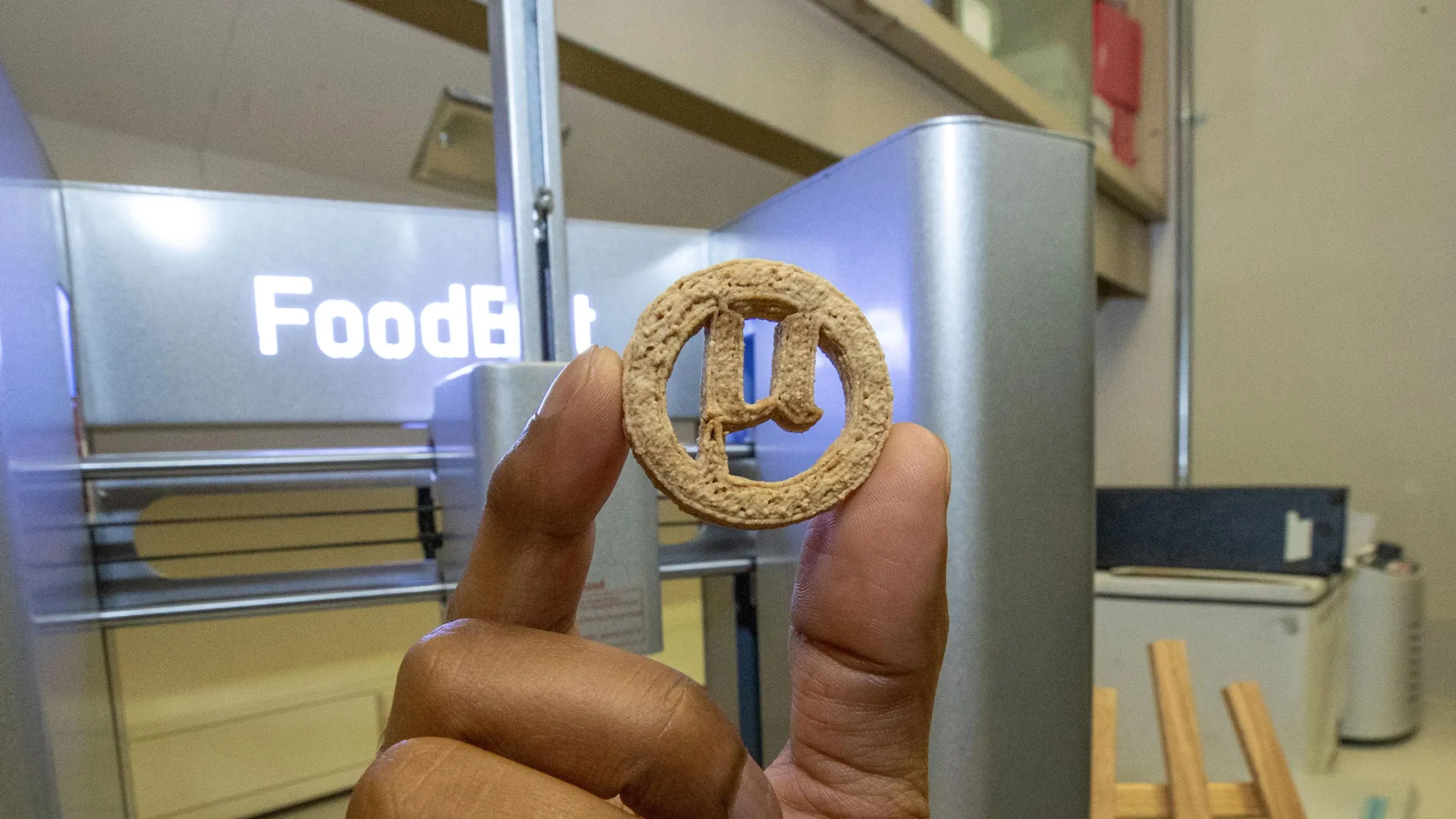
At Southern Illinois University, researchers pushed the idea further. They engineered yeast to turn PET plastic and agricultural waste into protein-rich, 3D-printed cookies called µBites — developed partly for NASA's Deep Space Food Challenge. The yeast can produce proteins, fats, vitamins, even vanilla flavoring from waste. "Microbes are very clever," says Lahiru Jayakody. "So, we are using their traits to solve the problems we created."
Machines that see what we've missed
Nature isn't the only teacher. NASA has teamed with IBM Research to launch the NASA-IBM Lunar Foundation Model — one of the first open-source AI models built for lunar science, trained on 17 years of data from the Lunar Reconnaissance Orbiter and hosted publicly on Hugging Face. It maps ice, craters and volcanoes, turning decades of observations into actionable strategy. "NASA has spent decades building an extraordinary scientific record of the moon, but collecting data is only part of the job," says chief science data officer Kevin Murphy.
AI is unearthing hidden biology too. At the Sylvester Comprehensive Cancer Center in Miami, researchers searched not by genetic sequence but by three-dimensional shape — comparing 214 million predicted proteins to find hidden members of the GPCR family, which help cells sense and respond to signals. "For decades, we have largely explored protein biology using sequence as our guide," says senior author Daniel Isom. "What we found suggests there is another layer of biology that we've been missing."
Meanwhile, at the Eastern Institute of Technology in Ningbo, a graph-based approach extracts physical laws directly from solid-mechanics data — discovering constitutive equations for alloy steels and lithium that beat empirical models while staying interpretable.
The small things that protect us
Elsewhere, the clues are closer to home. A study in Scientific Reports found that older adults who kept up everyday physical activity were less likely to experience hearing loss — even when blood pressure suggested otherwise. Cardiovascular health "did not appear to affect hearing loss, while physical function seemed to have a protective effect," says lead author Jean Neils-Strunjas.
A genomic tool for clams promises disease-resistant, climate-adaptive shellfish that also protect genetic diversity. And in JAMA Network Open, researchers following 2,603 women for up to 18 years linked earlier menopause to faster brain aging — a warning that doubles as a roadmap for earlier support.
The through-line is hope itself: whether it's a microbe munching a sneaker or an AI mapping the moon, the tools to mend what's broken are being found in the most unexpected corners of our world. And they're open — hosted, public, shared for anyone to build on. The future is not locked away. It's in a compost pile, waiting.
Sign in to join the conversation.
Comments (0)
No comments yet. Be the first to share your thoughts.