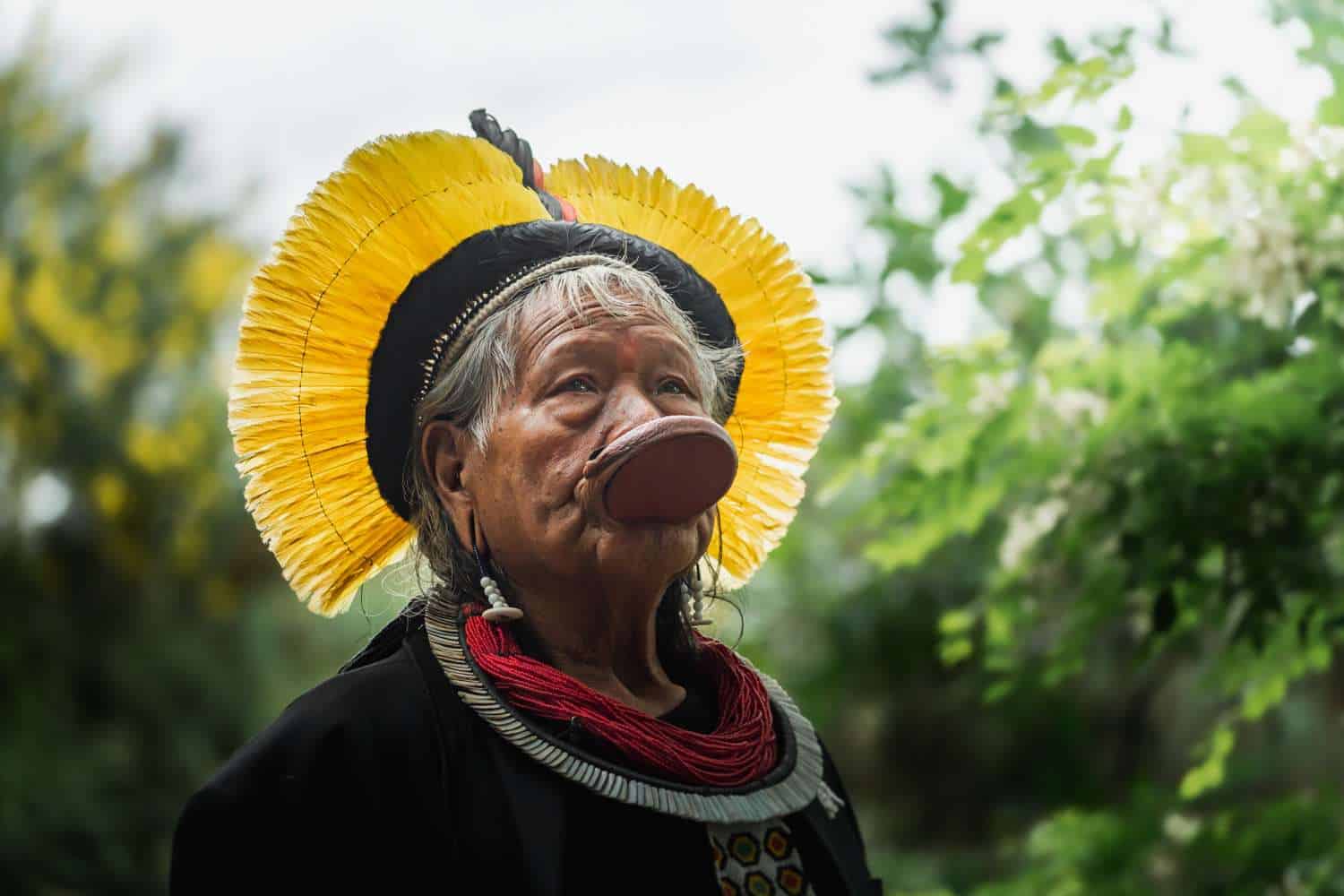
On the banks of the Xingu River, the land where Chief Raoni Metuktire was born is moving closer to legal protection. At 94, the Kayapó leader is receiving palliative care. Brazil’s President Luiz Inácio Lula da Silva visited him in Mato Grosso as the government took a consequential step toward recognizing the territory as Indigenous land.
The moment joined a personal farewell with a long public struggle. Raoni has campaigned for decades to protect Kapot Nhinore, the ancestral territory of the Mebengokre—also known as Kayapó—and Yudja peoples. Lula said he wanted to resolve the land issue while Raoni was still alive. “There is no Brazilian more authentic than our comrade Raoni,” he said, calling the chief’s ideas a guide for Indigenous peoples’ future.
Recognition is a beginning, not the finish line
Brazil’s Justice Ministry formally recognized the peoples’ permanent possession of Kapot Nhinore, a major step toward completing the territory’s demarcation. TeleSUR reports that Lula signed a decree recognizing the ancestral lands; other accounts describe the ministry’s order as advancing the legal process. Together, the reports show a meaningful shift: the state is acknowledging Indigenous rights to the land, while the full process remains unfinished.
The territory covers about 362,000 hectares—roughly 895,000 acres—and is home to around 60 people, according to the Associated Press. Its scale has been a point of contention in recognition discussions. Lula pushed back against measuring rights by population: “It doesn’t matter if it’s one person,” he said. “We cannot decide whether to recognize Indigenous land based on how much land people will have.”
There are practical obstacles, too. About 200 rural properties overlap the territory, Lula said, leaving legal hurdles before demarcation can be completed. He pledged to work to resolve them. The order is not the end of a complicated process, but it creates a firmer basis for moving forward.
Raoni’s grandson, Roiti Metuktire, told AFP the decision surprised the family and called it his grandfather’s last wish. The words carry weight because protection is more than a boundary on a map. For communities whose histories and ways of life are rooted in a place, formal recognition can affirm a right that should not depend on political favor or a person’s age.
One land struggle, part of a wider rights question
The other stories in this collection show why the meaning of rights—and whether they are upheld—continues to matter well beyond Brazil. At the United Nations, Human Rights Watch reports, the United States tried but failed to weaken language in draft resolutions concerning women’s and girls’ rights, sexual and reproductive rights, sexual orientation and gender identity, and the International Criminal Court. Russia and Egypt also proposed changes to rights-related language. No single country can block General Assembly resolutions, a safeguard that helped keep the texts intact.
In Bangladesh, a different kind of recognition brought a crowd to tears. Rohingya refugees gathered at Jamtoli Camp 15 to hear the International Court of Justice’s judgment in a case brought by Gambia against Myanmar. On November 19, a community leader relayed the ruling in Rohingya: by nine votes to six, the court found Myanmar committed genocide against the Rohingya in northern Rakhine State. “Today the truth has been recognized,” said Monajat Alam, 58.
These events are distinct, and one does not resolve the other. But they underscore a shared truth: rights become more than words when institutions recognize them, and when people continue pressing for recognition despite resistance, delay, or immense personal cost.
What protection asks of us next
For Kapot Nhinore, the next test is whether the remaining legal steps can turn this recognition into durable protection on the ground. For Raoni’s people, that means seeing the demarcation completed and the territory respected. For the Rohingya, a court’s finding is an important acknowledgment, not a substitute for safety, justice, or a future at home. And at the UN, keeping human-rights language intact is only the start of defending the people those words are meant to protect.
Lula’s visit gives the land campaign a powerful moment of visibility. The harder, hopeful work is what follows: making formal promises hold in daily life. That work belongs to governments and courts, but it also begins with a simple insistence—rights and dignity should not be conditional on how many people claim them, or how long they have had to wait.
Sign in to join the conversation.
Comments (0)
No comments yet. Be the first to share your thoughts.