The Week Science Quietly Rewrote the Rules
Picture a macaroni penguin waddling across a rocky Antarctic shore — all orange crest, flapping flippers, and apparent chaos. It looks like a creature at war with gravity. But look inside that body, and you'll find something extraordinary: a finely engineered machine, tuned over millions of years for two completely different modes of movement. A new study from anatomists at Midwestern University, working with SeaWorld San Diego and Scarlet Imaging, mapped the limb musculature of Eudyptes chrysolophus in remarkable detail, uncovering previously unknown features that explain how penguins can both "fly" underwater with balletic precision and stand upright on land without toppling over. The same body. Two entirely different physics problems. Solved.
That image — of hidden elegance beneath an awkward surface — captures something about this week in science. Across disciplines, researchers cracked open familiar things and found depth no one had expected.
Life's Deepest Quirk May Have an Answer
One of those surprises cuts to the very foundation of biology. Why does life — every amino acid in your body, every sugar in your DNA — prefer one "handed" version of its molecules over the mirror image? It's a mystery that has haunted chemists for over a century. Now, a team led by Prof. Yossi Paltiel of Hebrew University's Center for Nanoscience and Nanotechnology and Prof. Ron Naaman of the Weizmann Institute has published a compelling new answer: electron spin. This quantum property, they show, can cause mirror-image molecules to behave differently when interacting with magnetic surfaces — a mechanism that could have nudged early life toward its enduring preference for one molecular "hand." The universe, it turns out, may have voted before life even began.
A Switch Inside Cancer Cells — Finally Found
Meanwhile, at the University of Cape Town's Scientific Computing Research Unit, researchers have identified something oncologists have long hunted: a critical molecular "switch" that drives cancer progression. Published in Nature Communications, the study reveals how enzymes physically relocate within a cell's internal machinery, triggering an aberrant "sugar coating" of proteins — a hallmark of how cancers establish and spread. Understanding the switch is the first step to throwing it the other way. That step just got taken.
Brains That Don't Work the Way We Thought
Neuroscience had its own reckoning. For decades, scientists believed that neurons in the brain's inferotemporal cortex — the region responsible for recognizing objects — operated through fixed, stable tuning functions. Doris Tsao, who has studied visual processing throughout her career, believed it too. Then her team at Caltech, including recent graduate Yuelin Shi (Ph.D. '26), ran the experiments. The neurons weren't fixed at all. They switched codes — rapidly, flexibly, in ways that reframe how the brain builds its picture of the world. A foundational assumption, quietly overturned.
Ancient Waters, Ancient Tools
The rewriting wasn't limited to cells and neurons. At the University of Bremen's MARUM center, a research team used nitrogen isotope analysis to trace the origin of the Indonesian Throughflow — the powerful ocean current that connects the Pacific and Indian Oceans — over the past 800,000 years. Their findings, published in Nature Communications, show that Southern Hemisphere waters dominated this flow, revealing a direct and previously underappreciated pathway from high southern latitudes all the way to the tropics. Ocean circulation, climate, the distribution of heat across the planet: all of it connected through a corridor scientists are only now fully mapping.
On land, the timeline of human migration got a new data point. Members of the Atapuerca Research Team — spanning institutions including IPHES, CENIEH, the University of Burgos, and CEREGE — have published evidence in Quaternary Science Reviews that classic Acheulean stone tools, linked to North Africa, reached the Iberian Peninsula 700,000 years ago. That's the earliest known evidence of this sophisticated toolmaking tradition in the region, suggesting ancient hominins were crossing continents and seas far earlier, and perhaps more purposefully, than previously understood.
Mars Had Water — and the Proof Is in the Metal
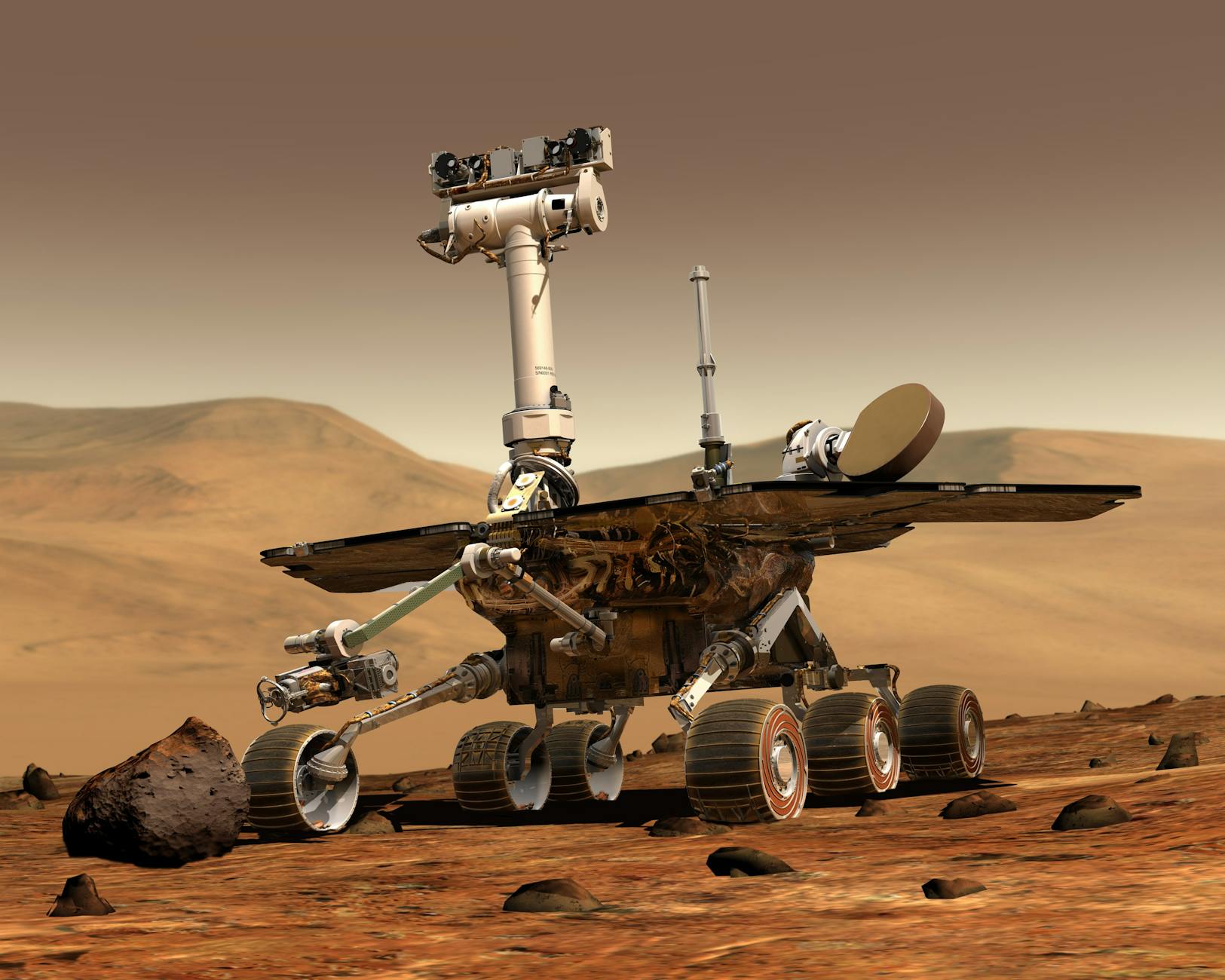
Speaking of ancient environments: NASA's Curiosity rover has found the highest concentrations of iron, manganese, and zinc ever detected together in Gale Crater on Mars. As reported in the Journal of Geophysical Research: Planets, these metal-rich minerals were locked inside remarkably well-preserved rock ripples — the kind formed by shallow, lapping water. A lake once sat there. The evidence is now, literally, written in stone.
Forecasting the Ocean's Biggest Mood Swing
And back on Earth, researchers from the University of Hawai'i at Mānoa have published a study in Geophysical Research Letters showing they can now predict El Niño and La Niña events 15 months in advance — using nothing more than observations of ocean surface temperature and height. No sprawling climate model required. Their current forecast: a powerful El Niño, more than 2°C warmer than normal. For the billions of people whose harvests, water supplies, and storm seasons are shaped by ENSO, earlier warning isn't just interesting. It's lifesaving.
The Hidden Architecture of Everything
What connects a penguin's shoulder muscles to a Martian lakebed, a cancer enzyme to a 700,000-year-old stone tool? Perhaps just this: the world is more intricately structured than it looks from the outside. Every week, scientists pull back another layer — and find not chaos, but pattern. Not dead ends, but pathways. The awkward waddle conceals a masterwork. The cancer cell contains a switch that can be found. The ancient ocean still carries its signature, 800,000 years on. Science, at its best, is the long work of learning to see what was always there.
That work is nowhere near finished. And right now, it has never been more alive.
Sign in to join the conversation.
Comments (0)
No comments yet. Be the first to share your thoughts.