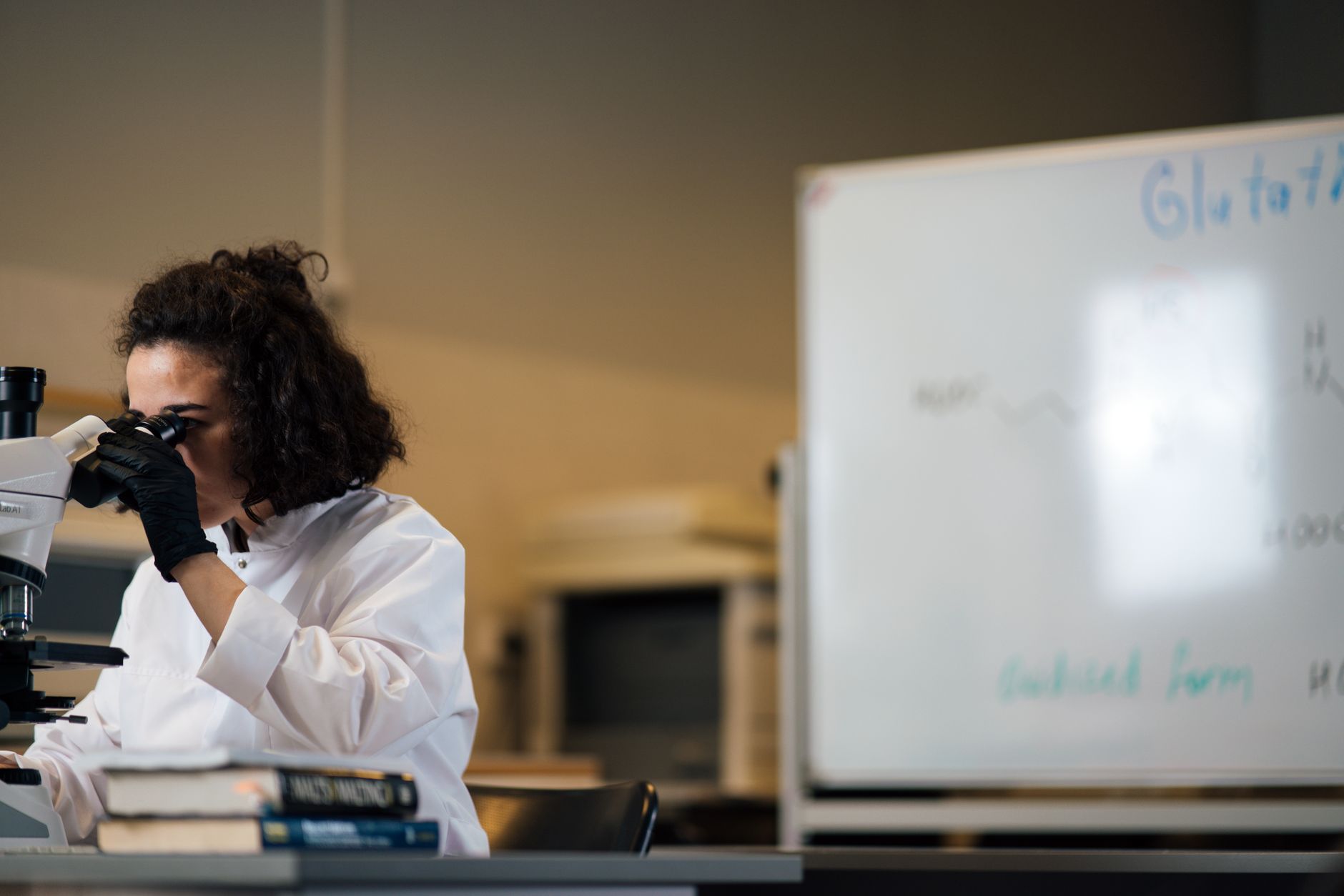
The Week Science Got Weird (In the Best Way)
Somewhere in an Ohio State University lab, a researcher ran a vacuum cleaner across a school hallway and changed how we might monitor public health forever. From nearly 30 dust samples collected in schools, university residence halls, and office buildings, the team simultaneously identified 54 distinct viruses — including SARS-CoV-2, influenza, norovirus, and Epstein-Barr virus. Published in Building and Environment, the study points toward a low-cost, passive outbreak warning system hiding in plain sight. The dust, it turns out, has been trying to tell us something.
That same spirit of finding answers in unexpected places animated a remarkable wave of new research this week — across disciplines, continents, and timescales spanning billions of years.
The Past Is Not What We Thought
On Israel's Carmel Coast, a narrow strip between the Mediterranean Sea and the Carmel mountain range, scientists pulled something extraordinary from ancient wetland sediment: 4,000 years of climate chaos. The international team, led by UC San Diego's Center for Cyber-Archaeology and Sustainability (CCAS) and the University of Haifa's Recanati Institute for Maritime Studies (RIMS), published their findings in Quaternary Science Reviews on May 13. Their method combined fossil analysis, pollen, and charcoal into a new tool for reading ancient environments — and what it revealed defied expectations.
The Eastern Mediterranean's climate didn't dry out slowly and steadily. It lurched — wet to dry to wet again, sometimes within a single human lifetime. And yet: people stayed. They adapted. The study offers a different story about our ancestors than the one we usually tell — not victims of climate, but resilient problem-solvers navigating a world that wouldn't hold still.
Zoom out to a galactic scale, and a similar story of disruption and recovery emerges. A new study led by researchers at the Institute of Cosmos Sciences of the University of Barcelona (ICCUB) and the Institute of Space Studies of Catalonia (IEEC), published in the Monthly Notices of the Royal Astronomical Society, reveals that the Milky Way's disk — the vast, rotating, pancake-shaped structure containing our sun — was likely reset by a violent collision with a smaller galaxy roughly 11 billion years ago. Using simulations alongside observational data on star clusters, the team found that such collisions can completely or partially destroy stellar disks before they re-form. Our galaxy, it turns out, has survived a catastrophe we never knew happened.
The Body Knows More Than We Give It Credit For
Closer to home, researchers are rewriting the rules of human performance. A study on 29 recreationally active adults doing high-intensity cycling at around 80 percent of peak power output found that people who listened to self-chosen music lasted nearly 20 percent longer than those who cycled in silence. The striking part, as the Optimist Daily reports: heart rate, oxygen consumption, blood lactate, and perceived exertion were virtually identical at the stopping point in both conditions. Music didn't make the body stronger. It made the brain more willing. The physical ceiling didn't move — just the willingness to approach it.
Meanwhile, gym-goers may want to recalibrate their expectations about one of fitness culture's most beloved supplements. A systematic review and meta-analysis from São Paulo State University (UNESP), published in Frontiers in Immunology, analyzed eight randomized, placebo-controlled clinical trials and found no consistent evidence that creatine reduces inflammatory markers. Creatine still works — it genuinely helps with strength, fatigue resistance, and recovery — but the anti-inflammatory reputation it's acquired appears to be more mythology than medicine. Knowing what a tool doesn't do is just as valuable as knowing what it does.
Decisions, Speed, and the Chess Grandmaster Problem
For decades, researchers assumed that harder decisions take longer — and that slower deliberation produces better outcomes. A new study published in the Proceedings of the National Academy of Sciences turned that assumption on its head. Professor Uwe Sunde of LMU, working with colleagues from Erasmus University Rotterdam and UniDistance Suisse, analyzed thousands of moves from professional chess games. Their finding: faster decisions are, on average, of higher quality. Decision time, the team argues, reflects the subjectively perceived difficulty of a problem — not the objective complexity of it. When an expert acts quickly, it's often because their pattern recognition has already done the heavy lifting.
The Materials and the Machines That Might Change Everything
At the University of Ottawa and MIT, researchers spent years mapping a frontier that could make your laptop run forever without overheating. Their comprehensive roadmap, published in the journal Newton, charts three distinct paths toward room-temperature quantum materials — a class of substances that could enable computers with permanent memory, phones that hold charge for days, and chips that generate almost no heat. It's still early. But the roadmap itself is a signal: the field is mature enough to navigate.
And for the scientists doing all this work? Lehigh University just handed them a new kind of co-pilot. Dr. Claw, built by a team led by assistant professor Lichao Sun, is an open-source AI research assistant designed to support the entire scientific workflow — from hypothesis refinement and literature review to paper drafting, grant writing, and presentation building. "Everything an investigator, professor, or student needs to complete a project is within this ecosystem," Sun says. It's not replacing the researcher. It's clearing the path so they can move faster.
What a Week Like This Means
These eight studies don't share a subject. They share something harder to name — a quality of illumination. Ancient mud, galactic collisions, hallway dust, chess clocks, workout playlists, supplement labels, quantum materials, and AI tools. Each one catches a corner of the world in better light than we had before.
That's what a good week of science looks like. Not a single moonshot, but dozens of researchers, in dozens of places, quietly making the unknown a little more knowable. If this week is any indication, next week they'll do it again.
Sign in to join the conversation.
Comments (0)
No comments yet. Be the first to share your thoughts.