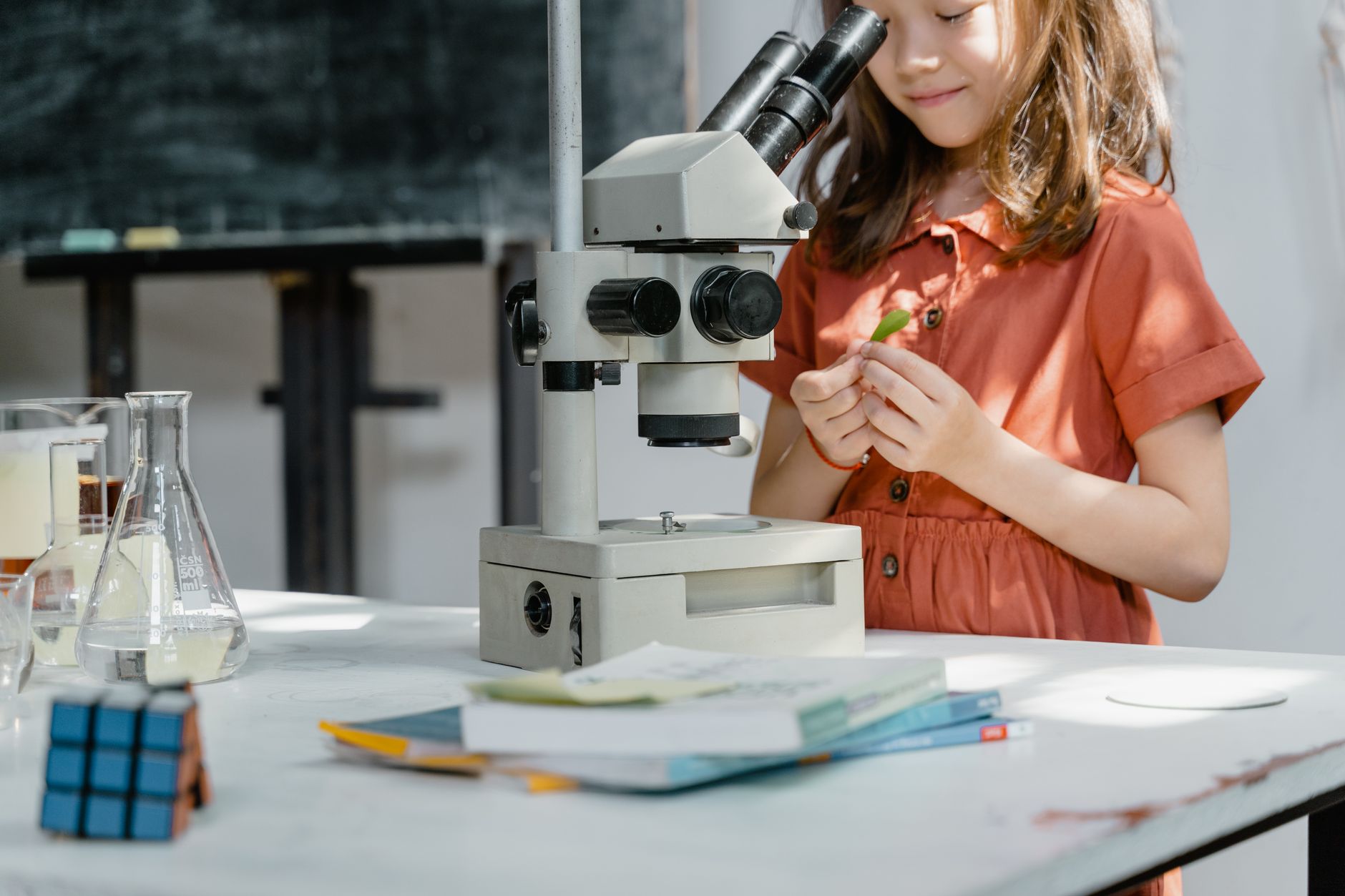
A Week in the Life of Human Curiosity
Somewhere in Japan, a hawkmoth is hovering in total darkness, drawn to a flower so strange it produces jet-black nectar. Meanwhile, a paleontologist in Liège is reconstructing the bite force of a marine reptile that ruled the seas 200 million years ago. And an astrophysicist in Birmingham is staring at data from the James Webb Space Telescope, puzzling over a planet that shouldn't exist.
This is science in 2026. Not one grand story — dozens of them, unfolding simultaneously, in labs and jungles and telescope arrays across the world. And several of the most striking broke in just the past few weeks.
The Brain Is More Flexible Than We Thought
Start close to home — literally, inside the skull. Scientists at the University of Oxford have, for the first time, directly demonstrated that the amygdala — a deep, almond-shaped emotional hub in the brain — actively shapes how we interpret ambiguous social cues, like an uncertain facial expression.
The method was remarkable: low-intensity focused ultrasound, aimed non-invasively at this tiny structure, temporarily altered its activity. The result? Participants read ambiguous faces differently. As the study, published in Neuron, shows, our emotional state isn't just a reaction to the world — it's a lens that filters everything we perceive. For people living with depression, where the amygdala is frequently dysregulated, this opens genuinely new therapeutic doors.
The Body Has Defenses We're Only Beginning to Map
Two other discoveries this month revealed just how much our own bodies are quietly working on our behalf — in ways science is only now catching up to.
At the University of California San Diego, researchers uncovered a surprising new role for an inflammatory protein called TYK2. It turns out TYK2 helps suppress breast cancer metastasis by sensing the physical stiffness of the tissue around a cell — a process called mechanotransduction. When the environment hardens, as tumors often cause, TYK2 responds. Understanding this mechanism could point toward new treatments that harness the body's own anti-spread defenses.
Meanwhile, an international team including scientists from Leipzig University has mapped how the balance of saturated and monounsaturated fats inside a cell's endoplasmic reticulum — a branched internal membrane system — plays a central role in regulating hunger signals in mammals. Published in the Proceedings of the National Academy of Sciences, the findings hint at a potential genetic target for metabolic and obesity-related conditions.
Then there's the spleen. Long considered a supporting player, it turns out to be actively involved in making stroke recovery worse — or potentially better. Researchers from La Trobe University and the Baker Heart and Diabetes Institute, publishing in Frontiers in Immunology, found that after a stroke, the spleen ramps up production of inflammatory immune cells that travel to the brain and amplify injury. Identifying the spleen as a target means doctors may one day be able to intercept that inflammatory cascade — reducing long-term disability after one of the world's most devastating medical events.
Building Tiny Worlds to Understand Our Own
Not every breakthrough happens by looking inward at the body. Some require building a replica of it first.
A research team has developed the world's first immune-capable cervix-on-a-chip: a microfluidic device that realistically reproduces the human cervical environment, including its microbiome and immune system interactions. The innovation allows scientists to study sexually transmitted infections — which cause billions of dollars in economic harm and enormous personal suffering globally — in ways that neither oversimplified cell cultures nor animal models could ever permit. It's a miniature world, built to illuminate a very large problem.
Secrets Hidden in Deep Time — and Deep Space
Some of this week's science required looking further back — or further out.
The University of Liège's international paleontology team published new findings in Palaeontology on ancient marine reptiles from the Age of Dinosaurs, reconstructing the biting mechanics of extinct ocean predators. Their analysis reveals how multiple large predatory species could coexist in the same ecosystem — each evolved with a distinct bite suited to different prey. Hundreds of millions of years before the first human asked "how does nature share resources?", evolution had already worked out the answer.
And then there's TOI-5205 b. This Jupiter-sized planet orbits a star roughly 40% the mass of our sun — a pairing so mismatched that astronomers call it "forbidden." Dr. Anjali Piette of the University of Birmingham, working with an international team using James Webb Space Telescope data, found that its atmosphere contains fewer heavy elements than the star it orbits. That's deeply unusual, and deeply interesting — because it challenges existing models of how giant planets form.
The Hawkmoth That Taught Us Something New About Flowers
And then, quietly, there is the story of the black nectar.
Researchers Soma Chiyoda, Ko Mochizuki, and Atsushi Kawakita from the University of Tokyo confirmed, for the first time, that Jasminanthes mucronata — a Japanese plant that produces strikingly dark nectar — is primarily pollinated by nocturnal hawkmoths. It's the first time any colored-nectar flower has been confirmed to rely mainly on night-flying insects. Published in Ecology, it opens an entirely new branch of inquiry into plant-pollinator relationships we've barely begun to study.
Why All of This Matters
These eight discoveries span neuroscience, oncology, metabolism, immunology, paleontology, bioengineering, astrophysics, and ecology. They share no single theme — except the one that matters most: human beings, patient and persistent, are still finding things that rewrite the rules.
The amygdala nudges how you read a stranger's face. The spleen sabotages stroke recovery in secret. A "forbidden" planet breaks our best formation models. A hawkmoth has been visiting black flowers in the Japanese dark for millennia, unseen.
Every one of these findings began with someone asking a question nobody had thought — or been able — to ask before. That instinct isn't slowing down. If anything, the pace is accelerating.
Which means next week, somewhere, something else we thought we understood will turn out to be far stranger and more wonderful than we imagined.
Sign in to join the conversation.
Comments (0)
No comments yet. Be the first to share your thoughts.