A Welder, a Farmer, and a Teacher Walk Into a New Future
Abyariman Emmanuel knew how to weld. He had known for years — the arc, the heat, the steady hand. But in Nakivale refugee settlement in Uganda, his skill was invisible. "Many companies doubted my skills as a welder and would not award me contracts," he explained. Without a certificate, his expertise simply didn't exist on paper.
Then came a piece of paper that changed everything.
Through the ILO's Recognition of Prior Learning (RPL) programme, supported under the PROSPECTS Partnership and funded by the Government of the Netherlands, Emmanuel was assessed by the Uganda Vocational and Technical Assessment Board (UVTAB) and earned his Workers' Practically Acquired Skills (PAS) certificate. Almost immediately, he secured his first formal contract. Across Uganda's refugee settlements, as the ILO reports, skilled workers like Emmanuel had long possessed valuable competencies — gained through apprenticeships and lived experience — that remained invisible to employers without formal recognition.
The same story, in different languages and landscapes, is playing out across the world right now.
Skills That Were Always There
In Kassala, Sudan, 38 youth-led startups gathered this May for the i-UPSHIFT Summit — a celebration of what 500 young women and men from Shagarab Refugee Camp and surrounding host communities had built through structured bootcamps, mentorship, and incubation. The ILO's i-UPSHIFT programme, adapted from UNICEF's UPSHIFT methodology, equips young people from refugee and host communities with skills in social innovation, entrepreneurship, and employability. These aren't hypothetical business plans. They are real solutions to real community challenges, born from the people who live them.
Meanwhile, in Battambang, Cambodia, the Royal Government, the United Nations, and Switzerland are accelerating efforts to expand decent employment for youth — with RPL testing centres for skills like scaffolding installation giving young workers a formal foothold in the labour market.
The pattern is unmistakable: around the world, skills that already exist are being seen, certified, and unlocked.
The Teacher Who Didn't Know What She Didn't Know
Maria Eni Rosaria Alves — known warmly as Mestra Eni — was 27 years old when she first stood in front of a classroom at ETA Natabora Agricultural Technical School in Timor-Leste. She had a degree in Business Management from the Dili Institute of Technology, a passion for teaching, and, as she admits with a smile, "a quiet sense of uncertainty."
"I did not even know that teachers and trainers were supposed to have Level 3 and Level 4 competency-based certification," she recalled.
In 2025, she was selected for the Certificate Level 3 Competency-Based Education and Training (CBET) programme. The transformation was immediate. "The training helped me organize my session plans better," she said. Mestra Eni is one face of a much larger shift happening across Timor-Leste's technical education system — where new teaching frameworks are not just improving classrooms, but building the instructors who will shape a generation.
When Training Comes to You
Not everyone can travel to a training centre. For 45-year-old vanilla farmer Aderito Cortereal, in Rotuto village in rural Timor-Leste, that distance had meant years of struggle. Poor yields. Failed pollination. Low-quality crops. "What I know is that I lacked the skills and knowledge," he said simply.
On April 16 and 17, 2026, the ILO's Agroforestry Skills Programme — funded by the European Union and implemented in partnership with Timor-Leste's Ministry of Agriculture — brought its Mobile Training Unit directly to Rotuto. The unit carries practical, hands-on knowledge to communities where geography and cost have always been barriers.
The same programme, just days earlier, had run a two-day training for 47 TVET trainers and SEFOPE officers across Timor-Leste on the SIMU-Web Job Portal — the country's national online employment platform. Marina da Costa, a counsellor at SEFOPE who registers job seekers every day, found herself needing to relearn a platform she thought she knew. "Now I can use it confidently and help others do the same," she said.
Measuring What Matters — Faster
The skills revolution isn't only about adults and workers. Vanderbilt professor Jonathan Seiden has published research in Early Childhood Research Quarterly introducing a human-centered framework for assessing early child development — cutting test time from over 30 minutes to just eight minutes across four skill areas. In countries with limited resources, where large-scale assessments are often impractical, this kind of tool could reshape how educators identify and support young children before challenges compound.
It's a reminder that the infrastructure of learning — how we teach, how we assess, how we certify — matters as much as the content itself.
Giving Back, Close to Home
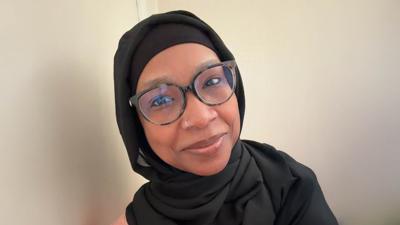
And then there's Johnethia Archie, 52, of Reading, Pennsylvania — born and raised there, still there, still building. A supervisor at a revenue cycle management company by day, she volunteers with the NAACP, Berks Democratic Women, and her local Islamic Center. Her story, spotlighted by Spotlight PA's Good Day Berks, is quieter than a summit in Kassala or a mobile training unit in the hills of Timor-Leste. But it belongs in the same conversation.
"Family is very important to me," she said, "and I am grateful for the love and sense of belonging that we share." That sense of belonging — of being seen, valued, supported — is precisely what every programme in every country described here is ultimately trying to create.
One Thread Connecting Them All
From a welder in Uganda to a vanilla farmer in Timor-Leste, from a young teacher in Dili to a community volunteer in Pennsylvania, the same truth keeps surfacing: people already have something to offer. The work of education, skills development, and community service is not about filling empty vessels. It is about removing the barriers — distance, paperwork, poverty, invisibility — that stand between human potential and human flourishing.
The global skills revolution is quiet, local, and deeply personal. It happens one certificate, one lesson plan, one training session at a time. And right now, it is happening everywhere.
Sign in to join the conversation.
Comments (0)
No comments yet. Be the first to share your thoughts.