A Bride, a Flood, and a Blueprint
Bulbul just got married. She moved into a small village in northeast Bangladesh, on the banks of the Jamuna River — a region that floods so reliably, so devastatingly, that families have stopped calling it a disaster. They call it the season. Every monsoon, water swallows homes. Crops vanish. Daily life becomes a fight for survival.
But this year, something is different. A group of architects from Dhaka has arrived, running hands-on workshops with rural communities to design houses that can actually withstand what the river throws at them. As Mongabay reports, they are teaching local builders techniques that break the exhausting rebuild-after-rebuild cycle. The knowledge doesn't leave when the architects do. It stays in the village. It stays with families like Bulbul's.
That is community doing what it does best: turning a problem too big for one person into something a group of people can solve together.
Gardens, Soil, and Showing Up
You don't have to survive a monsoon to understand that instinct. In Pequot Lakes, Minnesota, Park Board members spent a recent workday spreading manure from Lance Bragstad's Brakstad Family Farm into the soil of the Pequot Lakes Community Garden. Unglamorous work. Necessary work. The kind of work that only happens when people decide their neighbors' ability to grow food matters as much as their own.
Across the country in Woonsocket, Rhode Island, Riverzedge Arts has announced that its Community Garden is returning for the 2026 growing season, resuming full operations this spring at 196 2nd Ave. in the city's Fairmount neighborhood. A garden coming back to life after a hiatus is a small thing. It is also, in the most literal sense, an act of renewal.
And in Fisantekraal, South Africa — a community that has every reason to feel abandoned — residents have been planting indigenous trees to rehabilitate a local river, according to GroundUp. Fed-up neighbors in another South African town grabbed brooms and shovels to fix their own streets when no one else would. The through-line is the same everywhere: people deciding that the place they live is worth fighting for.
London, 26.2 Miles, and a Six-Year-Old Named Hugh
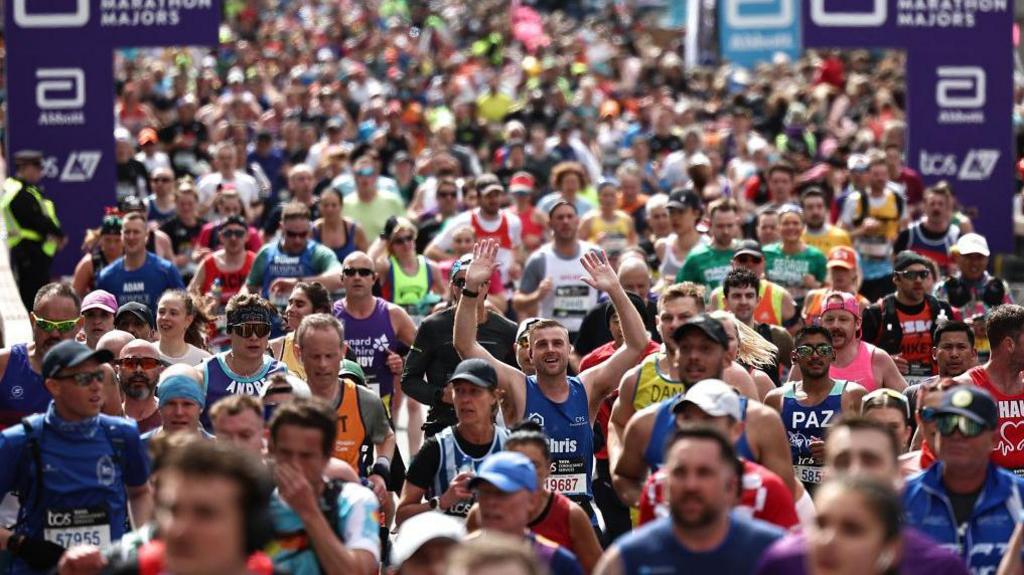
On Sunday, tens of thousands of people ran the London Marathon. Most ran for time. Many ran for something harder to measure.
Aaron Ramsey — the Welsh football icon who only recently retired — laced up for a different reason entirely. He ran in memory of Hugh, the six-year-old son of his friend Ceri, who died of a rare cancer. "Amazing," is how Ramsey described him, as the BBC reports. Twenty-six miles through London's streets, powered by the memory of a boy who never got to run them himself.
He wasn't the only one carrying something heavy across that finish line. Gabby Logan, BBC Sport's veteran presenter, sat down for what she called the "exclusive of the year" — an interview with Daddy Pig, the beloved Peppa Pig character, who was also taking on the Marathon to raise money for the National Deaf Children's Society. Absurd? Yes. But also completely sincere. London's streets have a way of making both grief and joy feel equally valid, often at the same time.
Then there was the choir — a group that found itself caught in a controversy when a disability charity initially told them they were not welcome at the event because of their founder's gender-critical views. The ban was reversed, and the choir performed. It's a messy, human story, and it didn't resolve cleanly. But the fact that the conversation happened publicly, that pressure was applied and a decision was revisited — that, too, is community holding itself accountable.
Neighbors Day and the Quiet Heroism of Yardwork
Away from the cameras, in La Crosse, Wisconsin, Habitat for Humanity put out a call for volunteers for Neighbors Day — an annual event that helps elderly and disabled homeowners prepare their yards for spring. This year, they aimed to reach approximately 200 households in a single weekend. No finish line tape. No charity bib. Just people with rakes, showing up.
That quiet heroism is easy to overlook. It shouldn't be.
The Thread That Runs Through All of It
From the Jamuna River to the Rhode Island growing season, from marathon start lines to Minnesota soil, the same impulse keeps surfacing: the belief that where we live, and who we live near, is worth investing in. Not because it's easy. Not because someone told us to. But because communities — real ones, messy ones — are built one deliberate act of showing up at a time.
The world has no shortage of problems too large for any single person to fix. But as Bulbul's neighbors in Bangladesh are learning, and as a Welsh footballer running 26 miles for a six-year-old proved this week, the size of a problem has never stopped people from trying. That's the part worth paying attention to.
Sign in to join the conversation.
Comments (0)
No comments yet. Be the first to share your thoughts.