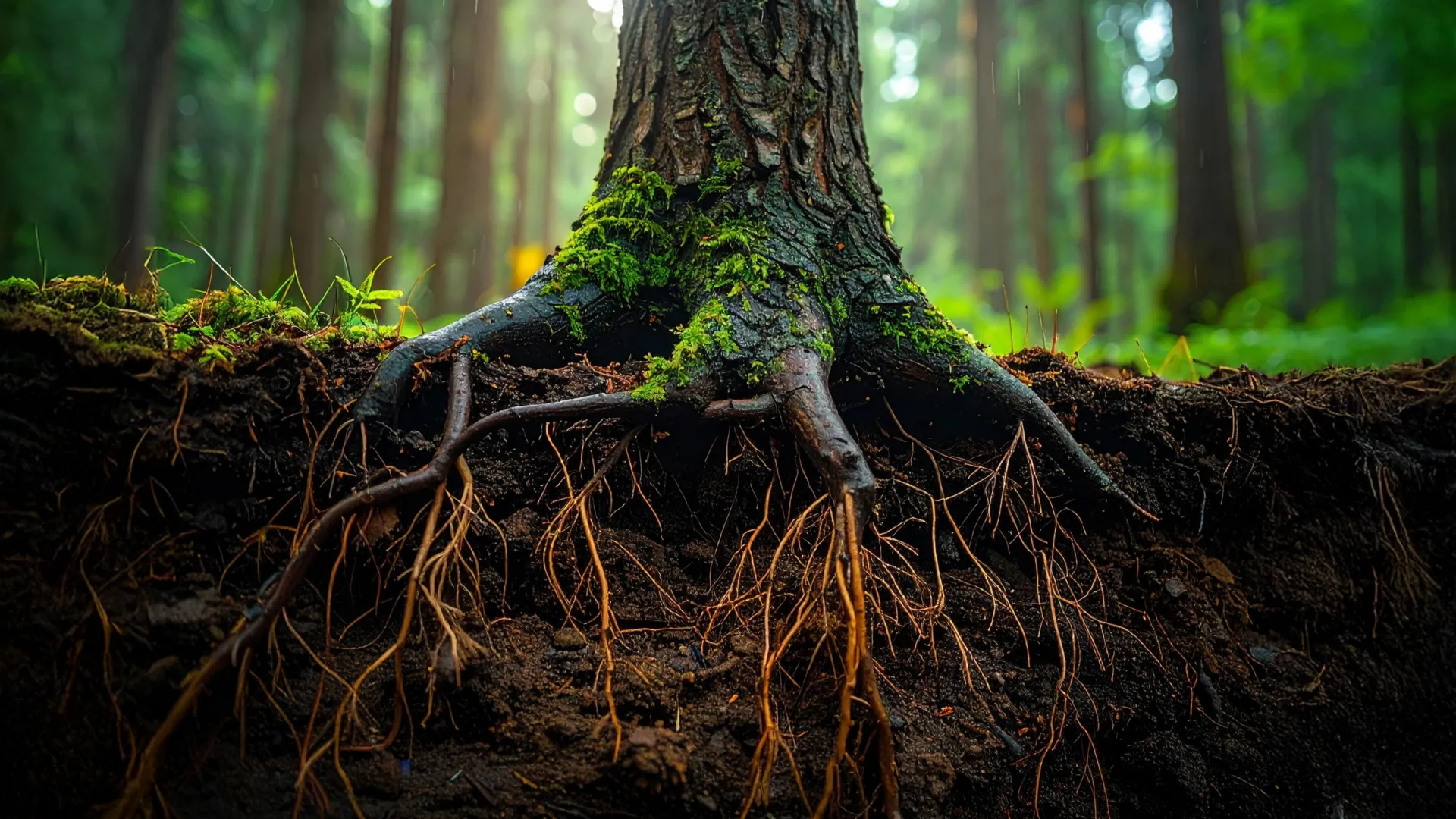
Off the coast of Mozambique, beneath 15 feet of warm Indian Ocean water, lie the ghostly remains of a forest that last saw sunlight 5,000 years ago. Now, these drowned trees—preserved as peat reefs—are alive again, not with leaves and bark, but with bluebanded snappers, reef fish, and thriving marine communities. As researchers from the Bazaruto Center for Scientific Studies (BCSS) discovered, these ancient forests have transformed into biodiversity hotspots rivaling coral reefs, offering a rare dual gift: rich ecosystems and powerful carbon sinks.
This isn’t the only quiet miracle unfolding. In California’s deep sea, where sunlight never reaches, scientists at the Monterey Bay Aquarium Research Institute found something no one expected: 20,000 octopuses gathered on a warm patch of seafloor, brooding their eggs in record time. The heat from hydrothermal springs speeds up development, turning a cold, dark abyss into a nursery of life. It’s the largest known octopus congregation on Earth—and a reminder of how much we still don’t know about our own planet.
Meanwhile, on land, forests are fighting climate change in ways we never predicted. A 24-year study by the University of Göttingen revealed that forest soils in southwestern Germany are absorbing 3% more methane each year, thanks to warmer, drier conditions that help methane-eating microbes thrive. This flips old assumptions on their head—climate change isn’t just weakening natural systems; in some cases, it’s revealing hidden resilience.
And where ecosystems are damaged, science is stepping in with astonishing precision. At Stanford, marine ecologists led by Fiorenza Micheli discovered that placing healthy coral fragments next to bleached ones can trigger a “fast and full recovery”—a simple contact method that could revolutionize reef restoration. This breakthrough comes at a critical time: 84.4% of the world’s coral reefs endured bleaching-level heat stress between 2023 and 2025.
At the same time, researchers at Scripps Institution of Oceanography are redefining how we restore reefs by focusing on the “settlement-sphere”—the microscopic world of chemical cues and microbial habitats that guide coral larvae to safe homes. Without these invisible signals, even well-intentioned restoration fails. Now, scientists are designing materials that mimic these cues, giving baby corals a fighting chance.
Even museum drawers hold answers. By analyzing decades-old frog specimens from Brazil’s Atlantic Forest, scientists from the Smithsonian and Penn State finally solved a 50-year mystery: the chytrid fungus was behind the sudden disappearance of amphibians. The discovery doesn’t bring the frogs back, but it arms conservationists with knowledge to protect what remains.
And in labs, innovation marches on. Researchers at the University of Konstanz found a “Pac-Man enzyme” that chews through certain plastics and even penicillin—hinting at both bioremediation potential and clues about antibiotic resistance. At the Potsdam Institute, a sweeping analysis of 169 countries shows that the nations most vulnerable to fossil fuel decline—like many in Africa—generate just 6% of global economic output, yet stand to gain the most from solar energy. The transition isn’t just fair; it’s economically rational.
These stories don’t make headlines. They unfold in data sets, deep-sea dives, and lab benches. But together, they form a quiet revolution—one where science doesn’t just diagnose the planet’s wounds, but helps it heal.
Sign in to join the conversation.
Comments (0)
No comments yet. Be the first to share your thoughts.