On a cool October morning in Lethbridge, Alberta, a tractor rolls through the last rows of a potato field. The harvest isn’t headed to grocery stores or fast-food chains. Instead, 20,000 pounds of research-grade potatoes—grown to test soil fertility and crop resilience—are being loaded onto a truck bound for the Interfaith Food Bank.
This is science with immediate purpose. Farming Smarter, an agronomy research group, has donated nearly 50,000 pounds of potatoes over three years—food that was studied, not wasted. As Taylor Doyle from the food bank puts it: “We’re so glad they choose to give them back to those in need.”
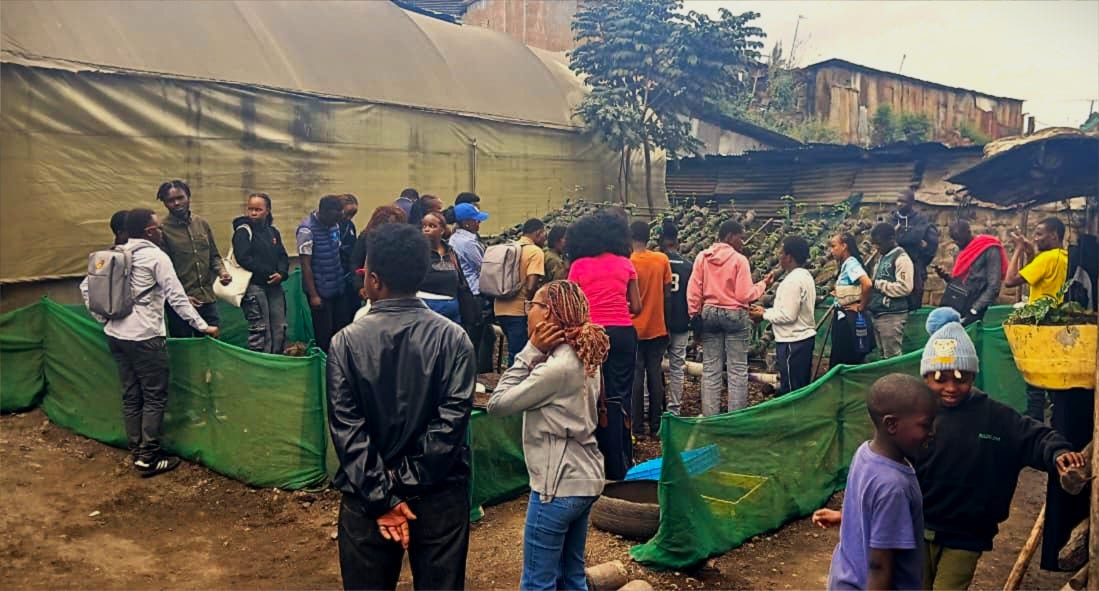
Half a world away, in Nairobi’s Mathare slums, another kind of research is taking root. Young innovators are turning organic waste into fertilizer, raising tilapia in aquaponic tanks, and growing strawberries on urban plots no larger than parking spaces. Davis Gichere, a local advocate, describes a model where “black soldier fly larvae eat food scraps and become animal feed,” closing the loop between waste and nourishment. These aren’t pilot projects waiting for funding—they’re already feeding families and training youth for green jobs.
Meanwhile, in New York City, high schooler Leslie Gomez Rivera was skipping lunch. Not because she was hungry, but because the cafeteria felt chaotic and stigmatized. Then she joined Youth Food Advocates, a program that teaches students to research school meal systems and push for change. Rivera surveyed her peers, gathered data, and helped redesign menus and spaces. Today, more students eat lunch—and they’re eating better.
From Nairobi to Brooklyn, research isn’t just happening in labs. It’s happening in cafeterias, alleyways, and vacant lots. At Rutgers University–Newark, researchers partnered with the city to install LED streetlights in crime hot spots. The result? Violent crime dropped by nearly 46% in the first six months. But the effect faded—proof that even data-driven solutions need community roots to last. As Alejandro Gimenez-Santana of the Newark Public Safety Collaborative said: “Lighting alone is not the solution.”
The same insight echoes in classrooms. A global study of 232,901 teens across 49 countries found that strong reading skills help students resist misinformation—especially those from disadvantaged backgrounds. Jason Jabbari, co-author of the study from Washington University, noted: “The misinformation resistance gap between rich and poor students is largest among weaker readers and shrinks considerably among strong readers.” Literacy, it turns out, is a shield.
Even in the quiet of night, research reveals unexpected harmony. A University of Toronto study found that people who sleep with their dogs don’t lose sleep quality—despite the occasional nudge or bark. The data showed humans and dogs often wake together, but more often, it’s the human who stirs first. Companionship, it seems, doesn’t cost rest.
And then there’s Paul Spong, who began his career in the 1960s studying orcas in captivity—only to realize the animals deserved freedom, not experiments. He left the aquarium system and founded OrcaLab on a remote island in British Columbia, where he’s spent nearly six decades listening to whales through hydrophones, never touching them. His research is observational, reverent, and relentless. “We don’t need to tag them to understand them,” he says.
What ties these stories together isn’t just the word “research”—it’s the belief that knowledge should serve life. Whether it’s potatoes pulled from test fields, streetlights guided by crime maps, or teens redesigning lunchrooms, the goal is the same: to turn data into dignity.
We often think of research as something distant—peer-reviewed, locked behind paywalls, waiting for application. But here, it’s already alive in the world. It’s feeding 3,000 people a month in Alberta. It’s lighting dark corners in Newark. It’s helping a teenager in Brooklyn feel proud to eat lunch at school.
The future isn’t just being studied. It’s being grown, cooked, shared, and defended—one community at a time.
Sign in to join the conversation.
Comments (0)
No comments yet. Be the first to share your thoughts.