On a conference stage in Seoul, Republic of Korea, researchers unveiled numbers that once felt impossible: patients with an aggressive form of lung cancer living a median of 18.5 months after their first treatment had failed—compared with 10 months on the old standard of care. A 43% reduction in the risk of death. The room, filled with oncologists, understood the weight of those digits.
That gotistobart result from the PRESERVE-003 trial was one of several breakthroughs shared at the IASLC 2026 World Conference on Lung Cancer, a gathering that felt less like a catalog of incremental gains and more like proof that the era of one-size-fits-all cancer care is ending.
Consider what happened in a single week.
In the DESTINY-Lung04 trial, first-line trastuzumab deruxtecan (T-DXd) pushed progression-free survival to 14.3 months for patients with HER2-mutant non-small cell lung cancer, versus 8.3 months for those on pembrolizumab plus chemotherapy—a full six-month improvement. Meanwhile, the phase 3 REZILIENT 3 trial showed that adding zipalertinib to platinum-pemetrexed chemotherapy cut the risk of progression or death by half (HR 0.50) in patients with EGFR exon 20 insertion mutations, with the benefit holding even in those with brain metastases. More time. Better time.
But the revolution isn't only about new drugs. Sometimes it's about doing less, more wisely.
The international SWOG S1827 MAVERICK trial delivered a striking message for patients with small-cell lung cancer: brain MRI surveillance alone actually improved cognitive failure-free survival compared with MRI surveillance plus prophylactic cranial irradiation. For decades, PCI was standard—a preventive blast to the brain that bought protection from metastases but often at the cost of cognition. Modern MRI caught metastases early enough that patients could skip the radiation entirely, without compromising survival. Sometimes the best medicine is subtracting.
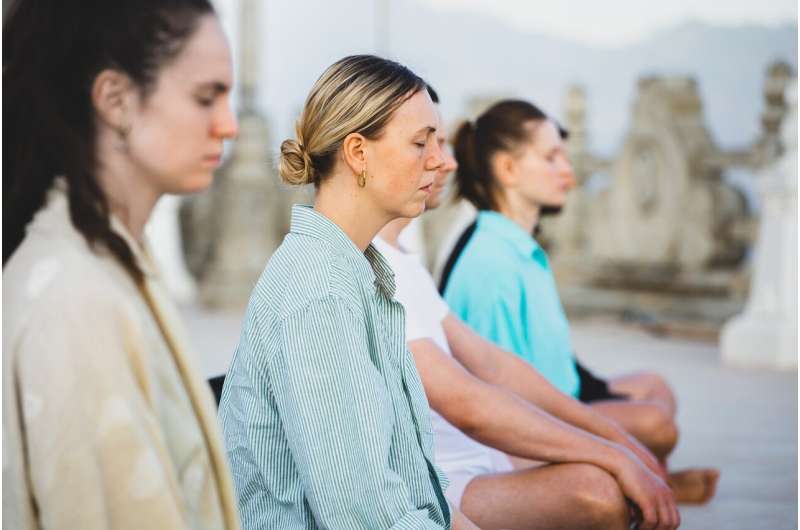
That philosophy of "whole-person" care echoed far beyond the oncology wards. The MATCH study, published in the Journal of Clinical Oncology and led by researchers at the University of Calgary, the University of Toronto and Mass General Brigham, followed more than 500 cancer survivors through mindfulness-based cancer recovery and tai chi/qigong. The result: less pain, less fatigue, and—for tai chi practitioners—fewer sleep problems. "These findings reinforce the value of a whole-person approach to cancer survivorship care," said senior author and Osher Center director Peter Wayne, Ph.D. The body and mind, it turns out, heal together.
Even the gut joined the fight. At MD Anderson, a Phase I/II trial found that fecal microbiota transplantation eased immunotherapy-related colitis—a brutal side effect that often forces patients to stop treatment—in nearly 77% of the first 13 patients, with symptoms subsiding in a median of just 1.5 days. Eight of ten responders stayed in remission. As principal investigator Yinghong Wang, M.D., Ph.D., put it, patients got back to cancer treatment faster.
New guidelines are following the science. The American Society for Radiation Oncology (ASTRO) released its first guideline focused on radiation across bladder cancer care, endorsing trimodal therapy as a curative alternative to bladder removal for appropriately selected patients. An estimated 85,000 U.S. adults will be diagnosed with bladder cancer in 2026—many of them now learning they have a choice.
And the healing isn't confined to cancer. A University of Virginia study of 480 patients found that adding lumateperone to standard antidepressants significantly improved sexual function in people with major depressive disorder—helping with the very side effects that cause roughly 68% of patients to abandon treatment. "An important step forward," said lead researcher Anita H. Clayton, MD.
Strip away the study acronyms and hazard ratios, and a single story emerges: medicine is learning to treat the whole person—their mind, their gut, their cognition, their relationships—not just their disease. It's a future where survival is measured not only in months gained, but in life preserved.
That's a future worth getting up for.
Sign in to join the conversation.
Comments (0)
No comments yet. Be the first to share your thoughts.