A Brother's Gift — and a Cure Nobody Saw Coming
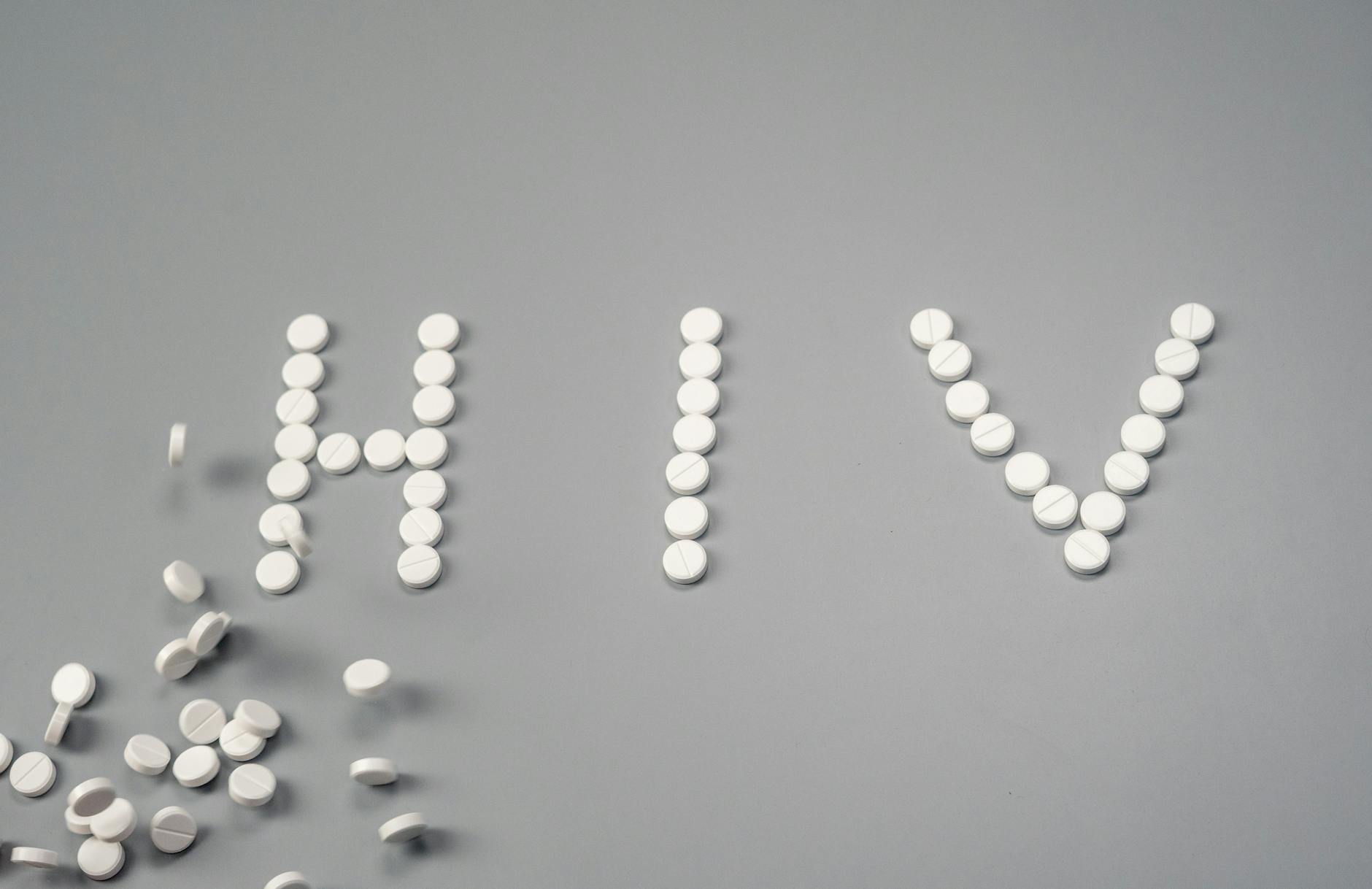
Nobody planned it as an HIV cure. When a 63-year-old Norwegian man received a bone marrow transplant from his brother to treat a life-threatening blood disorder, doctors were focused on keeping him alive. Then, almost incidentally, all signs of the HIV virus he had carried for 14 years vanished.
It turned out his brother's cells harbored a rare protective mutation — one nobody knew about until the very day of the transplant. Now known as the Oslo patient, he joins fewer than 10 people in history to have eradicated HIV through stem cell therapy, according to Singularity Hub. The case is remarkable not just for its outcome, but for its accidental elegance: science delivered a two-for-one deal.
That kind of surprise — where a deeper look at biology yields something no one expected — is exactly what is driving some of the most exciting research happening right now.
Cells Are Doing Far More Than We Thought
At MIT, chemists have just published findings that quietly upend a foundational assumption about how cells work. For decades, the lipid membrane surrounding a cell was understood as a passive shell — a barrier, a container. New research from MIT's Department of Chemistry suggests otherwise.
The study, published this spring, found that altering the composition of a cell membrane can directly change the behavior of protein receptors embedded within it — receptors that govern how cells communicate and respond to their environment. In other words, the membrane isn't just packaging. It's an active participant in the cell's decision-making.
That insight has implications reaching far beyond the lab bench, potentially pointing toward new approaches in drug design and disease treatment. And it arrives in the same week that MIT Professor Michael T. Laub — who studies the biological mechanisms of how cells process information — was named among the 449 scientists elected as 2025 Fellows of the American Association for the Advancement of Science (AAAS). He was joined by 21 MIT alumni in the honor.
Recognizing the People Behind the Discoveries
Science is, ultimately, a human endeavor. And this has been a season of recognition for the humans driving it forward.
The American Physical Society honored MIT professors Yoel Fink PhD '00 and Mehran Kardar PhD '83 with prizes for their contributions to physics, while professors Jorn Dunkel, Yen-Jie Lee PhD '11, Mingda Li PhD '15, and Julien Tailleur were named APS Fellows, joined by 12 additional MIT alumni. Meanwhile, MIT Associate Professors Jacob Andreas of Electrical Engineering and Computer Science and Brett McGuire of Chemistry were named winners of the 2026 Harold E. Edgerton Faculty Achievement Award — an honor established in 1982 to champion younger faculty making outsized contributions to their fields.
These aren't just accolades. They are signals of where the intellectual energy is concentrated, and what kinds of questions are being taken seriously.
Waves on Other Worlds and Energy Beneath Our Feet
Some of those questions are literally out of this world. MIT scientists have developed the first wave model capable of capturing the full fluid dynamics of ocean-like surfaces under different planetary conditions — and the results are striking.
On Titan, Saturn's largest moon, a mild breeze that would barely ripple a lake on Earth would generate waves 10 feet tall. The model, published in the Journal of Geophysical Research: Planets, could reshape how researchers think about the potential for liquid-covered moons to host — or hinder — conditions relevant to life.
Closer to home, a different kind of planetary resource is drawing urgent attention. At MITEI's 2026 Spring Symposium in March, 120 people — including faculty, investors, startup founders, multinational energy companies, and zero-carbon advocates — gathered around one shared conviction: geothermal energy is ready for its moment. The symposium, themed "Next-generation geothermal energy for firm power," made the case that drilling deeper and more innovatively could unlock a nearly bottomless source of clean, firm power for the grid.
Where Science Meets Community
Not every breakthrough happens in a laboratory. A new study from economists at MIT and the University of Cincinnati takes a careful look at how Asian immigrants — the fastest-growing and highest-earning immigrant ethnic group in the United States — influence the communities where they buy homes. The research examines the mechanisms behind rising home prices and their ripple effects on K-12 education and neighborhood dynamics, aiming to give policymakers and communities better tools for understanding change rather than simply reacting to it.
It is a reminder that science, in its broadest sense, is about understanding systems — whether those systems are cells, planets, energy grids, or the neighborhoods where we raise our children.
The View from Here
What connects a Norwegian man cured of HIV, 10-foot waves on Titan, a newly activist cell membrane, and a room full of geothermal energy believers? Each story is a dispatch from the frontier — a place where honest curiosity is producing answers that seemed impossible not long ago.
The scientists being honored this spring didn't set out to collect awards. They set out to understand things. The awards are just the world catching up. And if the pace of discovery this season is any indication, the world has a lot more catching up to do.
Sign in to join the conversation.
Comments (0)
No comments yet. Be the first to share your thoughts.