On a quiet campus in Laie, Hawaii, sunlight glints off sleek solar canopies stretching above parking lots, feeding power into a system that will soon run Brigham Young University-Hawaii on 100% solar energy. When phase two finishes, the extra juice won’t just sit idle—it will flow to the Polynesian Cultural Center and the Laie Hawaii Temple, turning a single university project into a community-wide clean energy lifeline. This isn’t a distant dream; it’s happening now, as part of a global wave transforming how we generate and share power.
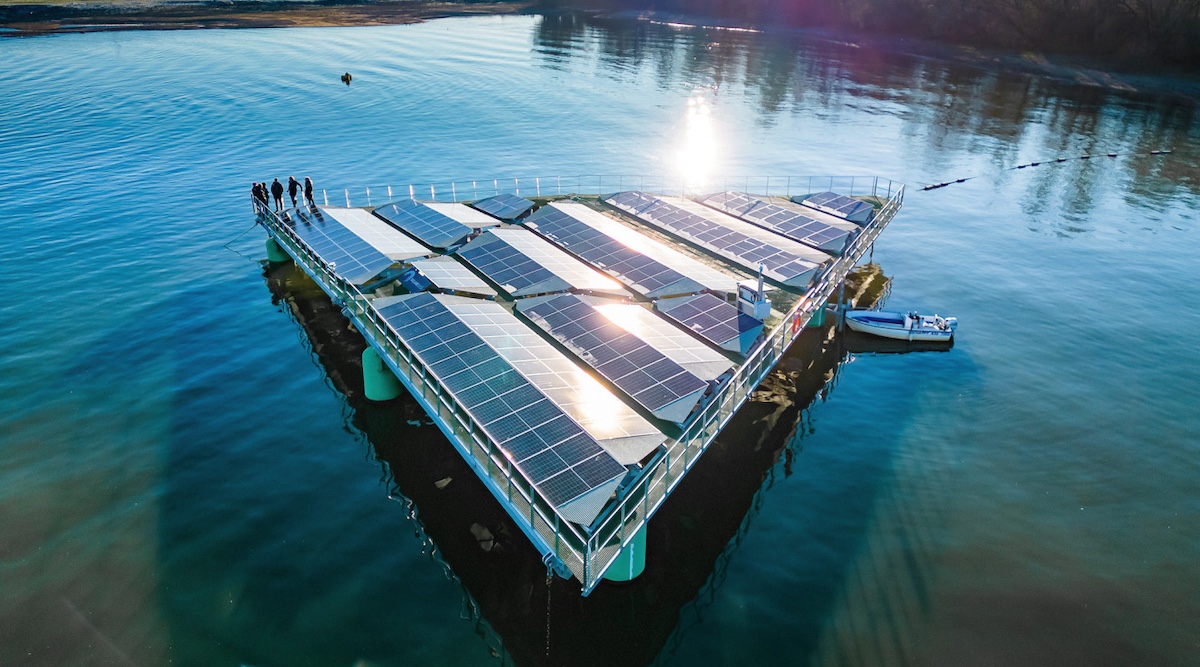
While Hawaii redefines what’s possible at the local level, Spain is charting a bold new frontier—offshore. Researchers from the University of A Coruña have found that floating solar arrays off its sun-drenched coasts could deliver 4.45 to 6.48 gigawatts of power, supplying up to 9% of the nation’s electricity by 2025. The study, published in the Journal of Cleaner Production, uses Spain’s Maritime Spatial Planning Plans to identify viable zones—proving that the sea, long seen as a domain for wind farms, can also host solar.
And the panels going up on land, water, and rooftops are getting dramatically better. At the Fraunhofer Institute for Solar Energy Systems in Germany, scientists have pushed solar module efficiency to a record 34.4%, using advanced III-V germanium cells. Just days earlier, they’d set a previous record at 34.2%. Meanwhile, China’s Trinasolar has set a separate world record with perovskite-silicon tandem cells—showcasing how fast innovation is accelerating across multiple fronts.
But technology alone isn’t enough. In the UK, 713 clean energy projects—solar, wind, and battery storage—are finally getting grid connections after the National Energy System Operator (NESO) overhauled a broken “first come, first served” system. The result? 37 gigawatts of new capacity and up to £40 billion in annual investment unlocked. It’s a blueprint for progress—especially when contrasted with the US, where permitting delays can add $7,000 to the cost of a rooftop system, according to Environment America.
That $7,000 figure isn’t just a number—it’s a barrier keeping families from going solar. But help is on the way. SolarAPP+, a government-industry collaboration, is automating residential permitting in over 350 jurisdictions. More than 150,000 permits have been issued, saving over 150,000 staff hours. It’s proof that bureaucracy, too, can be innovated.
Even the cold is no longer a limit. At Western University in Canada, PhD researcher Koami Soulemane Hayibo is developing foam-based floating solar panels with air bubblers to prevent ice buildup—adapting floating solar for harsh climates where it once seemed impractical. Globally, floating solar reached over 10 gigawatts of installed capacity by 2025, with 1.5 to 2 gigawatts added in a single year.
Underpinning all these advances is a quiet shift in how we think about the future. As highlighted in a CleanTechnica analysis, long-term energy models often assume endless population growth—but the real story is one of peak, plateau, and divergence. The world may not double again this century. That changes everything: energy demand, infrastructure needs, and the very pace of transition.
From a Hawaiian campus to the coasts of Spain, from lab breakthroughs in Germany to streamlined permits in New York, the clean energy revolution isn’t waiting. It’s adapting, accelerating, and spreading—one panel, one policy, one innovation at a time.
Sign in to join the conversation.
Comments (0)
No comments yet. Be the first to share your thoughts.