A Doctor's Oldest Problem
A tumor can hide for years. It grows quietly, borrows the body's own machinery, and waits. By the time it announces itself, it has already rewritten the rules.
That's the brutal arithmetic of pancreatic cancer — one of medicine's most stubborn adversaries. But in labs from Philadelphia to Rochester, New York, researchers are cracking a code that the disease has guarded for decades.
Scientists at The Wistar Institute and ChristianaCare's Helen F. Graham Cancer Center discovered something remarkable: pancreatic cancer cells don't just tolerate inflammation — they become addicted to it. Defective mitochondria inside those cells spark an inflammatory process, and the cancer grows so dependent on that process that blocking it may shut the whole system down. Published in the Proceedings of the National Academy of Sciences, the finding reframes inflammation not as a side effect of cancer, but as a potential target.
Meanwhile, researchers at the University of Rochester Medicine have been asking a different question: why does pancreatic cancer come back so stubbornly, even after a surgeon removes the tumor? Their laboratory work uncovered a genetic pattern that explains how rogue cancer cells hide, go dormant, and erupt later — with the goal of making those cells visible to newer immunotherapy drugs. Two teams. Two angles. One intractable disease, newly exposed on two fronts.
What a Blood Test Can Now Tell You
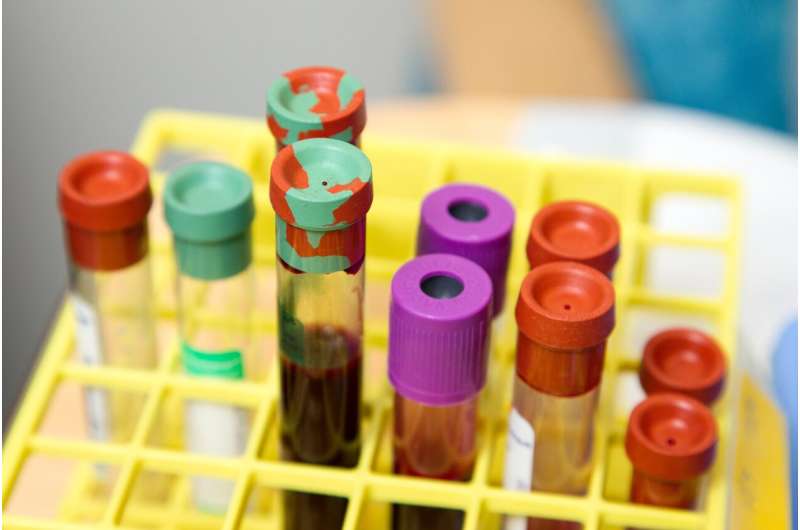
Some of the most powerful breakthroughs this season fit in a vial.
At Mayo Clinic, researchers have developed a blood-based method capable of detecting germ cell tumors — the most common form of testicular cancer — including cases that standard blood markers simply miss. Published in Nature Communications, the test represents a quiet but significant expansion of what early detection can do for a cancer that, when caught early, is among the most treatable.
The theme of seeing more with less extends further still. A new tool published in Nature Medicine shows that the future risk of 18 obesity-related diseases — including heart disease and several cancers — can be predicted using just 20 commonly collected health measures, like routine blood test results and basic demographic data. Two people can share the same weight and look identical on paper, yet face vastly different health trajectories. This tool, designed to complement BMI rather than replace it, could allow doctors to intervene before illness has a foothold.
The logic is the same in both cases: the body is already broadcasting a signal. We just needed better ways to receive it.
Rethinking What We Thought We Knew
Some of this month's most striking science involves overturning assumptions that have guided medicine for years — sometimes for decades.
For 30 years, doctors treating mevalonate kinase deficiency (MKD) — a rare autoinflammatory disorder — believed they understood which immune cells were driving the disease's devastating inflammatory flares. They were chasing the wrong culprit. Researchers at the Garvan Institute of Medical Research, publishing in Immunity, revealed that the real problem lies with natural killer (NK) cells. When these NK cells are impaired, as they are in MKD patients, the immune system loses its ability to regulate itself — and inflammation spirals. It's a correction 30 years in the making.
A different kind of course-correction is happening in vaccine science. A new study from the Icahn School of Medicine at Mount Sinai overturns a longstanding assumption about how mRNA vaccines generate immunity. The research found that certain non-immune cells play a surprisingly significant role in determining vaccine effectiveness — a discovery that opens an entirely new design space for making the next generation of mRNA vaccines more powerful.
Breast Milk, Brain Injuries, and a Hungarian Hospital
Not every breakthrough arrives with a blockbuster announcement. Some begin with ten newborns and a carefully observed question.
Between December 2024 and February 2025, clinicians at Semmelweis University in Budapest tried something unprecedented: administering breast milk through the nasal passages of newborns suffering from hypoxic-ischemic brain injury — brain damage caused by oxygen deprivation at birth. The intranasal delivery method is designed to route the protective compounds in breast milk directly toward the brain. The study, published in Pediatric Research, cleared its first safety test. Ten babies. No serious adverse effects. A door, carefully opened.
A Signature in the Blood
And then there is Ebola — a disease that, in its early stages, can look like many other infections. Every hour of delayed diagnosis carries weight.
Researchers at the Wake Forest Institute for Regenerative Medicine have now identified a distinct gene expression pattern that appears when the body responds to Ebola specifically — a kind of biological signature that sets it apart from other pathogens. Published in Frontiers in Genetics, the discovery could allow doctors to identify Ebola faster and with greater accuracy, buying time that, in an outbreak, is everything.
The Bigger Picture
What connects a Budapest neonatal ward to a Philadelphia cancer lab to a genetic study on Ebola? Each of these discoveries follows the same underlying impulse: to stop chasing disease from behind.
Inflammation, immune dysfunction, hidden tumor cells, misread blood markers — these are not failures of the body. They are signals, and science is learning to decode them earlier, more precisely, and with more hope than before. For the patients who will benefit from these findings — some of whom haven't been born yet — that is not a small thing. It is the entire thing.
Sign in to join the conversation.
Comments (0)
No comments yet. Be the first to share your thoughts.