When the Loch Ness Monster Met the Tardis
Inside the AO Arena, a Tardis materialized. King Charles III stepped out—unlocking a doorway to 96 years of Commonwealth history—while a towering representation of the Loch Ness Monster lumbered across the stage. Behind him, bagpipers struck up "Flower of Scotland" as the home crowd of 10,000 roared themselves hoarse.
This wasn't just a ceremony. It was a rescue celebration.
Just three years ago, these Games didn't exist. When the Australian state of Victoria pulled out in 2023, citing spiraling costs, the future of the Commonwealth's flagship event looked bleak. Glasgow—already the host of a triumphant 2014 Games—stepped in. But with barely two years to prepare, this would be different.
No new stadiums. No 46,000-seater Hampden Park for athletics—instead, events moved to Scotstoun's modest 10,000-capacity venue. Costs plummeted from the £700-800 million spent in Birmingham 2022 to just £160 million here. Sports were cut from 20 to 10. Athletes numbered roughly 2,000 fewer than previous editions.
"I don't think we have ever been stronger," Katie Sadleir, chief executive of Commonwealth Sport, told BBC Sport. "We took a hard hard look at ourselves and realised we needed to reset and reimagine this Games so it is an attractive proposition for our members."
On the field, Scotland's flagbearers embodied the Games' spirit. Alex Marshall, 59, had tears in his eyes when he learned he'd carry the saltire. A five-time Commonwealth champion bowler, he's Scotland's most decorated athlete in the event's history—yet still moved by the honor. Beside him, judoka Sarah Adlington, chasing an unprecedented third gold, had kept the secret for weeks. "I might not even sleep tonight," she admitted.
Then came Thursday's first full day of competition, and with it, Duncan Scott.
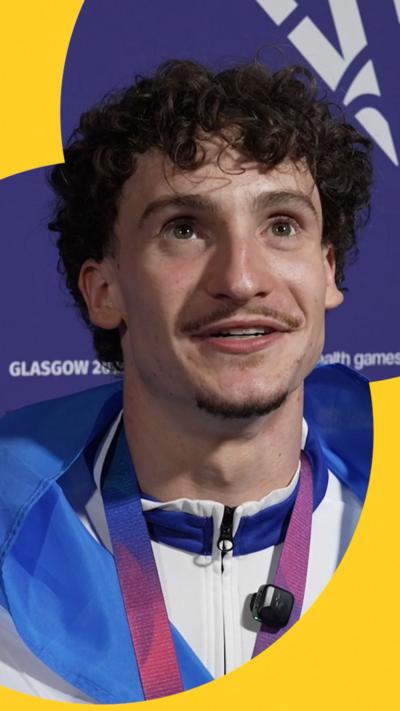
Twelve years after winning his first Commonwealth medal in this very pool—the Tollcross International Swimming Centre—the 27-year-old from Alloa touched the wall first in the men's 200m individual medley. His 14th Commonwealth medal. Gold, on home soil, with Scotland's kit on his back.
"I don't usually feel the expectation, but that one I probably did," Scott admitted. "Simply because it's day one and I love representing Scotland and you want to try and get the whole team off to a good start."
The roar that followed shook the building.
Behind him, teammates kept pushing. Angharad Evans, 23, blazed to the fastest qualifying time in the women's 100m breaststroke semi-finals, booking her spot in Sunday's final with frightening speed. Katie Shanahan—silver medalist in the 200m backstroke—chased a second medal in the 100m backstroke. Even in relay races where podiums eluded them, Scottish swimmers set new national records.
On Saturday night, there were no podium places for the home crowd to cheer. But Angharad Evans still had them on their feet.
The Commonwealth Games aren't what they were. Perhaps that's precisely the point. A leaner, more inventive model has emerged from Glasgow—one that might just outlast the doubts.
Sign in to join the conversation.
Comments (0)
No comments yet. Be the first to share your thoughts.