A Ship Arrives in Melbourne
Five thousand electric vehicles. One ship. All of them already sold before the hull even cleared the horizon.
When a BYD roll-on/roll-off carrier docked in Melbourne in May 2026, Australian media called it "frightening" and a "monster." But the real story wasn't the size of the ship — it was what it signaled. As CleanTechnica reports, approximately 30% of all new cars sold in Australia that month came with a plug. The Tesla Model Y became the first EV ever to top Australia's best-selling vehicle chart across all powertrains. And BYD is now nipping at Toyota's heels as the country's second best-selling brand — while Toyota sales have cratered 30% year-over-year.
Welcome to 2026. The electric tipping point isn't coming. It's already here.
The Numbers That Tell the Story
Zoom out and the picture sharpens dramatically. Globally, plugin vehicle registrations hit around 1.6 million units in April alone — up 9% year-over-year, according to CleanTechnica's global EV sales tracker. But the headline number buries the more important detail: pure battery electric vehicles (BEVs) surged 19% year-over-year, while plug-in hybrids (PHEVs) fell 9%. For the first time since 2019, PHEVs have been in the red for four consecutive months. The hybrid bridge is being crossed — and left behind.
In China, the shift is even more dramatic. Chinese retail NEV market share hit an estimated 63% in May 2026 — an all-time high — with wholesale figures reaching 61%, according to CPCA data reported by CnEVPost. BYD alone accounted for 27.7% of Chinese wholesale NEV sales, shipping 376,990 vehicles in May, with exports up a staggering 80% year-over-year.
France tells a similar story. Plugin EVs claimed 33% of the French market in Q1 2026, up from just 22.9% a year earlier, per CleanTechnica. BEV volume jumped 50% year-over-year to 112,086 units. Diesel-only vehicles now account for a mere 2.5% of the French market. The Tesla Model Y led all BEV sales with 10,670 units — its best Q1 ever — while the beloved homegrown Renault 5 came a close second.
Not Just Where You Drive — But How
Numbers alone don't capture the texture of this transition. Fritz Hasler, a 70-year-old driver from Minnesota, learned that lesson the hard way. On May 9, 2026 — his grandson's graduation day at UW-Madison — Hasler had his first intersection accident in seven decades behind the wheel. He was driving his 2019 Tesla Model 3 with Full Self-Driving engaged, but overrode the system at a stop sign, accelerating into cross traffic.
"If I had just let it drive, I wouldn't have had the accident," Hasler wrote on CleanTechnica. His honesty is striking. He replaced the totaled Model 3 with a new Model Y equipped with Hardware 4 and FSD V14 — purchased for around $40,000 with zero-percent financing over six years.
His story dovetails with a broader industry debate: who is responsible when an AI-assisted car crashes? BYD has just made a landmark move, announcing it will accept liability when a crash occurs while a driver is using its "God's Eye" autonomous system. As CleanTechnica explores, this is possible in China partly because civil law uses strict, formula-based compensation calculations — making liability financially predictable in a way that American tort law, with its open-ended damages, does not. It's a bold precedent, and one that sets BYD apart in the global race toward full autonomy.
Building the World EVs Need
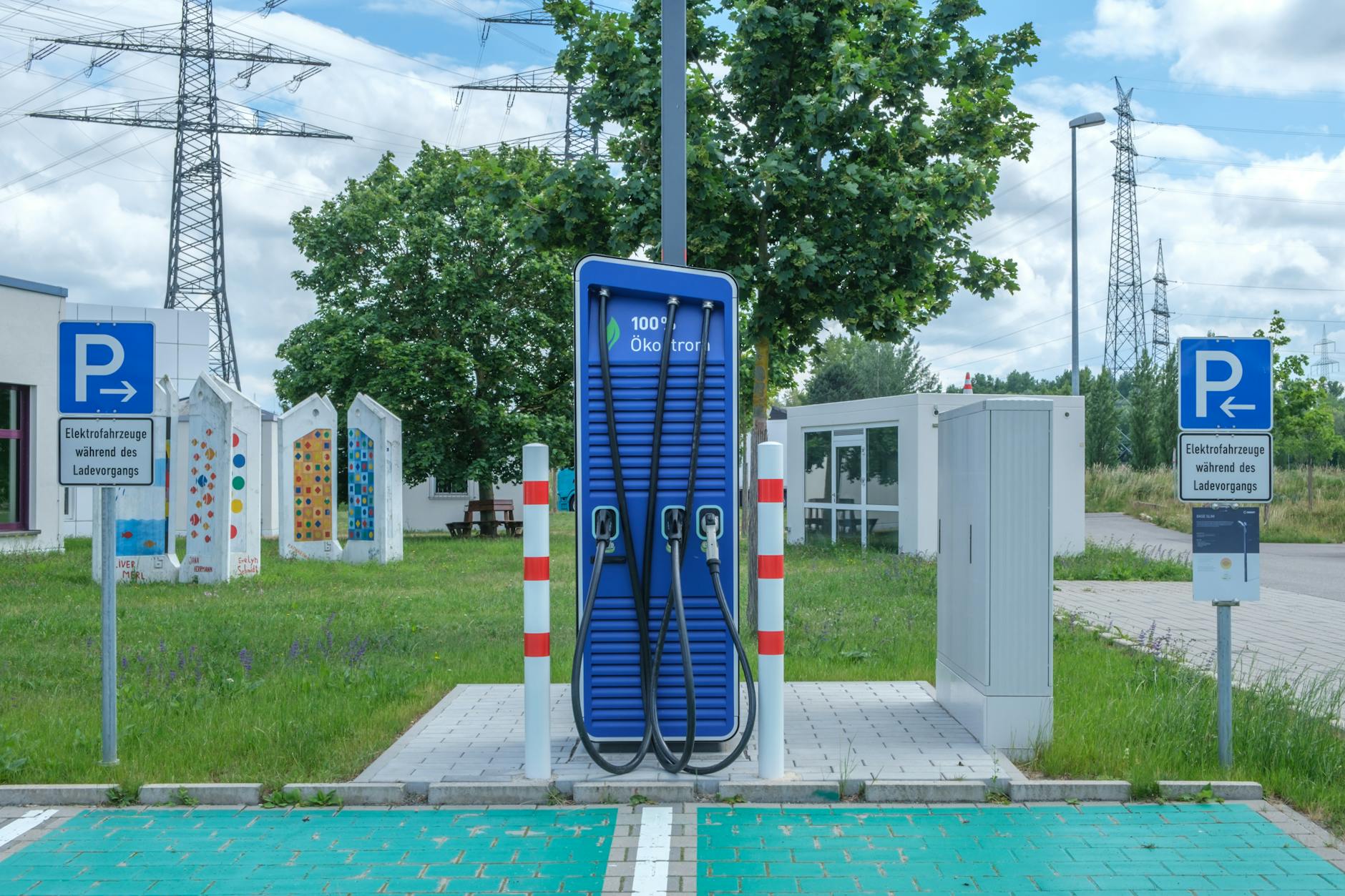
Meanwhile, the infrastructure catching up to all these vehicles is quietly remarkable. Eleport, an EV charging company operating roughly 800 public chargers across six European countries — Estonia, Latvia, Lithuania, Poland, Slovenia, and Croatia — has struck a deal with Respect Energy to power its 300 Polish chargers with 100% locally sourced renewable electricity from solar, wind, and hydroelectric stations. "This agreement was designed to combine access to 100% renewable energy with greater transparency and control," said Sebastian Ostrowski, Strategic Account Manager at Respect Energy.
In Japan, Lexus debuted the TZ on May 7 at the Toyota Technical Center Shimoyama — the brand's first three-row BEV SUV — in front of media from around the world. Takashi Watanabe, president of Lexus International, told assembled dealership heads that the key theme for the era ahead is simple: "taking on new challenges."
The Ride Is Speeding Up
The incentive-driven dips of early 2026 — the end of US federal EV credits last October, the partial rollback of Chinese subsidies at year's end — turned out to be speed bumps, not stop signs. BEVs have already rebounded to 7% year-over-year growth globally, and the structural forces underneath the transition have only deepened.
As one Australian observer watching that BYD ship dock in Melbourne put it: "Hold on to the handrails. The ride is speeding up."
They weren't wrong. Across continents, the electric vehicle revolution is no longer a forecast. It's a fact of daily life — in the cars people buy, the chargers they plug into, the liability laws being rewritten, and the headlines that can't quite keep up.
Sign in to join the conversation.
Comments (0)
No comments yet. Be the first to share your thoughts.