A School Bus Driver Changed Everything
Picture a school bus driver in Salt Lake City, Utah, pulling open the door of an electric bus on a cold winter morning. No diesel exhaust clouding the air. No rumble rattling the seats. Just quiet, clean motion — and kids who can breathe easier on the way to school.
That driver recently wrote a letter about the switch that caught the internet's attention. "With air quality being an ongoing concern in Salt Lake City, especially during the winter months," they wrote, "it feels good to be part of a solution." Salt Lake City has a documented air pollution problem, flagged by the American Lung Association. One electric bus won't fix it. But multiply that bus across a nation — and then a continent — and the math starts to look transformational.
That's exactly what's happening right now, from the highways of Texas to the autobahns of Germany.
588 Chargers, €1 Billion, and a Kentucky Governor Who Gets It
The numbers coming in from around the world read like a drumroll.
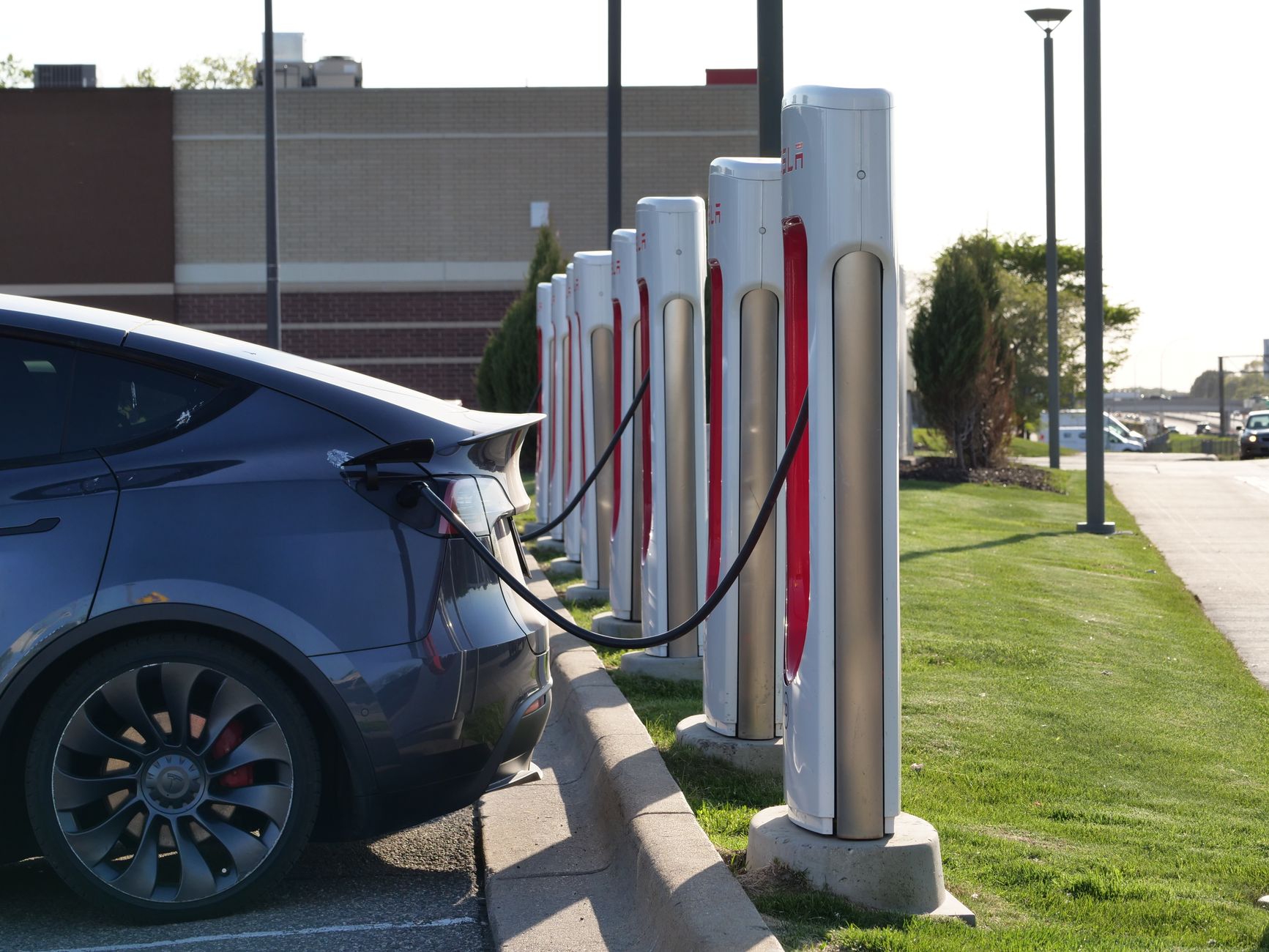
In Texas, the Transportation Commission just authorized Phase II of the National Electric Vehicle Infrastructure (NEVI) program — roughly $250 million in funding for at least 588 new public EV charging ports, many of them fast chargers capable of 300 kW or more, as CleanTechnica reports. Phase I had already delivered 65 charging sites, 15 of them already completed and humming. Rural gaps, long-distance corridors, underserved communities — NEVI is designed to fill them all.
Meanwhile, in Kentucky — not exactly the first state that comes to mind when you think EV adoption — the 10th public EV charging hub just opened at 4455 Russellville Road off Interstate 165, equipped with four ports capable of up to 400 kW. The state's governor didn't mince words: "EVs are no longer the technology of the future, they're here now." Kentucky had to fight for its $17.8 million in NEVI funding after federal freezes threatened the program — and fight it did.
Across the Atlantic, Germany's Federal Transport Minister Patrick Schnieder announced a €1 billion investment over four years to build out commercial electric truck charging infrastructure. "Heavy-duty road freight transport is essential for Germany as an economic hub," Schnieder said. "At the same time, this sector is tasked with becoming climate-friendly." Germany's grid already ran on more than 50% renewable electricity in 2025, making that switch all the more potent.
Europe's Bigger Bet
Germany's billion-euro commitment doesn't exist in isolation. It sits inside a much larger conversation reshaping the continent's energy future.
A coalition of civil society groups and industries has sent an open letter to European Commission President Ursula von der Leyen, Council President António Costa, and Parliament President Roberta Metsola, calling for a bold, binding post-2030 energy framework that delivers a full fossil fuel exit. The letter, published on CleanTechnica, warns that Russia's war in Ukraine and rising Middle East tensions have exposed just how dangerous fossil-fuel dependence really is.
The numbers back the urgency: electrifying roughly half of the EU economy by 2040 is projected to deliver net savings of around €29 billion per year. Energy security and climate action, the letter argues, are no longer competing priorities. They're the same priority.
Back in the United States, that same logic is playing out in courtrooms. In Atlanta, the Sierra Club, Natural Resources Defense Council, and Southern Alliance for Clean Energy filed a post-hearing brief against Georgia Power, revealing that the utility lost $152 million of customers' money by running coal plants uneconomically — then tried to pass the entire bill to ratepayers. The groups are pushing the Public Service Commission to force Georgia Power to share the pain. "Georgia Power wants to have its cake and eat it too," said Adrien Webber, Sierra Club's Georgia Chapter Director.
The Reliability Myth, Quietly Demolished
Skeptics have long claimed EVs aren't ready for real-world use. Consumer Reports just made that argument harder to sustain.
The organization released its list of the five least reliable midsize SUVs in America. Not one EV made the list. The bottom five were all gasoline-powered — including the Jeep Grand Cherokee (29/100 reliability rating) and the Mazda CX-70 (32/100). Completely unsurprisingly, as CleanTechnica noted with some relish.
And if you want to put your money where your conviction is, the Chesapeake Climate Action Network Action Fund just launched its 8th annual EV raffle — one ticket, three possible prizes: a Rivian, a Lucid, or a Porsche. Proceeds fund the fight for clean energy policy. It's a small, joyful symbol of something larger: a movement that's now mainstream enough to raffle off luxury electric vehicles.
The Road Ahead
From a school bus in Salt Lake City to a freight corridor in Bavaria, the electric transition isn't a distant promise anymore. It's infrastructure being poured, policies being fought for, and drivers who — given the choice — simply won't go back to diesel.
The question is no longer whether this shift will happen. It's whether we'll build the roads, the chargers, the policy frameworks, and the political will to make it happen fast enough. The evidence suggests: we just might.
Sign in to join the conversation.
Comments (0)
No comments yet. Be the first to share your thoughts.