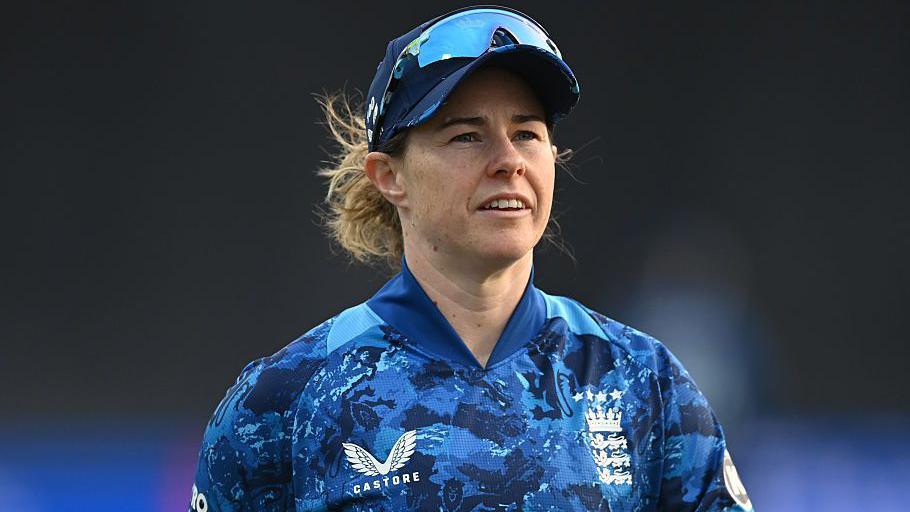
The sound of leather on willow has a new echo at Lord's.
On a crisp morning at the Home of Cricket, Lauren Filer ran in and sent down a delivery that carved out a sliver of history: the first wicket ever taken in a women's Test at Lord's. Shafali Verma departed for zero, and 28,000 people in the ground knew they were witnessing something that should have happened decades ago.
"I played my first Test match in a skirt, and paid for my own blazer," head coach Charlotte Edwards told BBC Woman's Hour. "I am just absolutely blown away. Sometimes I sit in the dugout and I'm just so proud of where the game is at because 30 years ago, probably 10 people were watching England play and we're now playing in front of packed houses at Lord's."
The match itself—a one-off Test between England and India—was sandwiched awkwardly between formats, just six days after England's heartbreaking T20 World Cup final loss to Australia. But even scrambling for attention, the day found its own gravity. Sophie Ecclestone, England's crafty left-arm spinner, needed only until the 73rd over to claim her 336th wicket across all formats, surpassing Katherine Sciver-Brunt and becoming the nation's leading wicket-taker in cricket's history. She finished with 3-68 as India were bundled out for 285.
The ECB marked the occasion by inviting pioneers from the amateur era—Enya Bakewell, Anya Shrubsole, Alex Hartley—to ring the ceremonial bell before play. These were women who played when the MCC wouldn't even grant them membership. "It was so lovely to see all the past players," Hartley said on BBC Test Match Special. "It's great for the ECB to recognise those who paved the way."
Thirty miles away at Wimbledon, the wheelchair courts were making their own quiet revolution. Britain's Alfie Hewett fought back from a set down to beat Gustavo Fernandez and reach his fifth successive wheelchair singles final. When he dropped the opener, he admits he needed a moment alone. "I took myself away after the first set and just tried to focus on the next set," he said. "These are the sort of matches that put wheelchair tennis on the map a lot more."
Hewett, a 10-time Grand Slam champion, will face Japan's Tokito Oda—a player who has won the last five major singles titles. "He's flying at the moment," Hewett admitted. "He's world number one for a reason." Alongside him, Gordon Reid, a six-time Wimbledon doubles champion, will contest the men's doubles final on Saturday.
Across women's football, the signals of progress are equally unmistakable. London City Lionesses announced the signing of Alexia Putellas—two-time Ballon d'Or winner, 38-trophy collector, and Barcelona legend—on a three-year deal. "I am thrilled to embark on this new chapter," the 32-year-old said at her unveiling in New York. "The club's ambition and its steadfast commitment to growing as a women-only independent club resonate deeply with me."
The numbers tell their own story. More than 28,000 packed Lord's on Sunday for the women's T20 final. The ground celebrated its 150th men's Test just this summer. The gap between those milestones and this one? A century and a half of waiting.
But the waiting, finally, is over. The bell has been rung. The wickets keep falling. And the girl who once paid for her own blazer is watching history unfold from the best seat in the house.
Sign in to join the conversation.
Comments (0)
No comments yet. Be the first to share your thoughts.