The Science of What We Can't See
Picture a tiny bird on a windswept island, perched close to a flock of its neighbors. It doesn't know it, but right now, its gut is quietly absorbing theirs.
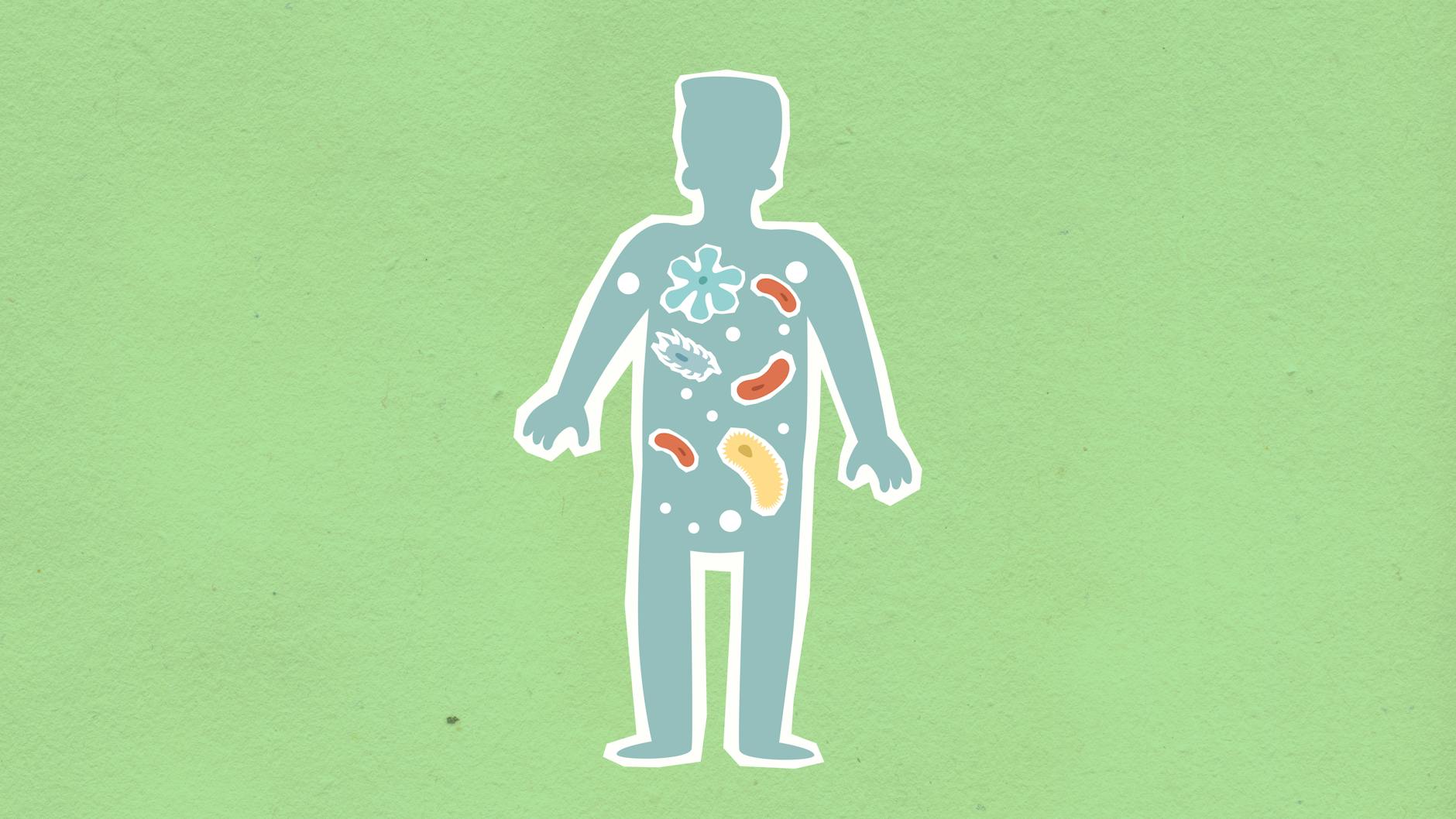
A new study from the University of East Anglia found that birds share more of their gut bacteria with the individuals they spend the most time with. The researchers say the same principle almost certainly applies to humans — meaning your housemates, your colleagues, your closest friends may be reshaping your microbiome in ways you've never considered. It's an intimate, invisible exchange happening every single day.
That finding lands differently when you pair it with research coming out of Brazil. A team led by scientists at the State University of Campinas (UNICAMP) in São Paulo has shown just how much those microbial communities matter. Published in the journal Gut Microbes, their study revealed that when gut microbiota is lost, the cells lining the large intestine change their profile dramatically. Compounds produced by healthy gut bacteria — like butyrate — turn out to be essential for maintaining the intestinal wall's defenses. Lose the bacteria, and that wall starts to fail.
The Code Beneath the Code
Meanwhile, in a university lab in Exeter, England, a team of scientists was finding that some of the genome's most important instructions had been hiding in plain sight — in a region researchers had spent decades ignoring.
Until recently, most genetic research focused on "coding" genes, the ones that produce proteins. But researchers at the University of Exeter and their international collaborators have now found that DNA changes in two non-coding genes — ones that make functional RNA molecules instead of proteins — are a direct cause of neonatal diabetes. Babies are being born with a condition that, until this study, had no identifiable genetic origin. The discovery could reshape how clinicians screen for and treat diabetes in the earliest weeks of life.
The University of Minnesota Medical School is building tools to make this kind of genomic detective work faster and more precise. Their new method, called PARTAGE, published in Genome Research, gives researchers a clearer picture of how the genome is regulated and — critically — how that regulation breaks down in diseases like cancer. It's less like finding a needle in a haystack and more like finally being handed a proper map.
Why Some Bodies Don't Respond
Not every medical mystery lives in the genome's uncharted territory. Some hide in the parts we thought we understood.
Ozempic and Wegovy have become household names — blockbuster drugs that harness the GLP-1 hormone to control blood sugar and drive weight loss. But for roughly 10% of people, they simply don't work. A new study has found out why: a set of specific genetic variants creates what researchers are calling "GLP-1 resistance." Paradoxically, these individuals produce more of the hormone the drugs are designed to mimic — but their bodies fail to respond to it properly. The finding doesn't diminish the drugs' extraordinary success for millions. It does mean that for one in ten people, a different approach is needed — and now scientists know where to look.
Weapons Against Ancient Enemies
Two other breakthroughs are targeting some of humanity's most fearsome viral foes.
At The University of Texas Medical Branch, a team led by Dr. Nikos Vasilakis and Dr. Peter McCaffrey has built a computational pipeline powered by artificial intelligence to accelerate vaccine development against alphaviruses — a family of mosquito-borne viruses that pose serious pandemic risk. By using AI to identify the most vulnerable and conserved targets across dozens of alphavirus strains, the team could dramatically shorten the timeline from emerging outbreak to working vaccine.
Alongside that, a nanodisc-based platform developed by a separate research team is exposing hidden weak spots in viruses like HIV and Ebola that traditional lab methods have consistently missed. By recreating the actual membrane environment of a virus — something previous techniques couldn't do — scientists can now see exactly how antibodies interact with viral proteins in conditions that mimic a real infection. The result: a more honest, more precise map of where a vaccine needs to hit.
Ghosts of the Ice Age
And then there is what Dr. John Moretti of the University of Texas and local caver John Young found deep inside Bender's Cave in the Edwards Plateau of Texas — a find so unexpected it may force scientists to revise existing climate records for the entire region.
Buried in the cave were the remains of Ice Age megafauna that had no business being there: a genus of giant tortoise called Hesperotestudo and a massive armadillo-like creature known as Holmesina septentrionalis. Published in Quaternary Research, the discovery points to an entirely different ecosystem that once thrived on the plateau — one whose climate conditions don't match what researchers previously believed about the region. The past, it turns out, is still full of surprises.
The Bigger Picture
What unites eight studies as varied as cave fossils and gut bacteria, AI vaccines and neonatal genetics? Each one is a reminder that the most important discoveries tend to come from looking where no one thought to look — in the dark corners of caves, in the overlooked stretches of the genome, in the invisible exchange between a bird and its neighbor.
Science doesn't just expand what we know. It quietly expands what we believe is possible. And right now, on that front, it is having a very good week.
Sign in to join the conversation.
Comments (0)
No comments yet. Be the first to share your thoughts.