The tears came after Egypt. Not from defeat, but from something deeper — relief that Lionel Messi hadn't let his teammates down after missing a penalty that threatened to end Argentina's tournament. It was that kind of World Cup for Messi, and that kind of career for a man who, at 39, refuses to write his final chapter.
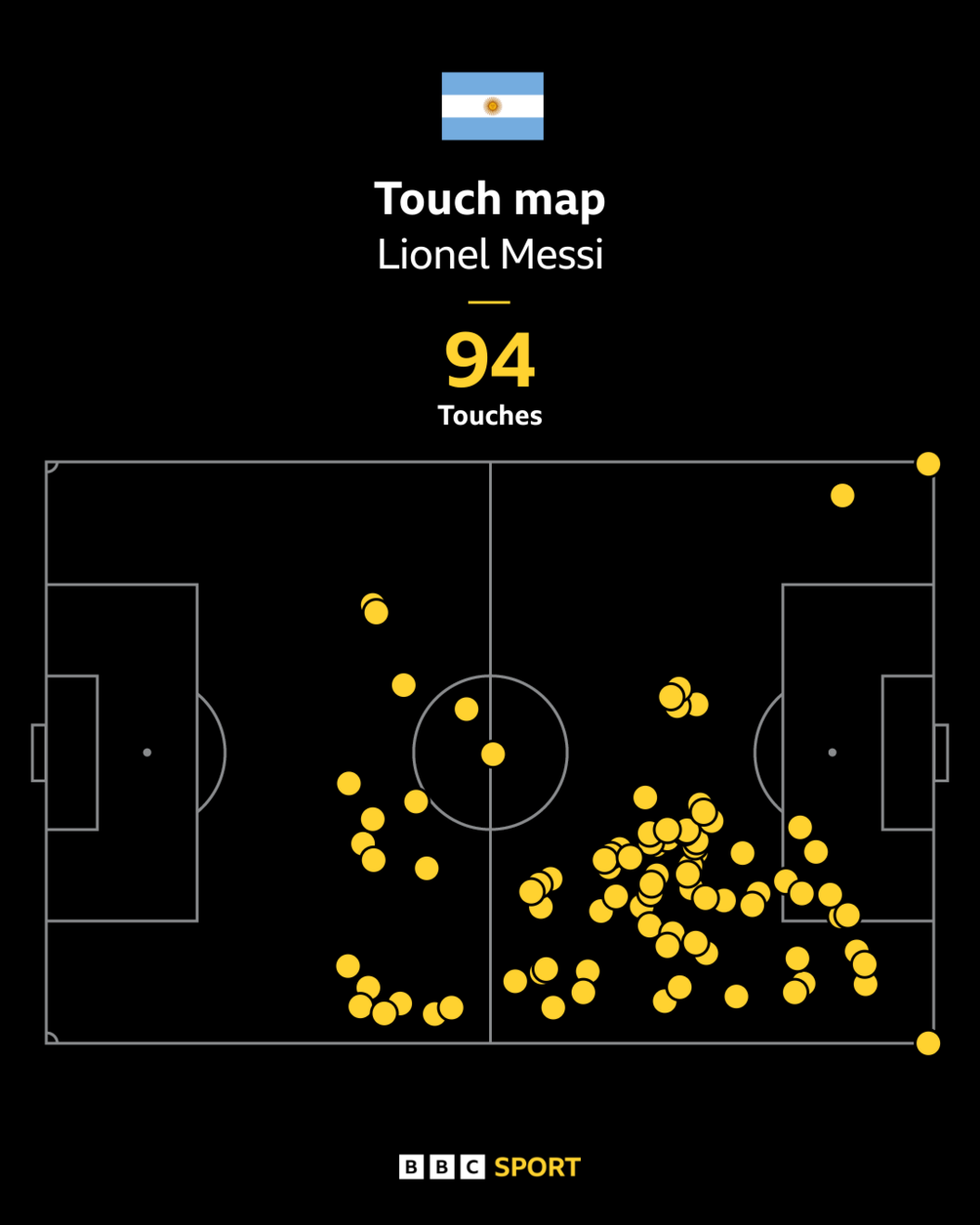
On Wednesday night in Atlanta, Messi turned the England defense into spectators. His two assists helped Argentina come from behind to win 2-1, knocking England out of the World Cup and sending the Albiceleste to their second successive final. Messi finished the tournament with eight goals and four assists — joint top scorer and second-highest assister in the entire competition.
"He's the best player in history. I don't know what else he would have to do to prove that," said Argentina manager Lionel Scaloni. "The majority of Spaniards love him."
Spain awaits in Sunday's final in New Jersey — the country where Messi built his legend at Barcelona. BBC pundit Micah Richards put it simply: "We thought it could have been Jude Bellingham or Harry Kane, but this is why he is the king."
For England, this was supposed to be different. Head coach Thomas Tuchel had transformed a squad that had lost two consecutive European Championship finals. The pre-match media briefing was moved to a larger venue and still had standing room only — such was the global belief that 2026 might finally be England's year.
The Three Lions had reached two World Cup semi-finals in the six decades since 1966 — at Italia '90 and in Russia eight years ago — but this felt like a new chapter, not a repetition. The rivalry with Argentina added layers: history, heartbreak, and memories of David Batty stepping up to take a penalty in Saint-Étienne in 1998.
That night, England faced Argentina in a last-16 shootout. Batty, a Yorkshire midfielder who had never taken a penalty as a professional, was handed the fifth spot-kick. Goalkeeper Carlos Roa saved it. Rather than collapse, Batty held his head high. When a fast-food company later wanted him to appear in an advert making light of the miss, he refused. He wouldn't profit from the disappointment of fans who had traveled to France.
Twenty-eight years later, history repeated itself in Atlanta. Argentina celebrated at full-time, having beaten England 2-1. But this time, there was something almost tender in the victory — Messi embracing opponents, the bench rising as one, the Argentine squad gathered around their 39-year-old captain.
"The best moments of all, by far, are celebrations of the group," Scaloni said before the tournament. "I coach for this — sharing a barbecue, playing truco." It could have been Messi speaking. He is stretching his career out for more of these moments.
Meanwhile, Bellingham's own World Cup journey showed why England fans have reason to look forward rather than backward. During the quarter-final against Norway in Miami, the midfielder scored his second goal of the game to give England a 2-1 lead in extra time — a glimpse of the individual brilliance this squad can produce.
For England, the wait continues. Sixty years since Sir Alf Ramsey's side lifted the Jules Rimet trophy at Wembley, the barrier remains. But the infrastructure is built, the talent is undeniable, and Thomas Tuchel has proven this team can compete with anyone.
Sunday's final isn't just Argentina's story. It's a testament to what happens when genius meets the right context — and a reminder that sometimes, the greatest stories aren't about who wins, but about what it took to get there.
Sign in to join the conversation.
Comments (0)
No comments yet. Be the first to share your thoughts.