The Lap of Honour That Almost Never Was
In the end, it was the small details that said the most.
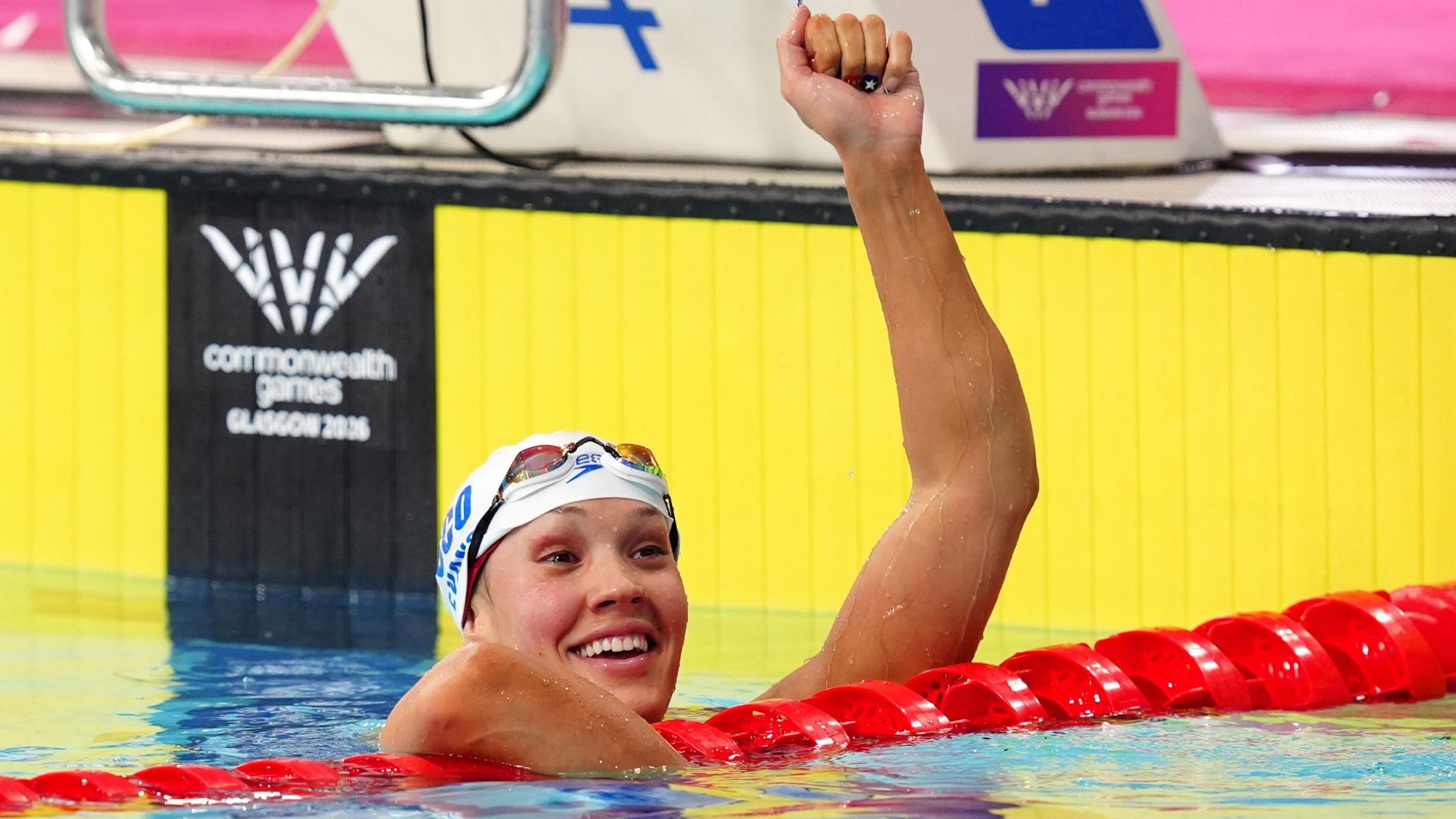
Duncan Scott touched the wall at Tollcross, tapped the touchpad, and began the slow swim toward the rope—the universal signal in elite racing that the race is over, the job done. Except he wasn't in a hurry. Not tonight. Not with his Scotland kit on and 10,000 voices reverberating through a pool that had once held crowds four times this size.
"I don't usually feel the expectation, but that one I probably did," Scott told BBC Sport Scotland afterward. "Simply because it's day one and I love representing Scotland."
It was gold. Scotland's first gold of Glasgow 2026. And for a nation that had spent the better part of three years wondering whether these Games would exist at all, that single medal carried weight far beyond its troy ounces.
The doubt never fully lifted. When the Australian state of Victoria withdrew as hosts in 2023—citing costs that had ballooned beyond their original estimates—the Commonwealth Games found themselves in freefall. Katie Sadleir, chief executive of Commonwealth Sport, admitted the decision "took even the leaders by surprise." For more than a year, the event's future hung in the balance.
Then Glasgow—quietly, determinedly—stepped in.
"I don't think we have ever been stronger," Sadleir told BBC Sport. "We took a hard look at ourselves and realised we needed to reset and reimagine this Games so it is an attractive proposition for our members."
The reimagined Games opened Thursday night with a ceremony stripped of spectacle and stuffed with heart. No 40,000-seat stadium this time; the action moved indoors, to a fraction of the space, in front of a fraction of the crowd. King Charles arrived via Tardis. A Loch Ness Monster lumbered across the stage. Bagpipers and drummers backed a rousing Flower of Scotland that had Scottish athletes dancing in their seats.
The Scotland team entered last, white shirts and kilts, and lifted the capacity crowd from their seats.
But earlier that same day, two athletes had already embodied what this Games would mean.
Alex Marshall is 59 years old. A five-time Commonwealth champion bowler, he's Scotland's most decorated athlete at these Games. When they told him he'd carry the flag alongside judoka Sarah Adlington, he cried.
"It's a bit nerve-wracking really," Marshall told BBC Scotland. "It's not very often I get a bit emotional, but I certainly had a tear in my eye when I came out the lift this morning and all the athletes were there. It's just a huge honour."
Adlington, 39, is chasing an unprecedented third judo gold. She'd known the news for weeks but couldn't tell anyone.
"That was really hard," she said. "I might not even sleep tonight but if it's even half as good as it was in 2014, it will be amazing."
Back at Tollcross, the roar for Scott's gold wasn't just about one swimmer's 14th Commonwealth medal. It was about what comes next.
Olympic champion Rhys McClenaghan, back after missing all of 2025 with shoulder surgery, posted a flawless 14.500 on the pommel horse—a message to the gymnastics world that he's not here to participate. The Northern Irishman is targeting his third Games medal after gold in 2018 and silver in 2022.
In the pool, 23-year-old Angharad Evans scared everyone into their seats when she cantered home with the fastest qualifying time in the women's 100m breaststroke. Katie Shanahan—silver medalist in the 200m backstroke—will seek her second medal Sunday. The 4x100m mixed relay team set a Scottish record, finishing fifth.
Friday night was always going to be a tough act to follow. Saturday night brought no podium places, no rousing Flower of Scotland. But there were finals reached. Records set. Young athletes rising.
The 2026 Games cost £160 million—a fraction of Birmingham 2022's £700-800 million. No new stadiums built. Athletics moved from 46,000-seat Hampden to 10,000-capacity Scotstoun. The sports list shrank from 20 to 10. Athletes numbered roughly 2,000 fewer than the last cycle.
Whether by accident or design, organizers believe they've found a template.
"We needed to reset and reimagine this Games," Sadleir said, "so it is an attractive proposition for our members."
The Commonwealth Games are 96 years old. They've survived wars, withdrawals, and doubt. In Glasgow 2026, they may have found something rarer than gold: a reason to keep going.
And for Scott—old man of the swimming pool at 31, with a home crowd's expectations on his shoulders, a drug test waiting in the wings, and a team looking to him to spark their fortnight—there's one more thing to note.
He's got the weekend off now. But he's more than done his bit to set Glasgow 2026 off on the right note.
Sign in to join the conversation.
Comments (0)
No comments yet. Be the first to share your thoughts.