The Weight of a Medal She Can't Hold
Somewhere in a drawer in Cameroon—5,000 miles away—Madias Ngake suspects there's an Olympic medal that belongs to her. She's never seen it. She's never held it. And she may never will.
That's because the Cameroonian weightlifter hasn't set foot in her home country since 2012, when she stood on the podium at London 2012, waiting for a medal that wouldn't arrive for another seven years—until three competitors were stripped of their results for doping. By then, Ngake had already vanished from the athletes' village, from Cameroon, from a life where loving who she loves could mean imprisonment.
"I'm a lesbian, I love women and it's not allowed in Cameroon," Ngake told BBC Sport. "I had to stay here for me to have a good future, good life and not hurt myself if I decide to have a girlfriend."
She slept rough. She had no friends, no home, no money. But she stayed.
And now, improbably, remarkably, she's preparing to compete again—this time for England at Glasgow 2026.
Earning What's Theirs
Ngake isn't alone in having her medal journey shaped by forces far beyond the pool, track, or court.
At Tollcross Swimming Centre, Northern Ireland's Barry McClements didn't leave anything in the tank. The para-swimmer claimed silver in the men's S9 100m backstroke, finishing in 1:03.68—just 0.68 seconds behind Australia's Timothy Hodge. It's Northern Ireland's second medal of these Games.
"We don't get to represent Northern Ireland unless we're at the Commonwealth Games," McClements said. "So just, again, to put our wee country on the map, it's the biggest privilege there is."
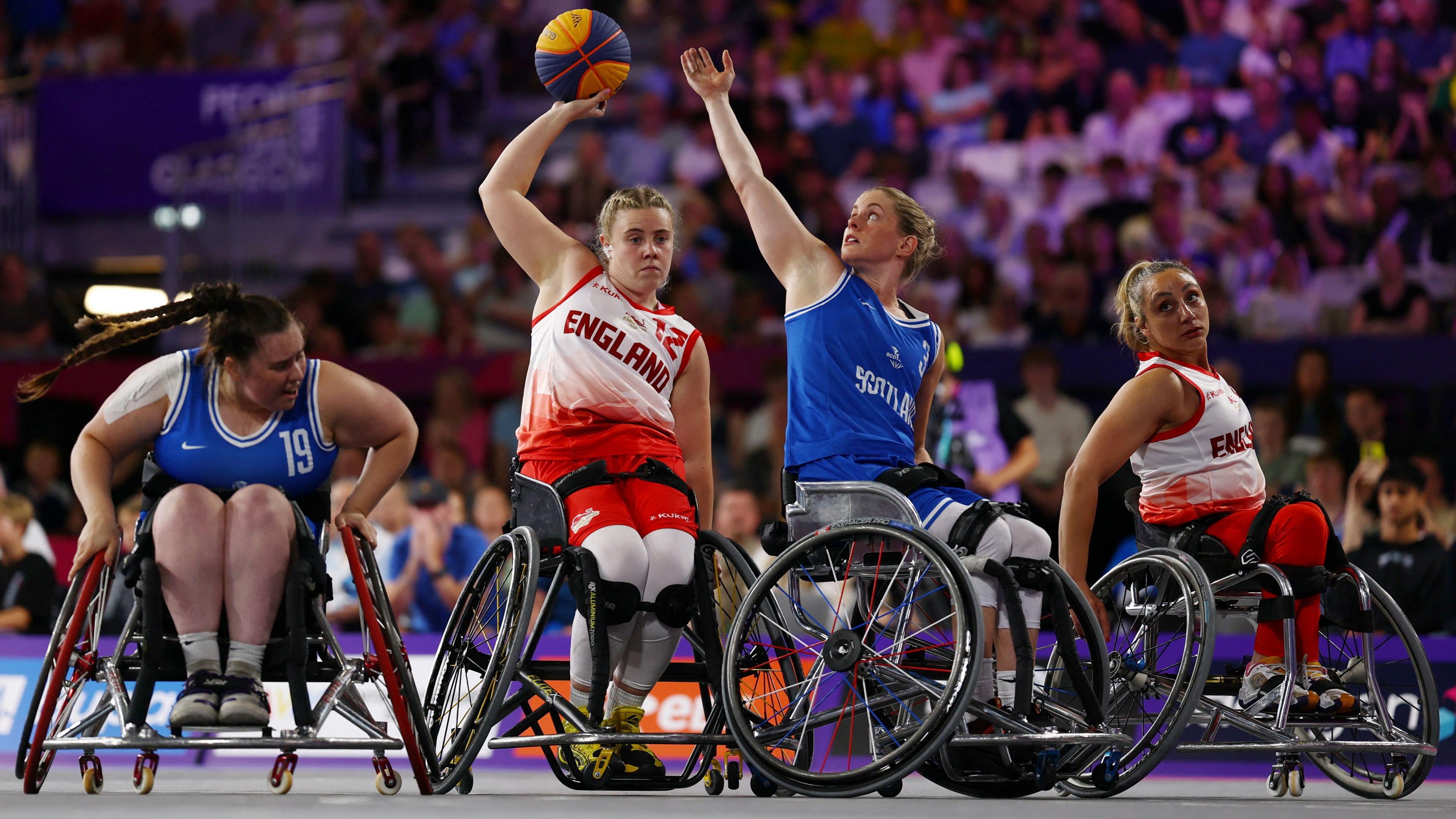
Four years ago, the same pool might have swallowed Scotland's Robyn Love whole. In Birmingham, tears fell in a converted car park after she missed bronze by a whisker. On Wednesday in Glasgow, Love—now 35—stood on the podium anyway: silver, after Scotland's women beat Australia to reach the final, then lost to England.
"I'm not crying now," Love said. "To get a Commonwealth silver with this group, and to get to coach them and see them grow... what a privilege."
Faster Than Before
Sometimes the obstacle isn't a system—it's the body itself.
Five years ago, Faye Rogers had qualified for Team GB Olympic trials. The day she was set to move to Scotland to train, a car accident shattered her right arm, severed her ulnar nerve, and, doctors said, ended her competitive career.
Twelve weeks later, she was back in the pool.
Last Friday at Tollcross, Rogers didn't just win gold in the S10 200m individual medley—she demolished the field by over 2.5 seconds. She was faster than she'd ever been before the accident. She still can't fully straighten her arm.
"I never in a million years thought that I could be faster," Rogers told BBC Sport.
Her teammate Stephen Clegg had his own miracle to chase. After double Paralympic gold in Paris 2024, he needed surgery on his shoulder. "I was prepared to not win gold," he admitted. Then he channeled his inner Messi—or perhaps his inner Mariah Carey, since his teammates call him "Mariah Cleggy"—and rampaged to victory in the 50m freestyle S14. The win lifted Scotland to seven golds.
The Road Back to the Track
In athletics, Wales captain Olivia Breen knows something about longevity. At 30—on the eve of her T38 100m final—she ran a season's best 12.86 seconds to claim silver, her fourth Commonwealth medal.
But this year hasn't been easy. Concussions, injuries, doubt.
"I kept myself together, kept my form and it was a really good start," Breen said. "I left it all on the track."
More Than a Medal
These athletes have learned that the metal around your neck is only part of the story. Madias Ngake left everything behind for the right to exist. Faye Rogers rebuilt herself from broken bones. Robyn Love transformed tears into teaching.
What they're chasing in Glasgow isn't just a medal. It's proof—that they're still here, still fighting, still worthy.
And sometimes, that matters more than any drawer in Cameroon ever could.
Sign in to join the conversation.
Comments (0)
No comments yet. Be the first to share your thoughts.