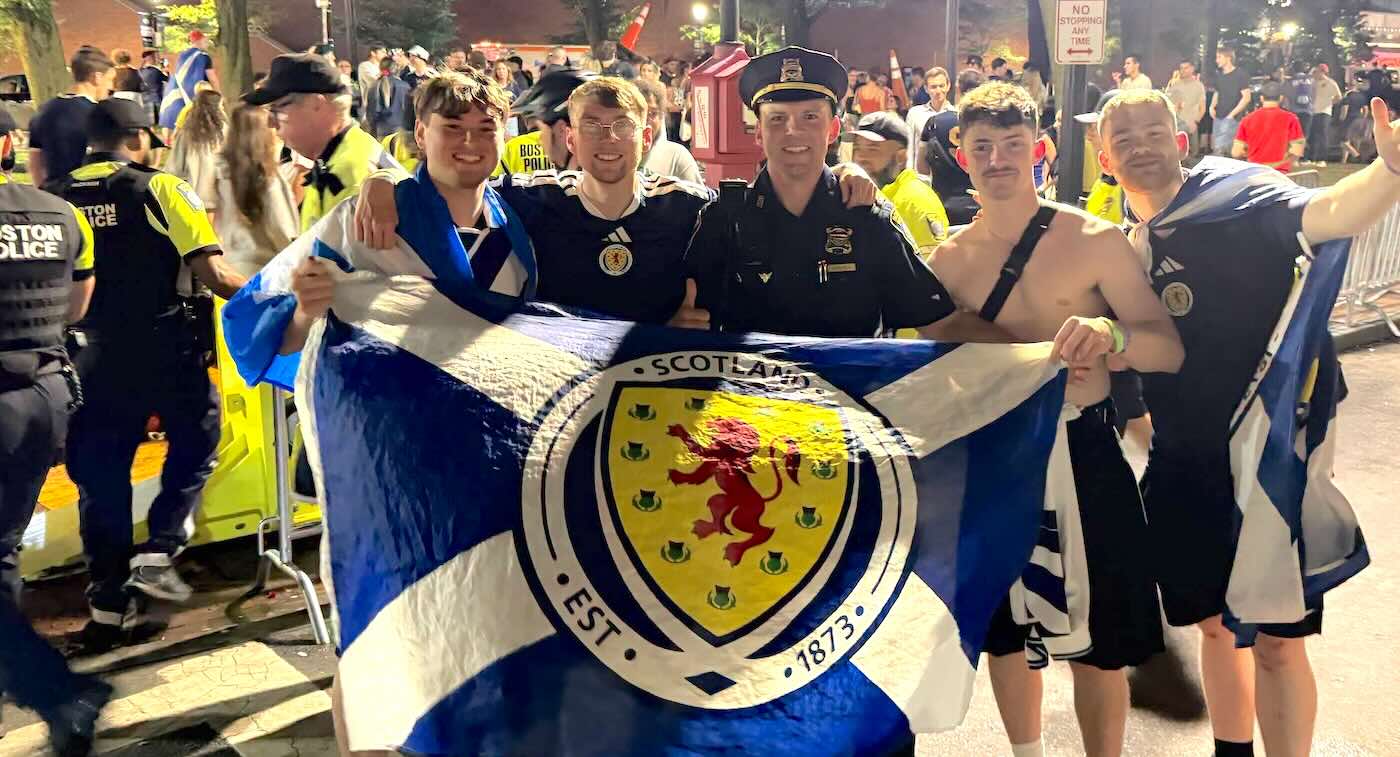
At 6:30 a.m. in a quiet Boston suburb, the first notes of bagpipes sliced through the morning air. Jet-lagged Scottish fans, fresh off an overnight flight, stood in kilts on a suburban lawn, pipes in hand, awakening the neighborhood not with noise complaints, but with joy. Mike Morrison, the man who filmed it, didn’t call the police. He grilled them sausages.
That moment—chaotic, warm, utterly human—captured something bigger than football. It was the start of a week where 30,000 Scots flooded Boston for the 2026 World Cup, turning city streets into impromptu ceilidhs. The Samuel Adams Taproom ran through 90 kegs—4,000 pints in four days—forcing emergency deliveries. But more than the drinking, it was the connections that went viral: friendships forged at dawn, shared songs, and an Airbnb neighbor now invited to Miami as an honorary member of the Tartan Army.
Half a world away, on the cricket pitch at The Oval, another kind of brilliance unfolded. Matt Henry, New Zealand’s left-arm seamer, carved through England’s batting order with 11 wickets for just 109 runs—the best figures by a New Zealander in a Test in England. Each dismissal was a masterclass in precision. Alongside him, Henry Nicholls stood firm, an unbeaten 119 under pressure, his 11th Test century a quiet monument to resilience.
Meanwhile, in Birmingham, two runners rewrote the record books in a single evening. Georgia Hunter Bell surged to victory in the women’s 800m, clocking 1:55.93—a new championship record. Minutes later, Jake Wightman powered to gold in the men’s race with a time of 1:45.40, cementing his status as one of Britain’s brightest track stars.
On the football field, Curacao’s Eloy Room stood like a wall against Ecuador, matching a World Cup record with 10 saves in a 0-0 draw—earning his nation its first-ever point in tournament history. And in England’s opener, Jude Bellingham silenced critics with a goal and a mature reflection: 'I put the noise aside,' he said, helping his team to a 4-2 win over Croatia.
These moments—scattered across sports and continents—were not just victories. They were reminders of what happens when people show up: for their teams, their communities, their neighbors. In Murrieta, California, on June 20, 2026, residents will gather for a community clean-up, adding their own quiet act to this global tapestry of connection.
Because while headlines often spotlight conflict, the real story is written in the margins: in morning bagpipes, in record-breaking runs, in wickets taken and kegs emptied and strangers becoming friends. The world isn’t just moving forward—sometimes, it’s dancing in the streets before breakfast.
Sign in to join the conversation.
Comments (0)
No comments yet. Be the first to share your thoughts.