The Quiet Revolution in Your Back Pocket
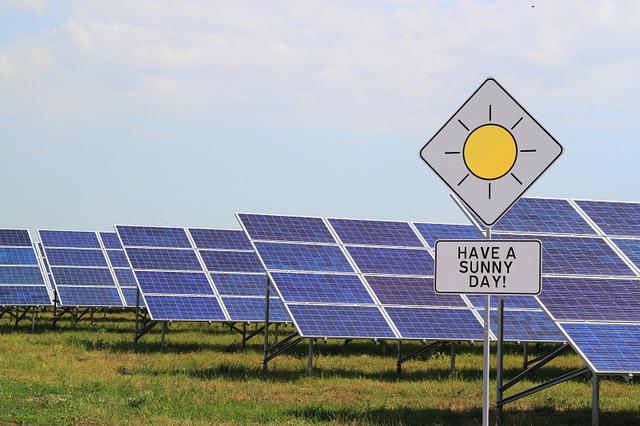
In a village outside Lahore, a family that once relied on flickering diesel generators now watches their neighbors charge phones, run fans, and power small businesses using rooftop solar panels installed just eighteen months ago. No fanfare. No international summit. Just sunlight, panels, and a transformed life.
This is the real energy transition—not the one debated in policy circles, but the one happening in millions of places like this, quietly and irreversibly.
Pakistan's energy economy offers a striking case study. According to a new report from Ember and Renewables First, distributed solar pushed the country's electricity demand up by 21% in just two years—a jump of 33 terawatt-hours led entirely by rooftop and community solar installations. That surge raised Pakistan's electrification rate to 21.7%, pulling it almost exactly to the global average of 22%. While electricity demand soared, non-electricity energy use grew just 2%, meaning solar didn't just meet new demand—it absorbed nearly all of it.
The story echoes across the Atlantic. In the United States, solar and wind each produced more electricity than coal in April 2026, according to SUN DAY Campaign analysis of EIA data. Renewables now account for 30% of US electricity generation, with utility-scale solar growing 21.3% year-over-year. The transition isn't waiting for political consensus.
Power in Your Hands
But the revolution isn't just happening at the grid level—it's moving into backpacks, cars, and homes.
At Shenzhen headquarters, Jackery has been quietly outfitting emergency responders worldwide through its "Power The Rescuers" campaign with the Red Cross. Their portable power stations now keep communication equipment running, medical devices operational, and lights on during disaster response—paired with portable solar panels for truly off-grid resilience.
Meanwhile, BLUETTI's new Apex 300 and B300K system delivers 5 kilowatt-hours of storage capacity with 3,840 watts of continuous output. That's enough to power a home, charge an electric vehicle, or run a welder—all from a box you can wheel to where you need it. The company sells the combo for $2,349, a price point that would have seemed impossible a decade ago.
The Bigger Picture
This proliferation of accessible clean energy didn't happen because of elegant international coordination. As one analysis notes, "The transition is not governed by one country's election cycle or one region's permitting failure." It moves forward because of competition, energy security concerns, falling costs, and the simple math of solar and battery economics.
Volkswagen Group is now taking this logic to the vehicle sector. Through its Elli subsidiary, VW launched integrated vehicle-to-grid charging packages in Germany, turning approximately one million MEB vehicles into mobile storage units that can sell power back to the grid during peak demand. Your car becomes an asset, not just a cost.
A Different Kind of Infrastructure
Not all energy stories are about adding new capacity. Some are about removing harms. Fort Pierce Utilities Authority in Florida relocated its wastewater treatment facility after a 2017 spill of 1.25 million gallons into the Indian River Lagoon. By 2020, harmful algae blooms had killed an estimated 89% of the estuary's seagrass. The utility's $100+ million relocation—guided by community concerns about environmental protection and storm resilience—represents a quieter but equally important energy transition: one toward systems that work with natural systems, not against them.
The Road Ahead
The global energy transition looks less like a smooth upward curve and more like a collective shuffle forward—two steps forward, one sideways, occasionally a stumble. But the direction is clear. From Pakistan's rooftops to Florida's estuaries, from Shenzhen factories to German highways, the infrastructure of energy is being rebuilt from the ground up.
And increasingly, that infrastructure fits in the palm of your hand.
Sign in to join the conversation.
Comments (0)
No comments yet. Be the first to share your thoughts.