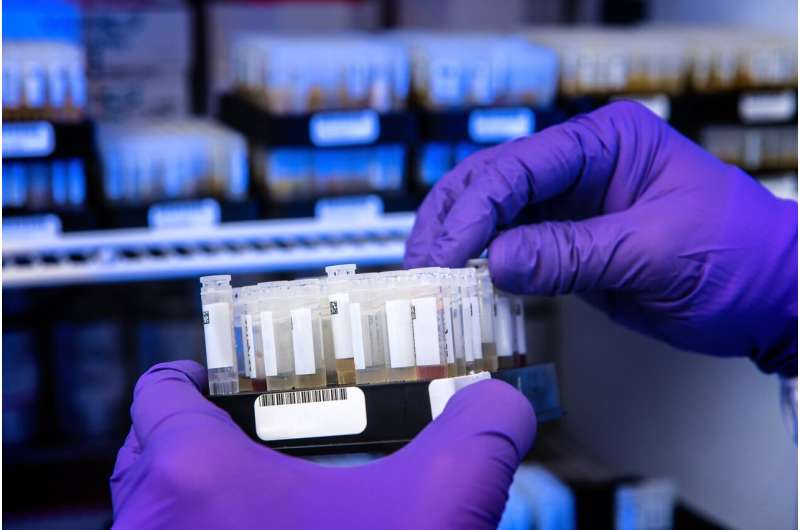
Eight years old, a body that already carries the fingerprints of cardiovascular and kidney disease. That's what researchers from Vanderbilt Health, UTHealth Houston, and UNC Chapel Hill found hiding in the blood of children in Cameron County, Texas—a protein "signature" that normally spells irreversible damage in adults, caught here at an age when it might still be turned around.
This is the story of a single week in cancer and health research, and it reads like the cancer field finally cracking its own code.
A laser, a balloon, and the tumor that couldn't be cut
At UCI Health in Irvine, California, Dr. Nadine Abi-Jaoudeh is doing something no one has done before. Her team injects patients with a light-sensitive drug called padeliporfin, then threads a balloon fitted with a laser into the blood vessel encased by an inoperable pancreatic tumor. When the light switches on, it activates the drug and kills the cancer wrapped around the vessel.
This is vascular targeted photodynamic therapy, a first-in-human Phase I trial developed by Israel's ImPact Biotech. The goal is breathtakingly simple: clear the tumor off the major arteries, and a patient who was inoperable becomes operable. "Once the vessels are clear of tumors, patients can undergo what can be a lifesaving surgery," Abi-Jaoudeh says.
Pancreatic cancer is the stubbornest of them all. But the attacks are now coming from every angle.
The tumor's secret shield
At Mount Sinai's Icahn School of Medicine, researchers published in Nature a discovery about why pancreatic cancer is so good at hiding. A small population of cancer cells hijacks the body's wound-healing machinery—the same fibrin meshwork that forms blood clots—to build localized immune-protective niches. They literally wall off the tumor against the immune system's attack.
Here's the hopeful part: in preclinical models, when researchers disrupted that clotting pathway, tumor growth slowed and immunotherapy suddenly started working. It's a direct answer to a question that has frustrated oncologists for two decades.
Meanwhile, at Tel Aviv University and Cornell, scientists built "masked antibodies" that can finally slip inside cells—crossing the blood-brain barrier that has blocked antibody therapies from reaching Parkinson's and Alzheimer's targets inside neurons. Two barriers, one new technology.
Lung cancer's biggest week in years
At the IASLC 2026 World Conference on Lung Cancer, three separate trials landed like hammer blows against small-cell lung cancer, the most aggressive form of the disease.
In the HARMONi-2 trial, ivonescimab—a first-in-class PD-1/VEGF bispecific antibody—nearly doubled progression-free survival over pembrolizumab, 11.1 months to 5.8, and now shows an overall survival benefit in advanced non-small cell lung cancer.
In ARTEMIS-008, the antibody-drug conjugate risvutatug rezetecan extended median overall survival in relapsed small-cell lung cancer from 10.3 months to 18.5—a 54% reduction in the risk of death.
And in TAISHAN-302, the sister drug tambotatug pelitecan added nearly four months of life in patients who'd been handed a terminal diagnosis.
Against this backdrop, the MAVERICK trial delivered something gentler but no less important: proof that patients with small-cell lung cancer can skip prophylactic brain radiation—with its cognitive toll—and rely on MRI surveillance alone without sacrificing survival. Sometimes the best treatment is knowing when not to treat.
Where this leaves us
Weave these threads together and a profound shift emerges. We're no longer just blasting cancer with poison. We're switching on lasers at the molecular level, dismantling tumors' shields, timing treatments to spare the brain, and catching disease in children before their bodies harden around it.
Each of these advances is early. Each needs more study. But the direction is unmistakable: the war on cancer has become a precision campaign—and in one remarkable week, the field showed it can hold the line on multiple fronts at once.
For the eight-year-old in Texas, for the patient with an inoperable pancreatic tumor, for the family staring down a small-cell diagnosis—the message from this week's research is simple. The tools are getting sharper. And hope, for once, has data behind it.
Sign in to join the conversation.
Comments (0)
No comments yet. Be the first to share your thoughts.