A Crowd Like No Other
Inside the Sir Chris Hoy Velodrome on the final night of competition, the roar was almost physical—a wall of sound pushing Emma Finucane toward the finish line of the keirin final. The Welsh cyclist didn't just win. She made history.
Four gold medals. Four consecutive days. The first sprint cyclist ever to achieve such a haul at a single Commonwealth Games.
"I'm a nervous swimmer," Angharad Evans would say later, describing her own approach to competition. "I don't hide from my nerves."
But Finucane wasn't nervous. She was inevitable.
She'd already claimed golds in the team sprint, individual sprint, and 1,000m time trial. Now, adding the keirin title, she had surpassed legends like Anna Meares and Ellesse Andrews—athletes who had managed three track golds in a single Games. The 23-year-old from Wales had become something new under the velodrome lights.
The Nervous Swimmer Who Defied Herself
Fifty miles away at Tollcross International Swimming Centre, Evans was quietly dismantling her own doubts.
She calls herself a nervous swimmer—someone who "dare not even let myself think of getting a medal." Her strategy has always been keeping expectations devastatingly low.
So when she powered to 200m breaststroke gold, adding to her 100m title from earlier in the week, the raucous Scottish crowd witnessed something unexpected. A nervous swimmer had become Scotland's breakout star of the 2026 Games.
Double breaststroke gold. A relay bronze. A relay silver. Four medals total from a woman even she didn't believe could do it.
"It makes it a lot easier doing in front of a crowd like that and with your teammates you train with every day," Evans told BBC Scotland.
The Captain Who Leapt Into History
Hours earlier, another Welsh athlete had given the crowd at Scotstoun Stadium reason to cheer.
Olivia Breen—Team Wales captain, seasoned campaigner, and veteran of four Commonwealth Games—launched herself into the T38 long jump sand on the first round. A distance of 5.09 meters. A gold medal.
She'd won this title on the Gold Coast in 2018. The event had been absent from Birmingham 2022. Now she was back, defending her crown.
The jump was further than her own Games record from eight years ago. Australia's Layla Sharp took silver—just three centimeters behind. Fifteen-year-old Ayla Kowalczyk, another Aussie, claimed bronze.
Breen collected her second medal of these Games, having won silver in the T38 100m just days before. Five medals across her Commonwealth career now: three gold, one silver, one bronze.
The Judo Fighter Who Refused to Break
In the wrestling hall, England's Acelya Toprak was locked in combat.
The women's -57kg judo final against India's Yamini Mourya had stretched past regulation, into golden score, into nearly seven exhausting minutes. Toprak had lost this same way in Birmingham 2022—two shidos each, a fatal misstep in extra time.
"That hurts," she said. "You're exhausted, someone's trying to throw you on your head for eight minutes and you've just got to get up and go again."
This time, she didn't break. Mourya collected a third shido. Gold went to England.
Building Toward Los Angeles
The Commonwealth Games have always been more than an end point. They're a bridge.
Lady Mary Peters won Commonwealth medals before claiming Olympic pentathlon gold in 1972. Pommel horse champion Rhys McClenaghan's first major title came in 2018 on this very stage. Now, with Los Angeles 2028 qualification approaching, Glasgow served the same purpose it always has—a checkpoint, not a destination.
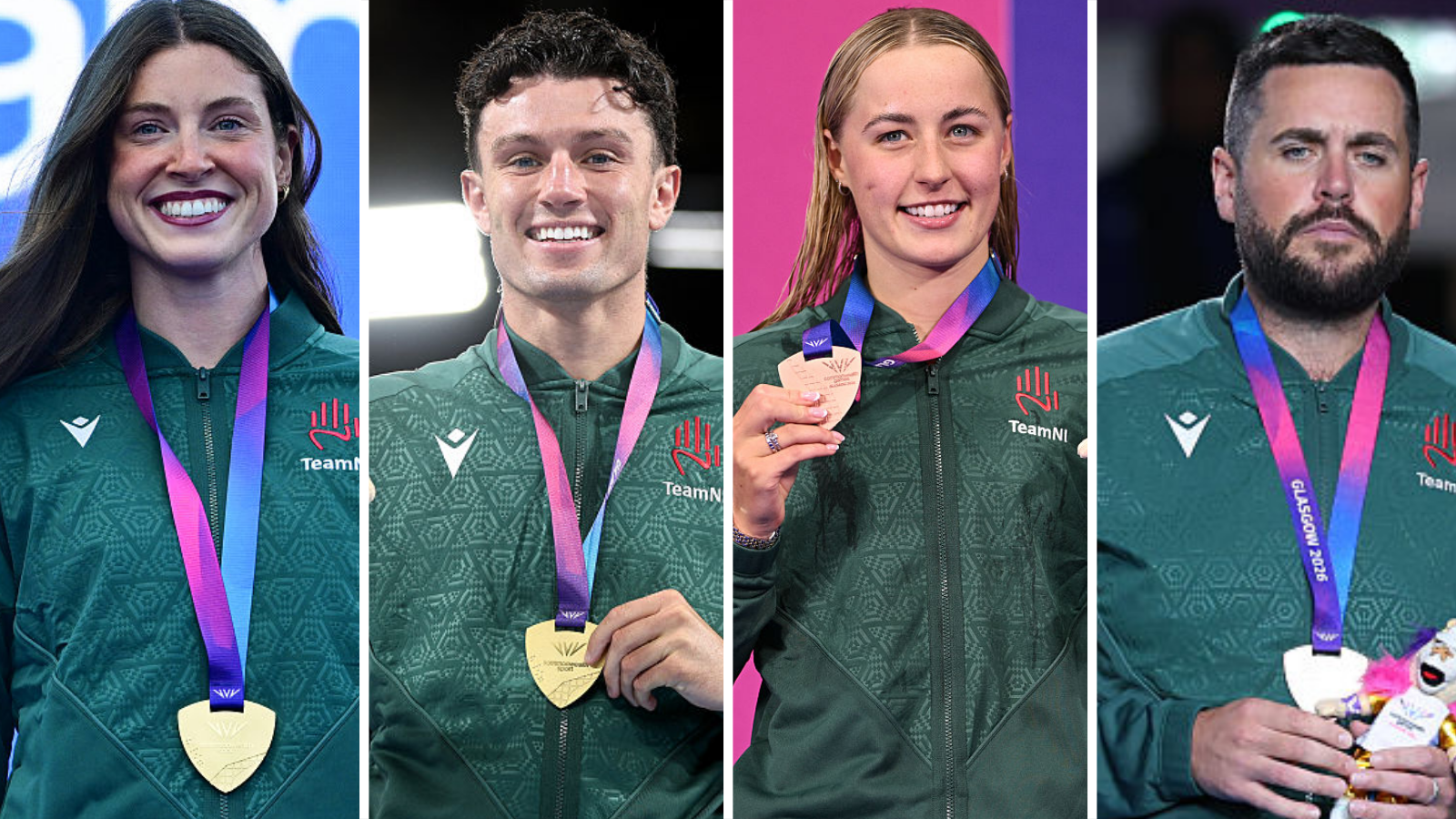
Northern Ireland brought home 16 medals, their second-biggest haul ever. Scotland claimed 23 medals on home soil, with Evans and discus thrower Cameron McQueen emerging as future stars. Wales finished ninth in the medal table with 31 medals—nine gold, ten silver, twelve bronze—despite the streamlined Games format offering fewer events than Birmingham.
Chef de mission Gethin Jones called it "a huge success." More than 100% of their Birmingham tally by percentage, he noted. But beyond the numbers, something else had surfaced.
"The culture and spirit within the team has been incredible," Jones said. "If you get that right, set that platform and environment, you can achieve great things."
Where Futures Begin
Back at the velodrome, Finucane stood on the podium, gold medal around her neck. She had become Wales' most successful female athlete in Games history, overtaking Breen for the record.
But records, like nerves, are just numbers. What matters is what comes next.
Georgia Hunter Bell is already eyeing more gold—she won the 800m in Glasgow, then immediately set her sights on the European Championships and the inaugural Ultimate Championships in September. "There are four opportunities to win gold this year," she said. "I am two golds down and two more to go."
The Commonwealth Games may be over. The real work is just beginning.
Sign in to join the conversation.
Comments (0)
No comments yet. Be the first to share your thoughts.