Insights
AI-synthesized editorial coverage of positive news from around the world

A New Dawn in Health: From AI Gut Sleuths to Ultrasound Brain Repair
Researchers across the globe are delivering real-world health advances: a simple test for uterine cancer, AI that spots disease in gut bacteria, and ultrasound that regenerates brain cells. These innovations promise earlier diagnoses, fewer invasive procedures, and more effective treatments.
A urine test could replace painful biopsies for postmenopausal bleeding.

The Comeback: How Science Is Turning the Tide for Nature
From the rediscovery of the Ghana cuckooshrike to AI-aided bee protection and climate-resilient wetlands, scientists are finding innovative ways to conserve nature. Research shows that when we account for ecosystem benefits, conservation can be economically viable—and culturally transformative.
A bird unseen for 13 years just reappeared in a West African forest.
AI Sees Cancer Sooner, and a Simple Grain Protects Your Heart: The Quiet Wins of 2026
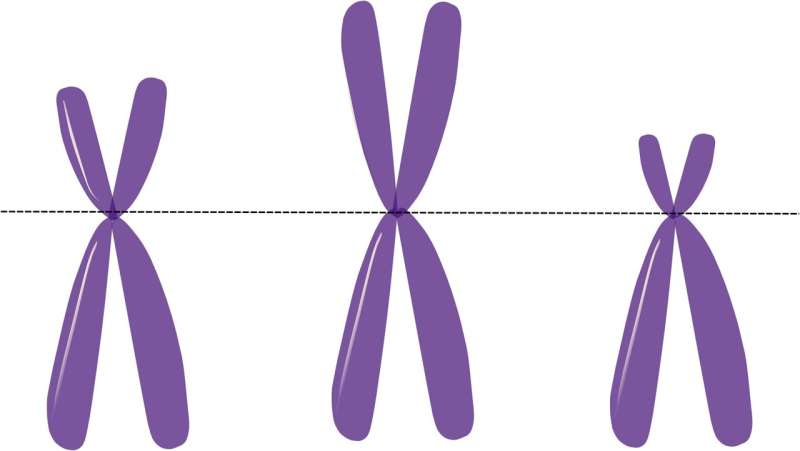
This year's health research is rewriting what's possible. An AI named IICM+ out-predicts the standard test for breast cancer recurrence, scientists found the loss of the Y chromosome is an early cancer signpost, and a review of 87 trials confirms four to six servings of whole grains daily protect your heart. Meanwhile, mindfulness and tai chi eased symptoms in 500+ cancer survivors, and an AI near
A single AI test now out-predicts doctors on breast cancer recurrence — and it's only one of this year's quiet breakthro

The Weekend the Underdogs Roared: Brighton's 125th Birthday Shock
On its 125th birthday, Brighton — the club that nearly died and fought two decades for a stadium — hammered champions Arsenal 3-0 to crown a weekend of British sporting upsets. Manchester City won a 7th straight, Brentford stayed unbeaten, Middlesex's Saskia Horley hit a final-winning century plus 4-36, Ross Smith stunned Gerwyn Price, GB reached the Davis Cup Finals, and England swept Sri Lanka 3
The club that nearly died just beat the Premier League champions on its 125th birthday — and every sport joined in.

The Quiet Rewriting of Our World: 8 Breakthroughs Worth Celebrating
This week's science news is quietly spectacular: a pangenome that could save Europe's ash trees, a pufferfish taste receptor's solved 3D structure, and stellar models brought closer to reality. Plus: AI trained on 20 Questions logic and a quantum computer confirming a 48-year-old math problem. Grounded optimism, in real data.
A 1963 fossil find just rewrote our dinosaur timeline—and that's only one of this week's quiet breakthroughs.

The chalkboard was never the ceiling: the quiet education revolution is measurable
From a Lagos rooftop where 4,703 young teachers graduated an AI-training fellowship, to rural Missouri where every kindergartner showed reading growth, education is quietly transforming. Ohio literacy hit a 5-year high, and 13,895 Bangladeshi women now earn incomes. The chalkboard was never the ceiling—just the start.
A 32-year-old Nigerian math teacher watched her students zone out until a 16-week AI program changed everything.

The Arrow, the Rifle, and the Golden Thread: Champions Who Refused Barriers
It started with Margaret Maughan's arrow in Rome 1960 and continues with Avani Lekhara's rifle in Paris — a 60-year arc of Paralympic champions refusing barriers. From Rick Hansen circling the globe to Elliot Mujaji winning Zimbabwe's first gold alone, to Lauren Steadman adding MasterChef glory, these athletes redefine what's possible.
In 1960, Margaret Maughan's archery shot won the UK's first-ever Paralympic gold — and she had no idea she was making hi

The Trick to Steer a Crowd: Just Sort the Numbers
If you can influence just a few people in a network, and use a single shared message for them, the best choices turn out to be oddly simple: just sort the numbers and pick the highest or lowest ones. A Rio de Janeiro team proved this for two popular opinion models (DeGroot and Friedkin–Johnsen), and they did it in near-linear time.
A budget-limited opinion-control problem turns out to be solved exactly by sorting numbers — nothing more.
The Radio Model That Flips Connected-Vehicle Safety Conclusions
Car safety tests for connected cars use old radio models that miss how cars compete for 5G spectrum. This paper turns a detailed 3GPP reference model into a simple one that fits existing tools, matching delivery decisions within 0.06 error. Changing just the reception model flipped speed trends and doubled hard-braking events. Each step links to a real loss cause—half-duplex, collisions, capture, decoding—so it's clear, reliable, and easy to reuse.
A new radio model more than doubles predicted hard-braking events and reverses traffic speed trends in safety
A swarm of half-blind sensors just learned to see — and to understand its own physics
Swarms of robots, sensors, and drones can't see everything on their own. They only get tiny bits of info and may not know their own physics. But they don't need to if they work together.
A network of partially blind, partially ignorant sensors can now jointly learn hidden states AND unknown physics within

A Chatbot Just Out-Searched the Engineers: LLM-Falsifier Finds Bugs on Its First Try
Same AI that writes emails can find bugs in safety systems — often on the first try. LLM-Falsifier beats old tools on 14 of 21 test cases.
On 6 of 21 safety specs, a chatbot found the bug on the very first simulation — impossible for classic optimizers.

There Is No Single R0: The Five Hidden Shapes of Disease Spread
R0 isn't one single number—it takes five different shapes, each showing how a disease spreads. A weighted sum means uneven infectivity (like HIV). A maximum flags competing strains. A geometric series signals relapse diseases, like TB or malaria. A geometric mean marks mosquito-borne or sexually transmitted infections. A fitness ratio describes gene drives. Qu and Ashwath's work proves the shape matters: it shows which treatments work best, from curing hidden TB to using bed nets.
There is no single R0 — its algebraic shape (sum, max, series, mean, ratio) reveals how each disease transmits.
Three Months of Unbroken Heat: When East Asia's Summers Never Cool Down
New projections from 12 climate model chains show concurrent day-and-night heatwaves — which strip away the body's nightly recovery from heat — could occupy nearly half of East Asia's warm season by 2100 under high emissions. Historically they filled just 0.9% of the season. Under strong mitigation, they stay closer to 3 weeks. The difference is a matter of life and death for two billion people.
By 2100, high-emissions heat could deny East Asia nightly cooling for 3 straight months of every year.
The Quiet Revolution: How Solar, Scallops, and a Silent Motorcycle Are Reshaping the Earth
A silent motorcycle in Kenya's Maasai Mara, a 50-million-home solar milestone in America's heartland, and India's first two-year coal flatline in half a century — the energy transition is winning in places nobody predicted, from savanna patrols to soil-healing farms and carbon-locking tiles in Finland.
71% of new U.S. solar came from red states — and India just flatlined coal for the first time in 50 years.

The 125-year rise: how Brighton — and the underdogs — stopped asking for permission
Brighton are celebrating 125 years by beating Arsenal 3-0 — remarkable for a club that once nearly died. Alongside them: Brentford beating Chelsea, Wakefield's first Super League semi-final, and the BBC's new World Rally Championship deal. This is the season the underdogs stopped asking permission and started winning.
Brighton once needed planning permission for a stadium. Now they're beating Arsenal 3-0. 125 years of belief.
A 60-Year-Old Fossil and a Quantum Proof: Why Science's Big Wins Come From Patience
A 60-year-old fossil, a neutron measurement, and a quantum proof made over a 48-year-old problem. This week, eight research teams showed that discovery rewards patience—from a quantum processor confirming an Olympiad theorem to a pangenome revealing ash trees' hidden resistance genes. Small steps, cosmic and practical, all pointing forward.
A quantum computer just proved a 48-year-old math problem—and it's only one of 8 breakthroughs this week.

The 9,287-Day Win: What Coventry and Missouri's Readers Have in Common
Coventry City waited 9,287 days — since Tony Blair's first term — for a top-flight win. Meanwhile, a rural Missouri school saw 100% of its kindergartners double their reading gains, and Ohio hit a five-year literacy high. The lesson from both: patience and consistent effort deliver breakthroughs.
Coventry waited 9,287 days for a top-flight win — while Missouri's kindergartners doubled their reading gains in one yea

Fifty years apart, two gold medals — and the world they changed
Five decades of Paralympic gold connects a Rome archery range to a MasterChef kitchen. From Margaret Maughan's first-ever UK gold in 1960 to Lauren Steadman's sticky toffee pudding triumph, champions keep redefining what's possible — from Rick Hansen's 40,000km wheelchair tour to Avani Lekhara's history-making rifle shooting.
A British archer won the first-ever Paralympic gold in 1960. Fifty years later, a Paralympian won MasterChef with sticky

The Scientists' Blind Spot: How Evolution's Math Forgets Alleles That Lose
Evolution is full of surprises that look like clean rules until you look closer. Here's one: a beneficial allele — a genetic variant that helps its carriers survive and reproduce — should, by the standard account, march toward fixation, spreading through the population until everyone carries it. The math seems to say so. Yet in reality, a helpful allele frequently vanishes entirely, wiped out by the lottery of genetic drift before it can do its work.
Even beneficial alleles get wiped out — and the standard math quietly deletes those histories, causing large errors.

The Price of Fairness: A Single Formula for How Many Seats Proportional Systems Actually Need
A math expert found one formula that shows how many extra seats a country needs to make elections fair. The formula is simple: take half a seat per voting area, then multiply by a number based on how many parties there are and how big the biggest one is. This gives clear results: Portugal needs 40 extra seats, Poland and Spain need 75, and Turkey needs 120. The math works with real election data from 20 years.
Poland's PiS won 51% of seats with 37.6% of the vote — and the math says it was never a fluke.