Insights
AI-synthesized editorial coverage of positive news from around the world

How Tiny Shifts Are Rewriting Science’s Big Questions
Scientists are decoding everything from 3D genome folds in octopuses to magnetic field sculpting, showing how small changes drive big breakthroughs. These discoveries—from quantum sensors to ancient primate migrations—are reshaping medicine, evolution, and technology.
A baby tooth in Germany reveals macaques lived 300,000 years farther north than we thought.

Sun, Sea, and Second Chances: How the World Is Rewriting Its Climate Story
From record-breaking solar in Australia to geothermal diplomacy between India and Iceland, clean energy momentum is accelerating. Meanwhile, ocean robots are unlocking climate secrets, and Indonesia may spare millions of acres of forest by shifting food production to degraded land.
Australia ran on 80% renewables for half an hour — and it won’t be the last time.

The Privacy-Preserving AI That Accurately Predicts Where Electric Vehicles Will Plug In
SecFD-FL is a new system that helps predict electric vehicle (EV) charging needs while protecting driver privacy. EVs can cause sudden power spikes when many charge at once, making grid management hard. Predicting these patterns is tough because data mixes regular habits with random surges. Sharing raw data to train models risks exposing personal routines.
Electric vehicle charging forecasts get 60% more accurate while keeping driver locations completely private using

Six Sensors, Not Thirty: How AI Is Redefining Grid Monitoring
Scientists found AI can predict power flows across a whole grid using data from just 20% of key locations. In tests, a neural network was 88% accurate with sensors on only 6 of 30 buses—beating setups with more sensors in less important spots. This means utilities don’t need sensors everywhere. Instead of asking how many sensors to use, they should focus on where to place them. Smart placement cuts costs and keeps grids reliable. AI helps find the best spots, which is crucial as solar and wind power make grids harder to manage.
With just 6 of 30 sensors, AI predicts grid flows with 88% accuracy.

A New Math for Complex Strategic Systems: How Game Petri Nets Can Model Everything from Cyberattacks to Maintenance Workflows
A phishing email can lead to a huge data breach. One small decision can change everything. Now, a new tool called **outcome-driven compositional game Petri nets (OCGPNs)** helps model these complex systems. It mixes game theory and Petri nets—systems that track how actions trigger other actions.
A 39-segment cyber network can be analyzed with $10^4$ nodes instead of $10^{25}$ — thanks to a new compositional game

How Data Centers Can Become Virtual Power Lines
Data centers will use almost 1,000 terawatt-hours by 2030—more than Germany uses today. Much of this is due to AI, which needs huge computing power. But power lines can’t keep up with the fast rise in demand, risking blackouts and wasted renewable energy.
Coordinating data-center migration with grid planning cuts costs by 12% and avoids one entire transmission line.

Why the South Has So Few Lyme Cases — It’s Not Just Biodiversity
Despite having the same ticks and hosts, the southeastern U.S. has far fewer Lyme cases than the Northeast. A new study finds this isn’t just due to biodiversity — it’s because southern ticks stay below leaf litter, avoiding competent hosts. But if climate change drives them upward, transmission could ignite. The research shows southern ecosystems aren’t resistant — they’re just currently mismatched.
Southern ticks stay below leaf litter, cutting Lyme risk 100-fold — but that could change.

Hidden Forces: How Unseen Attention Shapes Social Influence
Most social influence models assume people react to every opinion they see. But that’s not true. A new study shows two hidden mental steps—*who* we pay attention to (selection) and *whether* we change our mind (retention)—are key. Ignoring them makes influence seem weaker and simpler than it is. In 14 of 15 real datasets, models with these steps predicted opinions better. In over half the cases, what looked like steady, linear change was actually complex and nonlinear. The reason?
Modeling unobserved attention improves prediction on 14 of 15 real datasets—more than switching to a nonlinear kernel.
How Patience, Plasma, and Grass Are Rewiring the Future
New research reveals how patience fuels entrepreneurial success, plasma-engineered materials enable high-frequency electronics, and grass could replace wood in sustainable textiles. Meanwhile, AI control systems are becoming more stable and efficient by integrating century-old math with modern learning.
A 19th-century math idea is now stabilizing AI systems — and cutting energy use by 42%.
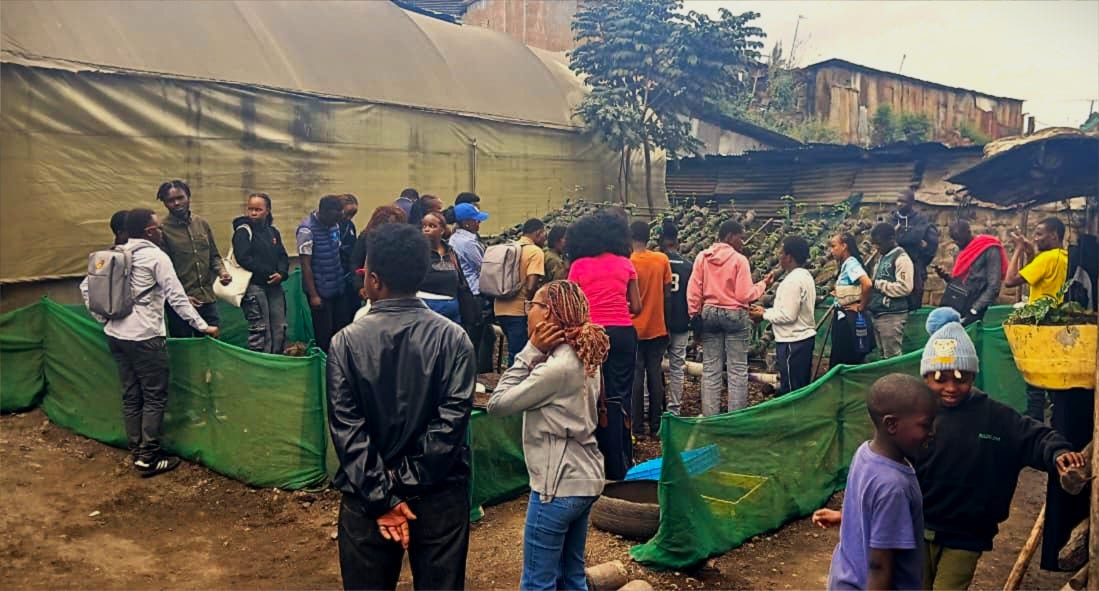
How Research Is Quietly Feeding Cities, Fighting Crime, and Empowering Teens
From Alberta to Nairobi to Newark, communities are turning research into real-world solutions: farming trials feed the hungry, data-driven lighting reduces crime, and students are reshaping school food systems. Science, it turns out, works best when it serves people.
Nearly 50,000 pounds of research potatoes are feeding families instead of going to waste.

How Ancient Bats, Icelandic Geysers, and African Sun Are Lighting a New Climate Path
India and Iceland are partnering on geothermal energy, while Nigeria’s solar mini-grids offer a model for Africa. Meanwhile, a University of Sydney study finds that ecosystems thrive when communities lead conservation—and ancient bat DNA is revealing how species survive climate shifts.
A 2,100-year-old bat bone and a geothermal plant in Iceland are reshaping how we fight climate change.

How Scientists Are Rewiring the Future of Medicine—One Cell at a Time
Researchers worldwide are unlocking new ways to fight cancer, blindness, and neurodegenerative disease using AI, organoids, and gene therapy. Simple interventions—like a one-sentence safety prompt for AI—are proving surprisingly powerful. These advances signal a shift from treating illness to preventing it.
A safety prompt cut AI's harmful medical choices by over 90%—and it took just one sentence.

How Light, Lithium, and 165-Million-Year-Old Fossils Are Rewriting Science
Researchers are using light to read quantum spins in crystals, simulating lithium’s brain effects, and decoding elephant gestures. Meanwhile, a 165-million-year-old fossil pushes back the origin of breastfeeding. These breakthroughs show how collaboration across fields is unlocking nature’s deepest secrets.
Scientists just read electron spins in crystals using light—opening a path to quantum sensors.

A Single Formula to Measure the Genetic Complexity of Any Trait
Genes can affect traits in small or big ways. Some traits, like height, involve thousands of genes. Scientists call this "polygenic." But how polygenic? A new study finds that four common measures of this are actually part of one idea: the Hill numbers. These numbers come from ecology, where they measure species diversity. Now, they help measure genetic complexity. By changing one number in the math (called *a*), scientists can focus on either many tiny gene effects or a few strong ones. At *a* = 0, it counts all genes with any effect.
10,000 variants contribute to a trait. But its true genetic complexity? As low as 1.01—depending on how you measure it.

How Ocean Robots Are Rewriting Climate Science — One Dive at a Time
About 4,000 robot floats dive 2,000 meters deep every 10 days, measuring ocean temperature and salt levels. They’re part of a global system tracking how the ocean absorbs heat — 93% of extra heat from climate change since 1970. Surface drifters track currents too. Together, they collect millions of data points. But the ocean is huge, so coverage is spotty. Scientists use smart math, like non-stationary Gaussian processes, to fill gaps and create detailed maps of ocean heat.
93% of excess heat since 1970 has been absorbed by the ocean — and we’re finally mapping where it goes.
Satellites See Clouds. This AI Sees Rain — Even the Extreme Kind
Scientists tested AI models to predict rain from satellite cloud images. Models that give exact rain amounts were usually more accurate, but missed heavy storms. Newer "generative" models, like diffusion networks, were less precise but caught 93% of heavy rain — key for flood warnings. They work by imagining many possible outcomes instead of one answer. This shift — valuing realism over perfect pixel matches — could improve weather forecasts.
Generative AI models capture 93% of extreme rainfall vs 67% for deterministic ones.
A Tiny Weather Model That Learns Storms from Just 96 Stations
A small AI model called CLARA can predict weather accurately using data from just 96 ground stations—no satellites or big physics models. With only 28,000 parameters, it learns how temperature, pressure, wind, and humidity change together, especially during storms or extreme weather. It beat older methods and even a similar AI in tests. When tested worldwide—from the Andes to Southeast Asia—it worked better than guessing tomorrow’s weather will be like today’s.
28,000 parameters forecast weather from 96 stations—no satellites, no physics models.

Ocean Fertilization Just Got a Reality Check: Why Patch Size and Physics Matter for Carbon Capture
Ocean iron fertilization pulls down far more carbon than we thought — but slowly. A new study shows only 5% of carbon is absorbed in the first two weeks. Most is soaked up over months, long after past experiments stopped watching. This means earlier tests missed most of the effect. Using a 3D model that tracks how water patches move, mix, and change shape, scientists found that size, spreading, and mixing boost carbon capture. The key surprise: the ocean keeps pulling in CO₂ long after the algae bloom fades.
Only 5% of carbon uptake happens in the first two weeks of an ocean fertilization event.
How to Learn a System When Most of the Data Is Missing
Scientists made a new method to understand changing systems—like brain activity or climate—even when most data is missing. Normally, gaps in data (from broken sensors, missed check-ups, etc.) mess up models. But this tool works even if only 10% of the data is available. It uses math tricks to fix errors caused by missing info. The key idea: if the system’s rules (called a transition matrix) have patterns—like being simple or smooth—it can be learned from short, patchy data. The method corrects bias and learns quickly.
10% of data visible, yet the system can still be learned.
This AI Generates Realistic Urban Wind and Heat in Seconds — Not Days
Scientists made a new AI that creates detailed 3D maps of wind and temperature in cities—including turbulence—in under 10 seconds. It’s 10,000 times faster than current methods, which take a day. The AI, called a Conditional Flow Matching (CFM) model, is 97% accurate compared to slow, high-quality simulations. It helps design cities that handle heat and wind better. Using building shapes and weather data, it makes realistic snapshots of how air moves around streets and buildings. This helps planners improve comfort, safety, and air quality.
This AI generates 3D urban wind and heat fields in 10 seconds — not 24 hours.