Insights
AI-synthesized editorial coverage of positive news from around the world

Power Grids Have a Hidden Stability Problem — This New Framework Reveals It
A new study shows that power grids can seem stable but still fail in real life. The problem? Old tests only check if grids get back in sync after a disturbance — not whether they break safety rules *on the way*. In one case, a node looked 100% stable, but 70% of the time its voltage swing went too far, tripping breakers. This hidden risk happens because real grids have limits — like a max 180-degree rotor angle — that old models ignore.
One node in a British power grid appears 100% stable — but breaches safety limits in 70% of large disturbances.

How Far Should Control Signals Travel in a Power Grid? A New Law for Distributed Systems
A power grid glitch in Texas can affect cities far away, but new research shows we don’t need to track every ripple. Scientists Chenchen Zhou and José Matias from KU Leuven found that optimal control responses in networks like power grids or traffic systems fade quickly over space and time—exponentially fast. This means local controllers only need limited communication and memory to work almost as well as perfect, centralized ones.
To halve control error, add just 1.4 extra hops—regardless of network size.

How a Robot Learned to Adapt in Real Time—With Help from Human VR Demonstrations
When a robot’s environment changes, most fail unless reprogrammed. This new system lets robots keep learning in real time using human VR demos—even when the human fails. A digital twin (a live virtual copy) runs ahead, testing actions. If it fails, learning continues instantly. Humans guide the robot not by forcing exact moves, but by showing intent. The robot uses a "dual actor" design: one part learns from trying things (reinforcement learning), the other from human demos. Only the better action is used. This avoids copying bad moves.
83–100% success with human demos that never reached the goal

A Hidden Pattern in Rain: How a New AI Framework Cut Satellite Error by Nearly Half
Rain seems random, but U.S. rainfall data from 2018–2022 revealed a hidden pattern. Researchers at UC Santa Barbara found it follows a simple mathematical structure called a low-rank tensor. Using this, they rebuilt daily rain maps across the U.S. with 76% better accuracy than old methods. They created TMerge, a tool that combines satellite data with sparse ground measurements by sharing this hidden structure.
48.2% — the reduction in satellite rainfall error using a new tensor-based method.

How Kids, Teachers, and Light Are Quietly Changing the World
New studies show teacher well-being boosts student learning, strong reading skills help teens resist misinformation, and even young children grasp complex rights. Meanwhile, students in NYC and London are reshaping city spaces through advocacy and design. These shifts reveal a global pattern: when we invest in education and listen to youth, society transforms.
Five-year-olds are redefining human rights—and cities are listening.
The Quiet Revolution: How Patience, Grass, and 19th-Century Math Are Reshaping Tomorrow
Innovations in materials, AI, and inclusive ecosystems—from clover-based fabrics to privacy-preserving elder care—are proving that slow, thoughtful progress often outlasts the hype. The future is being built on integration, not isolation.
Researchers just made fabric from grass—and it could replace cotton.

How Local Wisdom and Global Partnerships Are Rewriting the Climate Story
New research reveals that resilient ecosystems—from coral reefs to bat populations—share common traits: community-led stewardship, integration of traditional knowledge, and adaptive management. Meanwhile, India and Iceland are forging clean energy partnerships that could power a global transition.
Some ecosystems are thriving despite climate change—here’s what they all have in common.
How Ancient Bones, Quantum Clues, and Bird Wings Are Rewriting Science
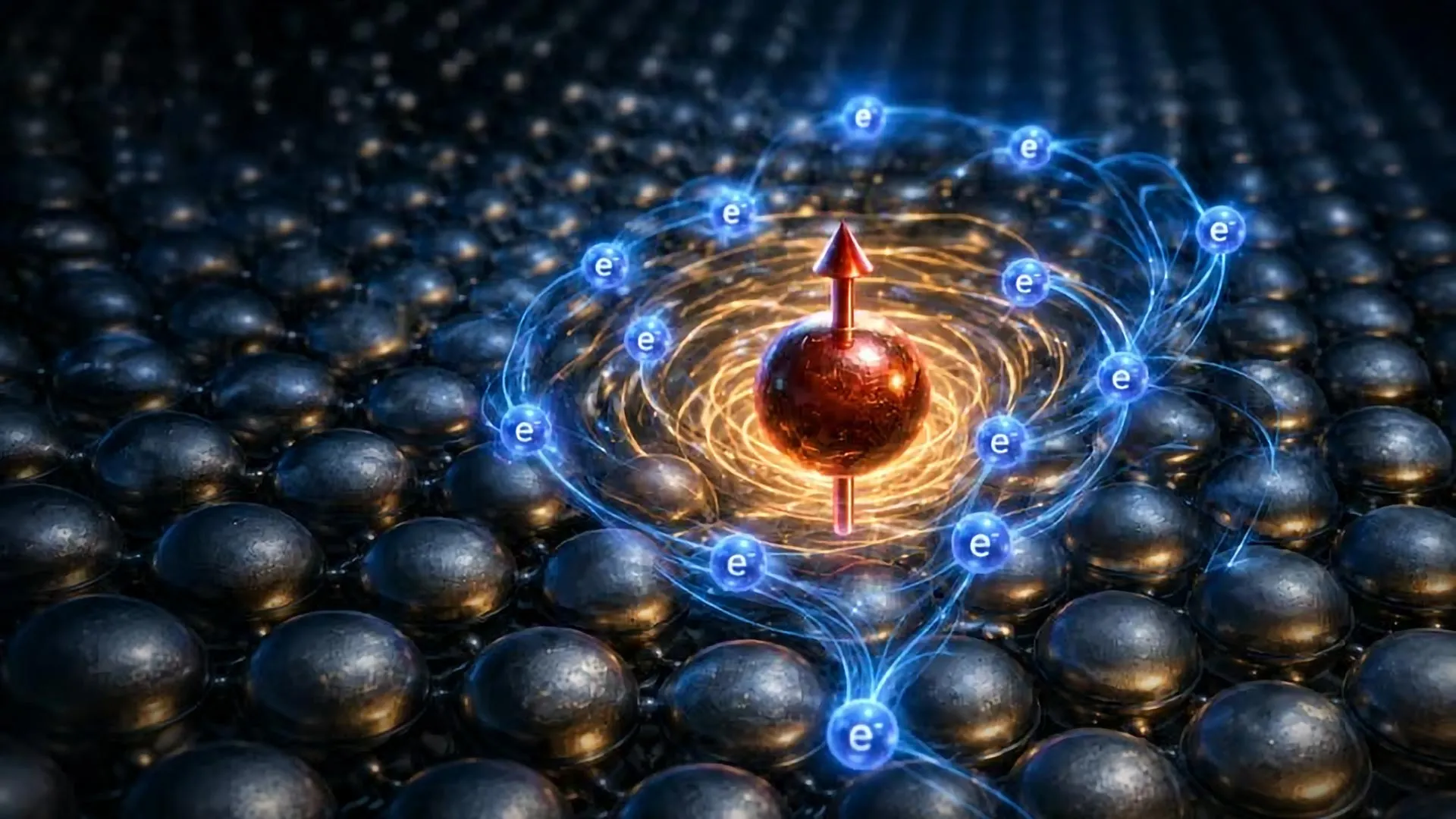
Researchers have discovered a new crocodile species in Egyptian limestone, pushed back the arrival of Homo erectus by 200,000 years, and used quantum simulations to explore lithium’s effects on the brain. Meanwhile, elephants’ intentional gestures and nightjars’ flight trade-offs reveal nature’s nuanced designs.
A fossilized crocodile found in the same stone as the Great Sphinx was just identified as a new species—100 years after

The Quiet Revolution in Medicine: How 8 Breakthroughs Are Rewriting Health's Future
Researchers worldwide are making strides in vision restoration, cancer treatment, and neurodegenerative disease by rethinking old models and leveraging AI and genetics. These advances, from optogenetics to organoids, are paving the way for earlier diagnoses and more precise therapies. The future of health is unfolding—quietly, but powerfully.
A woman once blind to all but shadows now tracks light with her eyes—thanks to a breakthrough therapy.
How AI and Physics Are Teaming Up to Map Hurricane Winds in 3D
Scientists made a new AI model that predicts hurricane winds in 3D much better than before—40% more accurate. It combines AI with real physics, so it understands how air actually moves in storms. Unlike old models that guess wind changes with height, this one uses laws of science to create realistic wind profiles. It can turn satellite surface wind data into full vertical wind views, even without nearby aircraft. This helps forecasters, engineers, and emergency planners.
40% lower wind speed errors in hurricanes using AI that obeys physics

21.4 mag/arcsec²: How Portugal’s Dark Sky Villages Are Fighting Light Pollution from Space
Scientists used satellite data to study the night sky in Portugal’s Schist Villages. They measured darkness, clouds, and air clarity. The darkest spot was 21.4 mag/arcsec² — darker than needed for certification. Ground checks with handheld meters confirmed the results. This helped the area become a Dark Sky Starlight Tourist Destination in 2018. The method was low-cost and accurate, using free satellite data from VIIRS and MODIS. It shows how communities worldwide, even with small budgets, can find and protect dark skies.
21.4 mag/arcsec² — the brightness of the darkest sky in central Portugal, visible to the naked eye.

We vs. Them: How AI Favors 'Us' Over 'They' — And Why It’s Woven Into Its Wiring
When AI sees "we," it’s more positive; when it sees "they," it’s more negative. A 2026 study found this "us-vs-them" bias in models like GPT-2 and Llama. It’s not just in outputs—it’s built into the model’s inner workings, especially in middle-to-late layers. Using a method called Edge Attribution Patching, researchers mapped the bias to specific neural pathways. These pathways are sparse but deeply tied to language skills. Fixing the bias harms the model’s ability to speak well. The circuits change after fine-tuning, meaning they’re unstable.
LLMs assign 90% more positive sentiment to 'we' than 'they'—and the bias is wired into their core circuits.

One Car to Rule Them All: How a Single Buffer Vehicle Can End Stop-and-Go Traffic
Traffic jams often start from tiny brakes that grow into waves. A new study shows fixing this isn’t about all cars driving the same. Instead, one "buffer" car with a bigger gap ahead can stop waves. The other 19 cars stay close together. This setup boosts highway capacity by up to 40%. The idea was tested in math and simulations using real traffic models (IDM and FVDM). It proves that giving cars different roles — not all acting the same — makes traffic smoother and safer. This could change how self-driving cars are designed.
One car with a 3-second gap can eliminate traffic waves and boost highway capacity by 40%.

A Negative Clustering Coefficient? How Quantum Networks Rewrite Network Science
In quantum networks, signals are waves that can cancel each other. A new study by Anjali Waghmare, Yu Tian, and Renaud Lambiotte (2026) introduces a clustering coefficient that can be negative, unlike classical ones. It measures how network structure and wave phases affect connections. The coefficient splits into two parts: one for structure, one for phase. In photonic meshes, phase differences alone can reduce clustering by 87%, even if wiring stays the same.
0.87 — the fraction by which quantum interference can suppress connectivity, even with identical wiring.
The Hidden Time Trap in Modular Networks: Why Small-World Cores Always Win
Even huge modules don’t slow down a network as much as we thought. A new study shows that in modular networks—like brains or social systems—the core structure controls how fast information spreads, not the size of the modules. The key is the "Fiedler eigenvalue," which sets the speed of processes like spreading rumors or syncing neurons. In bundled networks (where modules connect to a central core), equilibration time follows a "series law": first escape the module, then cross the core.
Even at 10^30 nodes, modules slow equilibration by just a logarithmic factor—core architecture dominates.
The Hidden Crisis: How We’re Miscounting Energy Poverty — and What to Do About It
In Nottingham, 38% of homes spend over 10% of income on energy, but only 12% are called "fuel poor" under current rules. That’s because the official measure is outdated and misses many struggling families. A new study from the University of Nottingham introduces the Temporal Equity Framework (TEF), which sees energy poverty as a scale, not a yes/no label. TEF looks at real needs, income, and how close households are to crisis — even if they’re not officially "poor."
38% of households in Nottingham spend >10% of income on energy — but only 12% are counted as fuel poor.

This AI Learns to Control Unknown Systems in a Set Time — No Trial and Error Needed
Most AI controllers learn slowly and unpredictably. A new method fixes this by guaranteeing control within a set time — even if the system’s physics are unknown. It combines neural networks, replay buffers, and smart design to learn fast and stabilize quickly. The system learns dynamics on the fly and hits a preset deadline for control. Tests show it works accurately and on time. This is big for drones, robots, and power grids where timing is critical. No more waiting — it learns exactly when needed.
The system stabilizes in exactly 100 seconds — no matter where it starts.
A Neural Network That Predicts Global Wildfires 7 Days in Advance
A new AI model can predict wildfires up to a week ahead by using weather, land data, and past fires. Unlike current systems that rely on delayed satellite images, this model learns how fires behave based on conditions like drought, wind, and vegetation. It cuts forecast errors by up to 43% and gets better than older methods over time. Tested in 2023–2024, it accurately tracked fire seasons in Australia, the Amazon, and Siberia. The system, called ST-FRPGNN, uses a grid of 11 km cells and connects them like a network to show how fires spread.
43% reduction in fire forecast errors at 7-day lead time
What If We Actually Heard Something? A Global Test for First Contact
In October 2026, scientists ran a fake alien signal drill called *A Sign in Space Part 2*. A pretend signal was sent from ESA’s Mars Express spacecraft. Real radio telescopes in Italy, the U.S., the Netherlands, and Australia joined the test. They found and confirmed the signal in under 12 hours. The goal wasn’t to find aliens — it was to test how well scientists worldwide can work together if we ever detect real alien life. The test followed the IAA’s Post-Detection Protocol, which guides what to do after finding a possible alien signal.
0.0000000001 — the odds of detecting aliens this year. Yet we just rehearsed it like a fire drill.
How Kids, Light, and Forests Are Quietly Changing the World
From student-led food reform to lighting that reduces crime and children understanding human rights, communities are solving problems through empathy, data, and long-term thinking. These quiet revolutions show that change doesn’t need to be loud to be powerful.
A 16-year-old in Brooklyn redesigned her school’s lunch program—just by asking her peers what they wanted.