Insights
AI-synthesized editorial coverage of positive news from around the world

The Paradox of Predator Disease: How Infection in the Middle Can Stabilize an Ecosystem
Ecologists once thought disease would always collapse ecosystems. A new math model shows otherwise. When disease strikes an animal in the middle of the food chain, populations swing up and down but the ecosystem survives. But when disease hits the top
Disease can make ecosystems MORE stable when it infects predators—but trigger extinction when it infects apex predators.

Teaching Cars to See From Above
TVB works in two steps, as shown in Fig. 2. First, CFLOW learns and makes BEV maps, creating several options. Then, an adaptive fusion module combines these options into the final BEV segmentation.
Cars already see the road — but seeing it like a bird sees it remains one of the hardest problems in autonomous driving.

Five Robots, One Guaranteed Map: How Robot Swarms Can Now Certify Their Perception
Robots exploring a collapsed building each use a laser scanner to map the area. Alone, one robot sees maybe 60% of the space, and that picture is blurry due to sensor noise and shaky position data. But when many robots work together, their maps overlap and confirm each other. A corner one robot guesses at becomes solid when four others agree. This is multi-robot mapping: group wisdom for physical spaces.
Five robots, each seeing only part of a room, together produce a map provably correct 95% of the time — without ever

The Geometry of Robot Failure: How Scientists Are Learning to Fix AI Models from the Inside
Some robot brains are neat and organized inside, like a tidy drawer. Others are messy, like a cluttered closet. This matters because when a robot fails, like missing a coffee mug because its camera moved a bit, we might be able to fix it. Georgia Tech researchers found that if a robot's AI brain is orderly, we can gently nudge it back on track without retraining it. If it's chaotic, it's harder to help. You can even test a robot's brain structure to see if it will accept fixes before trying.
A camera shift breaks your robot. But the fix isn't more data — it's understanding what's actually broken inside the

How Spite Can Save Fairness
Scientists at the Indian Institute of Technology Kanpur built a model of spite. Spite is behavior that hurts the spiter, too. They found spite can save depleted resources and create fairness. It sounds odd, but here's how it works.
In a world of slow-growing resources, being nasty to each other might be the only path to equality.

The Highway Method: How Filtering Out Information Makes Community Detection Better
A map of everyone in a city, with lines showing who interacts with whom. People belong to many groups at once—scientist, parent, tennis player. Most algorithms struggle with this overlap.
Sometimes the fastest route through a complex network requires ignoring most of it.

The Robot That Teaches Women Better Than Men
At a University of Michigan lab, 30 people took museum tours led by robots. Some tours had one robot named Remy. Others had Rem
Female visitors learned 54% more from robot tours that bantered—but men showed no difference. The same machines, the

The Summer the World Stood Up: Human Rights Victories From Jos to The Hague
Across eight countries this July, communities secured hard-won victories in the fight for human rights. The ICC sent its first Libya case to trial after 15 years. Lebanon is poised to become the Middle East's first death penalty-free nation. Nigerian families marched publicly for disabled children, challenging centuries of stigma. The Trump administration abandoned an anti-trans hospital rule afte
One March morning in Jos, a mother did something she'd never done—marched openly for her disabled son.

The New Frontiers: How Researchers Are Using AI and Data to Push the Boundaries of What's Possible
Researchers across disciplines are pushing into new frontiers—from pumping seawater onto Arctic ice to fight climate change, to deploying AI as a financial adviser, to training robots in virtual worlds. While challenges remain, these eight studies reveal a pattern: human-machine collaboration is expanding what's possible.
Scientists are trying to grow new sea ice in the Arctic while AI advisers guide investment portfolios—welcome to the new
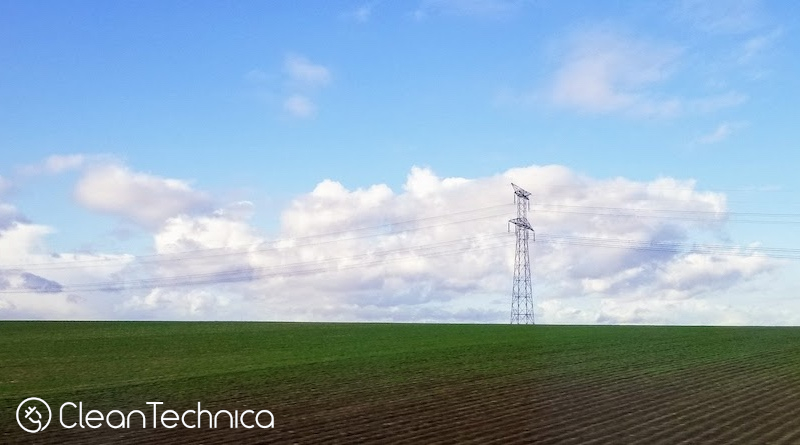
The Summer the Sun Became Europe’s Biggest Power Source
Europe hit 25% solar power for the first time in June 2026, making sunlight the EU's top electricity source for only the third month in history. This milestone lands as three continent-spanning mega-projects—America's largest solar farm, the Philippines' world-record MTerra facility, and Masdar's $6.1B gigascale Round-the-Clock plant—signal that the clean energy transition isn't coming. It's here.
In June 2026, Europe ran on sunlight more than any other power source for the first time ever.

The Gecko, the Ghosts, and the Future of Medicine
Researchers are developing new biomarkers to predict disease before symptoms appear, creating virtual tumor models to guide treatment decisions, and testing therapies delivered 1,000 times faster than conventional approaches. Meanwhile, simple home visits within 24 hours of hospital discharge could slash readmissions by a third.
An 80% tumor rate in one tiny gecko species is helping scientists crack cancer's code.

The Sound of Power: How Radial Vibrations Transmit 10x More Energy Through Metal
Scientists at the University of Tennessee found a new way to send power through solid metal. They discovered that one type of sound wave (radial vibration) sends almost
Radial vibrations transfer 668W through metal vs 68W for thickness vibrations — a 10x breakthrough for wireless power

The Mathematics of Why Patchwork Landscapes Help Species Survive
Soybeans took over a prairie in 2019. A decade later, ecologists saw something odd. Different species now shared the land. Some lived in farms, some in native grass, and a few where the two met.
Fragmented landscapes aren't always worse for biodiversity — math shows patchwork environments can actively promote

The Math of Why Crowded Labs Move Slower Than They Should
Bigger research teams don't make discoveries much faster. Doubling your team only speeds things up by 1.4 times. Tripling it helps just 1.73 times. Why? Everyone spends most of their time learning what others already know. Less time is left for new ideas.
A thousand researchers should outpace ten. In science, they barely do.

The Paradox of Traffic Bottlenecks: When Narrowing Streets Can Speed Things Up
Two traffic engineers, Victor Knoop from Delft University of Technology and Carlos Daganzo from UC Berkeley, studied narrow streets where cars from both directions must share one lane. These are called choke points. They used math, called queueing theory, to compare two rules. FIFO means cars go in order of arrival. Directional priority means one direction always goes first. The engineers looked at delay time and how much traffic a street can handle. For one bottleneck, they found that capacity changes based on traffic in both directions.
Adding a traffic bottleneck can paradoxically *increase* how much traffic a street handles—counterintuitive math from

The Grid Is Getting Weaker: A New Framework to Measure How Much
Scientists at University College Dublin made a better way to measure power grid strength. Old tools don't work well anymore because modern grids now use solar panels, wind turbines, and batteries instead of big spinning machines. The team created 12 simple tests to check grid strength. They tried their method on Ireland's grid,
The tools we use to keep the lights on are becoming obsolete—and a new framework aims to replace them before the grid

The Jumping Threshold: How Group Interactions Transform the Mathematics of Herd Immunity
Getting vaccinated helps stop disease. But the usual models might not show the truth.
The same 40% vaccination rate can either end an outbreak or fail completely — and it depends on when you start.

The Algorithm That Sneaks Past Math's Hidden Bottleneck
Scientists at the University of Sheffield—Gabriel Machado, Ross Drummond, and Morgan Jones—found a smarter way to solve tough math problems. Their method, called "lifting-free" regularization, runs 40% faster than top solvers on certain tests. It can handle much bigger problems without using tons of memory.
40% faster: A new technique avoids the hidden step slowing down optimization solvers for decades.

The Hidden Architecture of AI's Training Data: Why 40% of the Web Is a Permanent Collection
The web is huge and always changing. A system called Common Crawl saves up to 3 billion web pages every month. This data helps build powerful AI like GPT and Llama. But until now, no one fully understood what this "library" captures or misses.
40% of the web is a permanent collection the rest churns. This changes how we should think about AI.
The Factory Floor Solution to Pandemic Preparedness
University of Pennsylvania engineers want to use factory planning tools to stop pandemic chaos. They created a five-step method called DMAIC:
The world spent trillions reacting to COVID-19. These engineers say we could have spent billions preparing.