Insights
AI-synthesized editorial coverage of positive news from around the world

A Biological Control System Just Got Solved—After a Decade of Mystery
For years, a key circuit in synthetic biology — antithetic feedback — lacked proof that it would always work, no matter the conditions. This circuit helps cells control protein levels, like a thermostat. Now, Wouter Jongeneel from KTH Royal Institute of Technology has proven it is globally stable for first-order systems. He did this by creating a special mathematical function (a Lyapunov function) that shows the system always settles down. The proof confirms that this biological controller won’t oscillate or fail unexpectedly.
A biological control system resisted proof for over a decade—now it’s finally solved.

How to Keep LFP Batteries Honest When Their Voltage Sensors Lie
Lithium iron phosphate (LFP) batteries are popular in EVs and power storage because they’re safe, last long, and cost less. But their voltage stays almost flat while charging or discharging, making it hard to guess how full they are. Even tiny sensor errors can cause big mistakes in estimating charge—like showing 50% when it’s really 20%. This can lead to early shutdowns or safety risks.
Under a +3% voltage gain fault, conventional filters misestimate SOC by 22.6 points—this method reduces it to just

Epidemics Speak the Same Mathematical Language — Even When They Look Different
New research shows that very different outbreaks — like viruses, memes, or even two diseases spreading at once — follow one simple rule near the start. The key is a single number: the slope of the infection rate when almost no one is infected. If this slope is positive, the outbreak grows fast and sudden; if negative, it rises slowly. Scientists found this rule by focusing on "fast" changes (like people avoiding risk) versus the slow spread of infection.
The slope of a curve at zero prevalence decides if an epidemic grows gradually or explodes suddenly.

How a $12M Cancer Startup, 3D-Printed Labs, and Laser-Powered Satellites Are Rewriting the Rules
From Melbourne to low Earth orbit, breakthroughs in AI, energy, and biotech are accelerating. Startups like Skopos Bio and Star Catcher are joined by open-source tools and ethical AI safeguards, creating a global wave of scalable, responsible innovation.
A $12M cancer startup and laser-powered satellites are just the beginning.

When the Underdogs Rise: From Belfast to Salt Lake City, a World of Quiet Victories
From Northern Ireland’s unbeaten defense to Natalia Silva’s UFC title and Wu Yize’s snooker rise, 2026 is delivering powerful underdog stories. Even when Macklemore was dropped from a tour, his voice grew louder.
Troy Parrott dribbled past two defenders and scored through the keeper's legs—then it got even better.

From Breast Milk to Brain Games: 8 Breakthroughs Making Health Feel Hopeful Again
Researchers are using breast milk to detect cancer, making childhood tumors visible to the immune system, and showing that puzzles can reverse cognitive decline. Meanwhile, new therapies target aging cells and fat cells with precision—ushering in a new era of hopeful, human-centered medicine.
Breast milk could detect cancer earlier than a blood test—thanks to a mom in Manchester.
Hope Spots: Jaguars, Solar Trains, and Dolphins in the Dark
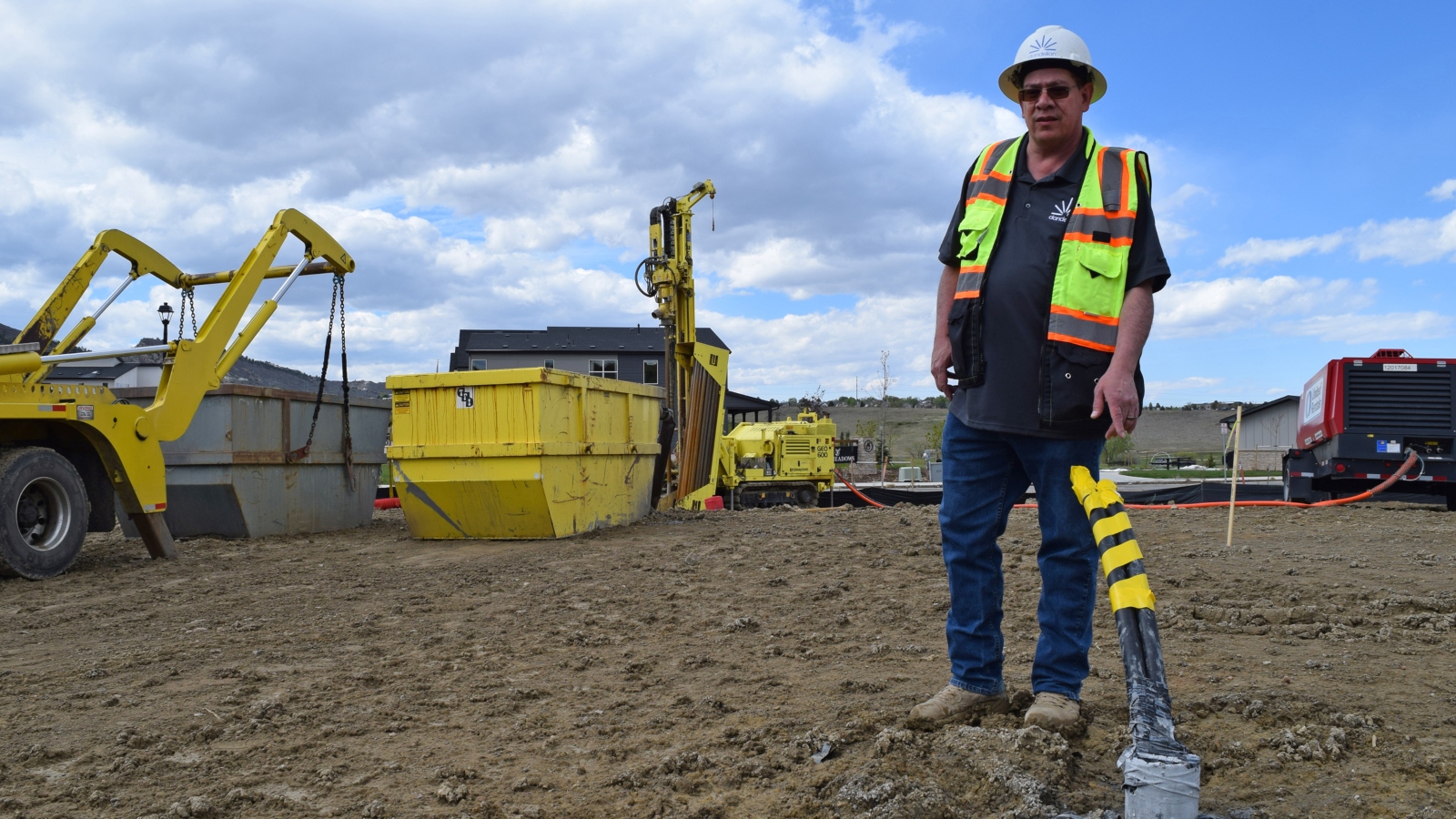
From geothermal neighborhoods in Colorado to the first-ever vaccination of black-faced lion tamarins in Brazil, 2026 is revealing unexpected wins in conservation and clean energy. Researchers are using AI to target invasive pythons, while solar and wind firms are stabilizing Brazil’s grid with data centers. Even in the most polluted rivers, life finds a way.
Dolphins are surviving in a river so polluted, fish can’t live there.

The Hidden Threads of Discovery: How Science Remembers What It Thought Was Lost
Researchers across the globe are uncovering hidden memories in nature—from quantum 'birthmarks' and mobile human genes to 25,000-year-old grass histories. These discoveries challenge long-held assumptions and open new paths in energy, evolution, and medicine. Science, it turns out, never really forgets.
A quantum system never forgets where it came from—neither does science.

Active Life: How Bacterial Swarms Rewrite the Rules of Invasion and Pattern Formation
When bacteria move and multiply, their spread changes in surprising ways. A new study shows that when they actively swim—like real bacteria—they invade faster at first, speeding up by up to 40%. But if they’re too active, the wave breaks down. In 2D, they form patterns like rings, bands, and hexagons—just like real colonies. This challenges old models of how life spreads, from cancer to invasive species.
Invasion waves speed up by 40%—then collapse—when organisms are too active.

How to Teach AI the Rules of Human Conflict — With Mathematical Guarantees
This new method learns what people want by watching how they act in competitive situations, like driving or trading. It uses math to ensure predictions are stable and accurate. By focusing on the Nikaido-Isoda loss and breaking down game dynamics with Helmholtz–Hodge decomposition, it builds reliable models even from noisy data. The approach guarantees equilibrium stability, works quickly (just 0.03 seconds for 10 agents), and stays within 3% of true behavior in driving tests—using only 50 past observations.
0.03 seconds: time to predict a 10-agent equilibrium after learning from just 50 noisy observations.

Forgetting Makes Rumors Live Longer — A Surprising Twist in How Information Spreads
On a 1D line where people only talk to neighbors, rumors should die fast—classical models say they always fade. But a new study shows: **if people forget, rumors can live forever**.
On a 1D lattice, rumors with forgetting survive; without it, they always die — even at infinite transmission rates.

Why AI Learns Better When It Knows When to Specialize
New research shows AI works better with multiple specialized "experts" instead of one all-in-one system — not because they're smarter, but because they focus on stable parts of changing environments. In a robot task, separate AI policies beat a single shared one by 37%. The key isn’t brainpower — it’s timing.
37% performance gain — not from smarter AI, but from knowing when to specialize.

A New AI Framework Can Rewrite the Past — And Improve Weather Forecasts
DAWIS is a new AI system that improves forecast accuracy by 40% in complex systems like the atmosphere. Unlike traditional models, it can revise past estimates when new data comes in—like updating a guess about yesterday’s weather after getting today’s readings. Most models lock in past guesses, causing errors to build up over time. DAWIS fixes this by rewriting those earlier states dynamically. It combines three tasks—filtering, smoothing, and forecasting—into one system.
40% improvement in forecast accuracy by letting AI revise the past

How to Stabilize the Future Power Grid—Without Melting Down the Computer
Modern power grids use lots of solar, wind, and batteries. These connect through inverters that switch super fast—thousands of times per second. Simulating such grids needs tiny time steps (0.0001 seconds!) but also tracks slow changes like frequency drops over minutes. This makes models huge and slow—even supercomputers take days.
0.0001 seconds: the time step needed to simulate modern inverter-dominated power grids.
A New Index for Quantifying Stability Adaptation Effort in Power Electronics-Dominated Power Systems Based on Frequency-Domain Impedance Identification
Power grids are switching from big spinning generators to electronics from solar, wind, and batteries. This makes grids faster but less stable. A new study introduces the Adaptation Effort Index (AEI), a tool that measures how much a power converter must be adjusted to fix instability — without needing secret internal details. In a test with two converters, the grid-following one needed only 37% of the tuning effort compared to the grid-forming one. This surprises experts, as grid-forming units were thought to better support stability.
Grid following converters need only 37% of the tuning effort to stabilize the grid vs. grid forming units.

Rainfall Looks Heavier at Higher Resolution — Even When It’s Not
Rain seems heavier in high-resolution climate data, but that might not be the weather’s fault — it’s how we measure it. A new study shows that even when the real conditions are the same, rain looks more intense at finer scales simply because of how data is grouped. Using satellite and ground data, scientists found that when you zoom out — like from 11 km to 550 km grids — the reported peak rain rate drops from 19 mm/day to 10.85 mm/day, not because less rain fell, but due to averaging.
At 0.1° resolution, rain peaks at 19 mm/day. At 5°, the same rain peaks at 10.85 mm/day — a 43% drop, just from scale.

How Dolphins, Wolves, and Solar Tech Are Rewriting the Rules of Survival
Despite extreme pollution, Ganges river dolphins are reproducing in Bangladesh’s Buriganga River. Meanwhile, probiotics prevented coral bleaching in the Red Sea, and new solar cooling tech boosts efficiency in deserts. In Brazil and Sweden, renewable energy drives data center and storage growth.
Dolphins are surviving in a river so toxic, fish can't live there.
From Lab to Liftoff: How Tiny Breakthroughs Are Powering a New Era of Innovation
In labs and startups worldwide, scientists are using AI, biotech, and advanced materials to solve pressing challenges—from food safety to clean energy. Breakthroughs at UCLA, Cranfield University, and Star Catcher show how small-scale innovations can scale fast. Together, they signal a new era of practical, planet-positive tech.
A single beam of light just detected 15 deepfakes at once—using less power than a lightbulb.

How a Desert Alga, Squid Hairs, and Cosmic Rays Are Rewriting Science
Researchers are using drones in Antarctica, molecular threads in brain labs, and space particles in thunderstorms to unlock breakthroughs. From extreme survival to neural repair, these discoveries span Earth and biology. The future of resilience, medicine, and energy may already exist in nature.
A single alga surviving 140°F days and freezing nights may hold the key to climate-proof crops.

How a Church, a Tool Shed, and a Baby in a Pink Blanket Are Rewriting the Rules of Community
From New Orleans churches with solar batteries to a Norwegian study showing motivation trumps working memory in math learning, communities are discovering what truly helps people grow. Whether it’s kinship caregivers stepping up in minutes or multilingual kids reading more joyfully in their home languages, belonging is the real engine of progress.
When Hurricane Francine hit, one pastor opened his church—and unknowingly lit a spark for a new kind of community resili