Insights
AI-synthesized editorial coverage of positive news from around the world

Eight Breakthroughs Rewriting the Rules of Medicine, Food Safety, and the Planet
A finger-cuff algorithm just detected aortic stenosis with 100% accuracy in African American patients — one of eight major research advances revealed this week. Scientists also cracked the genetics behind the most common heart birth defect, developed a promising H5N1 vaccine for dairy cattle, and built an algorithm that delivers disaster aid 34% more equitably.
A finger cuff now detects deadly heart disease with 100% accuracy in Black patients.

One Weekend, Six Sports, One Thunderous Message: Women Are Rewriting the Record Books
Tigst Assefa shattered her own women's marathon world record in London, while Catherine Debrunner claimed her fourth wheelchair title and Beth Potter won the World Triathlon Series opener in Uzbekistan. Add a debut try from 20-year-old Millie David in the Six Nations and Nelly Korda's commanding Chevron lead — and one April weekend told a remarkable story.
Tigst Assefa just broke her own marathon world record — and that wasn't even the biggest women's sports story of the day

Japan's Weather AI Just Beat the Official Forecast — Using a Surprisingly Old-School Algorithm
Japan’s weather agency uses a computer model with 5 km accuracy, then fixes errors with machine learning. But two university researchers built a model called LightGBM that beat those official fixes at 18 places in Japan. It worked for temperature, wind speed, and rain. The trick: they gave the model weather data from many nearby grid points, not just the target spot. Then they cut 5,702 inputs down to the useful ones using smart methods. For rain, they used a special error formula that caught heavy storms better.
A tree-based ML model beat Japan's official AI forecast at 18 sites across the country.

The Algorithm That Lets AI Networks Collaborate Without Seeing Each Other's Secrets
Distributed machine learning lets many computers collaborate on a shared problem, but sharing gradients—the mathematical signals that guide learning—can leak raw training data. A team from Northwestern Polytechnical University has designed an algorithm that wraps every exchanged value in Paillier homomorphic encryption and scrambles each agent's learning rate randomly. The result: a network of agents converges to the correct answer with probability 1, while no participant—inside or outside the network—can recover what any other agent knows.
Pixel-perfect image reconstruction from shared model weights—the attack that makes this paper necessary.

ProDock Turns Messy Drug Discovery Pipelines into Reproducible Science
Protein–ligand docking helps scientists predict how drugs stick to proteins. It’s common in drug discovery, but many studies fail due to messy steps—bad scripts, lost files, or results that don’t match. ProDock is a free, open-source Python tool that links four key stages: preparing data, running docking, analyzing interactions, and saving results in a simple database. It works with tools like RDKit and AutoDock Vina.
Most docking studies fail at the workflow level, not the science—ProDock fixes the plumbing.

Earth Week 2025: The Planet Fought Back — and Won
On Earth Day, China published a landmark fossil-fuel crackdown policy, while in Washington the Westerman bill — which would have weakened the Endangered Species Act — was pulled after a massive wave of public opposition. Meanwhile, Oregon passed historic wildlife-funding legislation, and new science showed that reconnecting fragmented habitats can restore the microbiomes animals need to fight dise
A bill gutting wildlife protections was killed — on Earth Day — by citizen pressure alone.
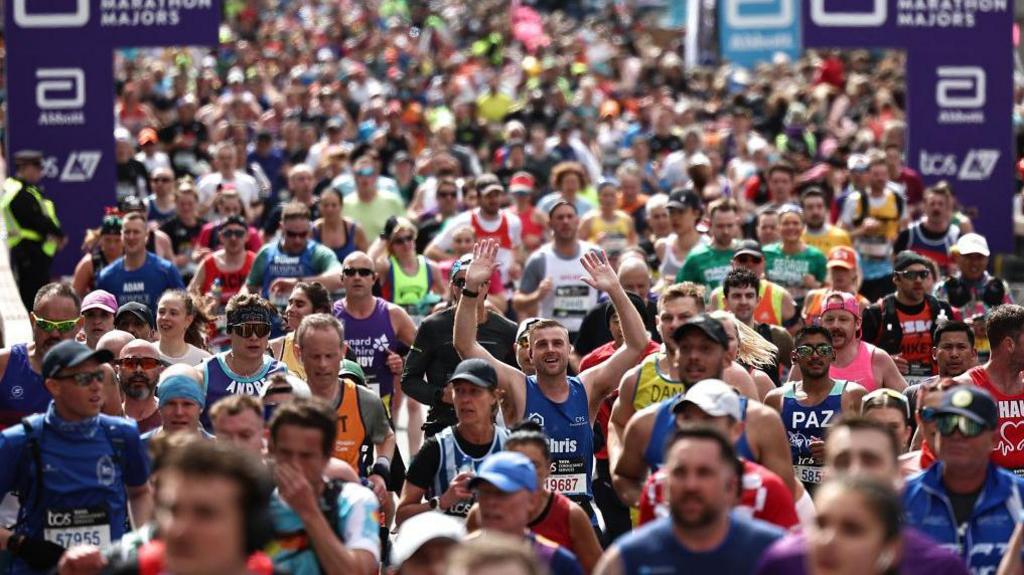
From the Jamuna River to the London Marathon: Why Community Is the World's Most Powerful Force
This week's news is full of people deciding their communities are worth fighting for — Bangladeshi architects teaching flood-proof homes, Aaron Ramsey running the London Marathon for a six-year-old who died of cancer, and volunteers raking yards for elderly neighbors. The thread connecting them all is the same stubborn, hopeful impulse to show up.
A retired footballer, a cartoon pig, and a Bangladeshi bride walk into the same story.

8 Discoveries Reshaping What We Know About Life, Earth, and the Past
This week in science: ancient octopuses topped the ocean food chain, WEHI found a never-before-seen sugar storage mechanism in human cells, and UC Irvine linked dopamine loss to Alzheimer's memory decline. Meanwhile, a 230-million-year-old beaked reptile surfaced in Brazil and Kyoto researchers discovered an overlooked phase in how earthquakes end.
100 million years ago, giant octopuses ruled the ocean — and that's just the start.

One Weekend, Eight Matches, Zero Boring Finishes: The Premier League's Most Chaotic Spring
Eberechi Eze's early strike sent Arsenal back to the top of the Premier League, while Declan Rice's bold title claim aged beautifully. Meanwhile, Callum Wilson scored in the 92nd minute to keep West Ham above the drop, and Tottenham ended a painful winning drought with a nervy 1-0 win at Wolves. It was sport at its most human.
A 92nd-minute winner, a title promise kept, and Tottenham's long-awaited win — all in one weekend.

A Laptop Can Beat a Supercomputer at Drug Discovery Math
Drug discovery AI doesn't always need a supercomputer. Researchers at Michigan State University took a simple graph-theory model, layered in chemical descriptors and ensemble learning, and watched its average predictive accuracy jump from R² = 0.24 to R² = 0.79 — beating or matching a Graph Convolutional Network on every benchmark tested. The entire framework runs on a standard laptop, trains in under five minutes, and uses only free tools, making it a rare win for researchers in resource-limited settings.
A $0 laptop model beat GPU-powered deep learning on 5 out of 5 drug-discovery benchmarks.

Why DNA Has Four Letters: The Physics of Life's Optimal Alphabet
A new theoretical study frames DNA copying as a communication channel between templates and copies, calculating exactly how much genetic information survives each round of replication. The results reveal a striking non-linearity: even tiny error rates cause disproportionate information loss. More surprisingly, the analysis shows that DNA's four-letter alphabet sits far from the mathematically optimal point for information-per-unit-energy — and that this is probably deliberate, because the high energy cost of assembly prevents random, uncontrolled polymer formation.
A 2% DNA error rate sounds small — but it can destroy nearly 10% of transmittable genetic information.

The Algorithm That Designs Better mRNA Vaccines in 7 Minutes
Every mRNA vaccine contains a hidden design choice: which of millions of possible genetic spellings of a protein should be used? A new algorithm from Lawrence Berkeley National Laboratory solves this problem exactly and efficiently — for the first time using a fully accurate physics model of RNA stability. Designing a 5,000-amino-acid protein takes roughly 7 minutes on a GPU. The approach doesn't just find one good sequence; it maps out an entire statistically principled ensemble of good candidates, giving scientists rich new tools for vaccine and therapy development.
Designing a stable mRNA strand for a 5,000-amino-acid protein now takes ~7 minutes, not days.

The Protein Function Benchmark That Never Sleeps: Meet LAFA
Every protein in your body does something — and figuring out what, computationally, is one of biology's hardest open problems. The field's main benchmark, CAFA, only scores competing AI methods once every three years, leaving new tools unranked and old scores stale. LAFA is a new persistent platform that containerizes protein function predictors and evaluates them every eight weeks as fresh experimental annotations accumulate, offering the field its first continuous, reproducible leaderboard.
Biology's top AI benchmark runs once every 3 years. LAFA replaces it with continuous, live scoring.

The AI That Learns Where the Pancreas Is Before It Looks for Cancer
Pancreatic cancer is among the deadliest because it hides. A new AI model, PanGuide3D, tackles this by first generating a probability map of where the pancreas is, then using that map as a continuous guide for tumor detection — a strategy that dramatically improves performance when scans come from a different hospital than the training data. On out-of-cohort CT scans, standard models detected as few as 7% of tumors; PanGuide3D detected 84%. The approach is end-to-end, computationally lean, and built for real-world deployment.
Standard AI missed 93% of pancreatic tumors on a new hospital's scans. This one missed 16%.
The Hidden Tax Killing Your AI Agent — and the Fix That Costs 95% Less
Every time an AI agent takes a turn in a conversation, it silently re-injects the full specification of every connected tool into its context window — whether those tools are relevant or not. In large enterprise deployments, this "Tools Tax" consumes up to 60,000 tokens per turn, crowding out the reasoning space the model needs to actually think. Sadani and Kumar's Tool Attention system uses embedding-based intent matching and lazy loading to cut this overhead by 95%, from 47,300 tokens to just 2,400. The result is not just cheaper AI — it's AI that reasons more coherently over long tasks.
120 tools, 6 servers: Tool Attention cuts per-turn schema tokens from 47k to 2.4k — a 95% reduction.
The Week Science Rewrote the Rules: 8 Discoveries That Change What We Thought We Knew
From giant prehistoric octopuses to a newly discovered sugar-regulation mechanism in our cells, this week delivered eight landmark scientific findings across biology, medicine, and deep time. Researchers at universities from Kyoto to Cape Town to Irvine each found that reality was stranger than existing models suggested. Taken together, the discoveries signal a remarkable moment of scientific poss
100 million years ago, giant octopuses may have been apex predators — and that's just the start.

From Turf Moor to the T20 World Cup: Football's Title Fever and a Cricket Legend's Final Bow
Manchester City sit top of the Premier League after a decisive 1-0 win at Burnley, while their women's team are one week away from a WSL title. From a National League title decider between Rochdale and York to Suzie Bates' retirement after 20 years in international cricket, sport is serving up high drama at every level.
Man City's men AND women could both lift league titles within days of each other.
The Quiet Revolution: 8 Breakthroughs Rewriting What Technology Can Do
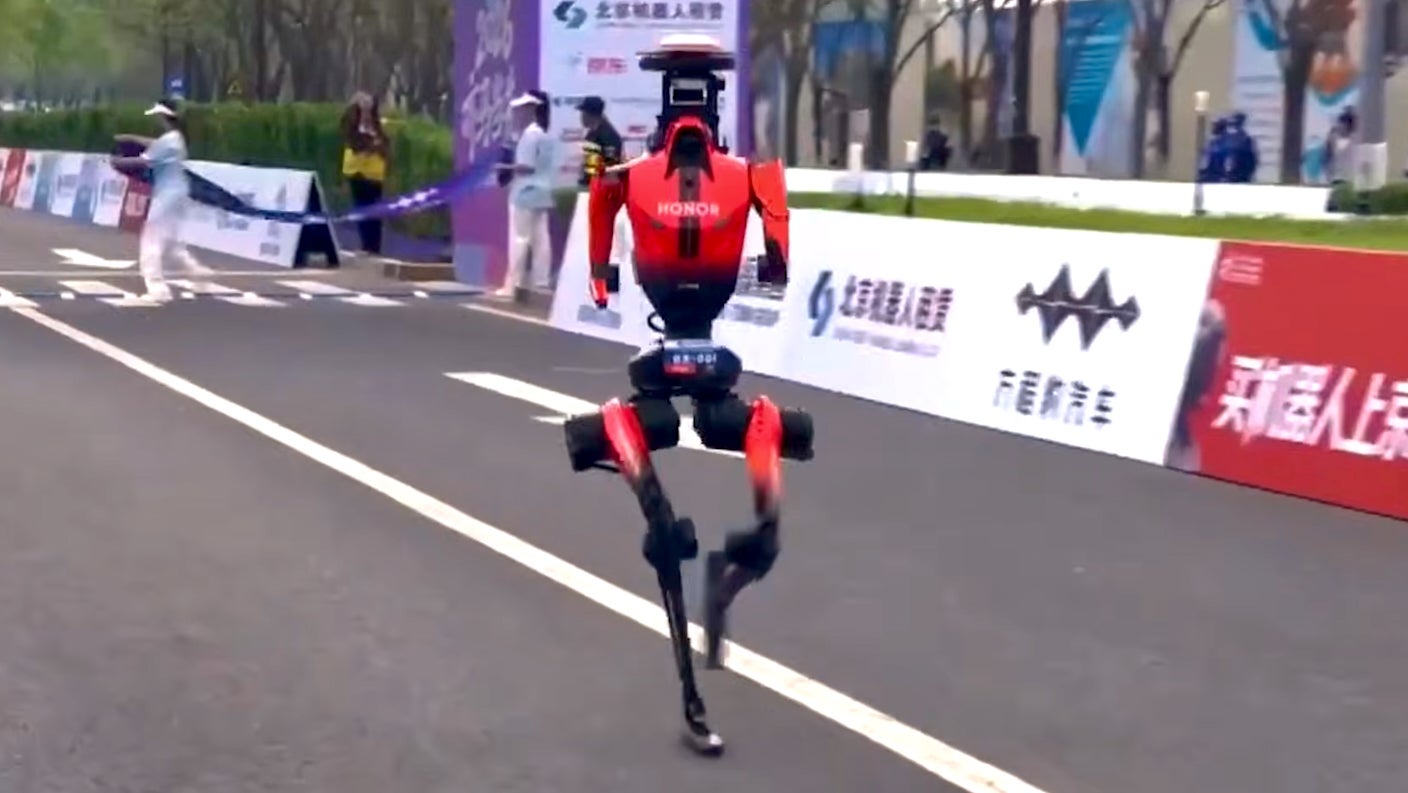
A humanoid robot just beat the human half-marathon world record by nearly seven minutes. Meanwhile, researchers are unveiling chips that slash AI energy use by 70%, origami antennas for deep-space CubeSats, and quantum-proof security for pacemakers. Eight breakthroughs at once suggest a major technological inflection point is underway.
A robot just beat the human half-marathon world record by 7 minutes — and that's not even the biggest news.

The Year Coal Lost Its Crown — And What's Rising in Its Place
In 2025, renewable energy overtook coal as the world's largest electricity source — and that milestone arrived alongside a cascade of climate action. China published a landmark fossil-fuel control policy on Earth Day, BII launched a $1.5B Asian climate fund, and communities from the Philippines to Woods Hole are planting mangroves and rebuilding coastlines.
In 2025, renewables beat coal as the world's #1 electricity source for the first time ever.
Eight Research Breakthroughs Quietly Rewriting What It Means to Be Healthy
Eight breakthrough studies published in 2026 are rewriting our understanding of health — from AI tools that squeeze single breast cells to detect cancer risk, to proof that a brisk daily walk beats structured exercise. Researchers are finding that education, metabolic health, and mental patterns shape longevity more than we knew.
Rushing to catch a bus might actually be saving your life, researchers now confirm.