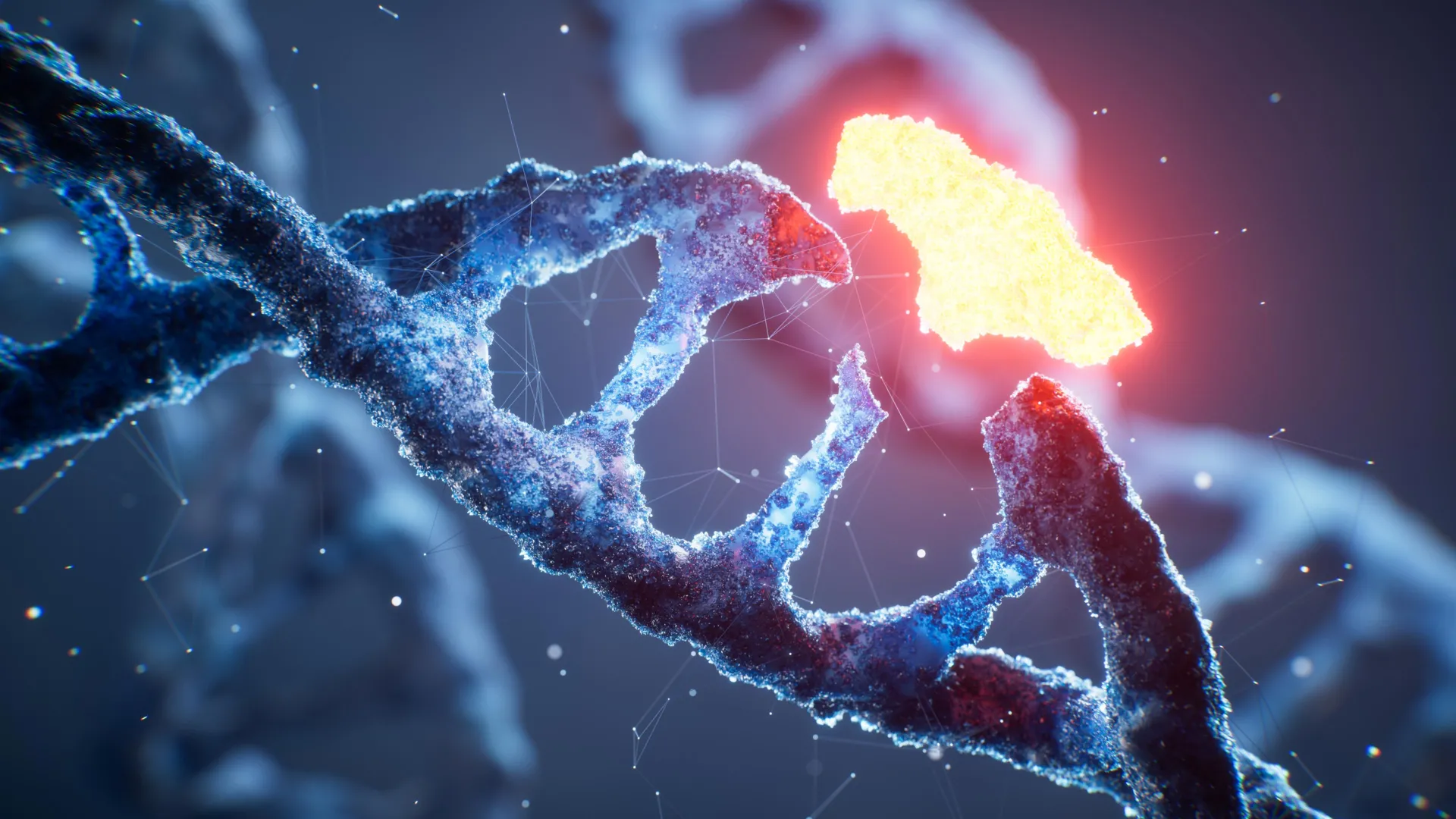
In bacteria and baker’s yeast, some of the most important genes may not be shielded from mutation after all. A University of Bath study has found no evidence for a long-running idea that evolution makes vital genes less likely to change.
The idea dates to 1972 and has returned to scientific debate many times, including in 2023. It suggests that organisms might protect genes needed for basic survival, while allowing more change in genes where mutations could help them adapt. The notion sounds sensible: a harmful change in a gene that keeps a cell working could have serious consequences. But the new findings suggest that earlier evidence may have mistaken the effects of natural selection for a lower rate of mutation.
Dr. Sofia Radrizzani and Professor Laurence D. Hurst, both at the University of Bath’s Centre for Evolution, studied the largest collection of spontaneous genetic mutations assembled to date. Their research, published in PLOS Biology, focused on Escherichia coli, commonly called E. coli, and baker’s yeast, a single-celled fungus whose scientific name is Saccharomyces cerevisiae.
The team used mutation accumulation experiments. These are designed to record genetic changes while reducing the usual influence of natural selection, the process that makes some inherited traits more common because they aid survival or reproduction. The researchers also ran three independent tests to check whether selection could still be affecting their results. The supplied study account says their analysis found no evidence that essential genes have lower mutation rates.
That distinction matters because a mutation can happen and then disappear. Changes in genes that are crucial to survival are more likely to harm an organism, so natural selection may remove them quickly. If researchers later look only at the mutations still present in a population, those missing changes can make important genes appear unusually stable. Hurst calls them “ghost mutations”: changes that occurred but were eliminated before scientists could observe them.
The usual picture of evolution separates the creation of genetic variation from the sorting that follows. Mutations introduce differences; natural selection affects which differences persist. The new study reinforces the need to tell those steps apart when measuring evolution. A gene that shows few lasting changes is not necessarily a gene that was protected from mutation.
Radrizzani, who co-wrote the paper as part of her PhD, described the claim that important genes mutate more slowly as “a triumph of hype over substance.” She also noted that the old suggestion is routinely revived in different forms. The finding does not mean mutations are harmless or that natural selection has no role in evolution. Rather, it challenges one proposed way that selection might influence where mutations arise.
The work offers a clearer way to test a question that has persisted for half a century: examine mutations before selection has had much chance to erase them. By using data from two different microorganisms and checks designed to limit that filtering effect, the Bath researchers have put the old hypothesis on firmer ground for scrutiny. Further research can show how broadly the result applies, but for these bacteria and yeast, the evidence does not support the idea that evolution protects essential genes by making them mutate less.