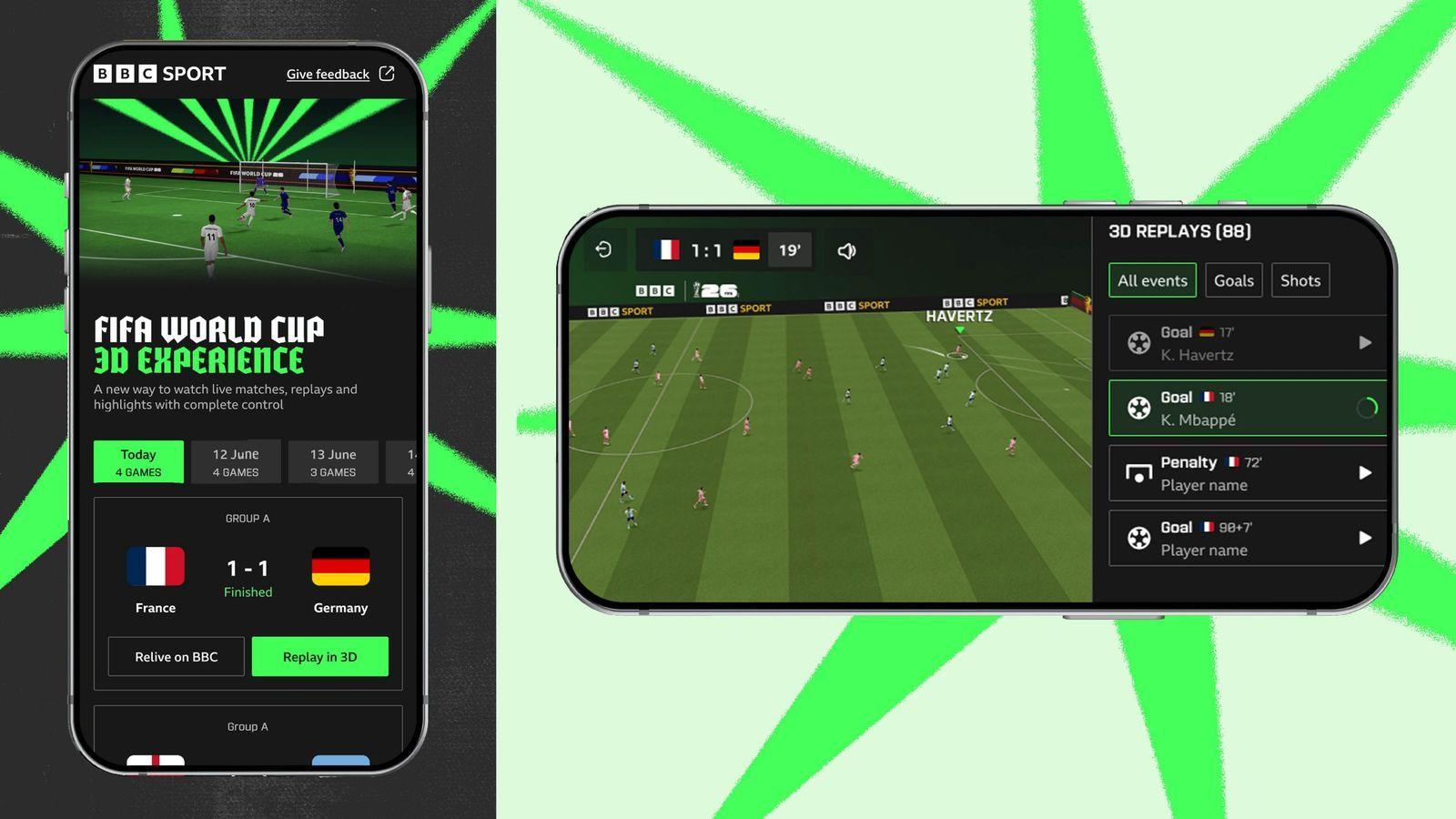
When the Canadian men's national team took the pitch against Bosnia-Herzegovina on Friday night, BBC Sport viewers in the United Kingdom experienced something no World Cup audience had ever seen before: the ability to watch the match from unlimited angles, including a bird's-eye tactical view of the entire field and even the perspective of a player on the grass.
The Fifa World Cup 3D Experience represents a genuine shift in how sports broadcast technology can engage viewers. For decades, television audiences have been passive observers, watching matches unfold through the director's chosen camera angles. Now, BBC Sport's partnership with XR company Immersiv.io is placing control directly into viewers' hands, letting them explore each moment as it unfolds in real-time, then rewind and replay key scenes from fresh perspectives.
The technology works with remarkable precision. Using live official Fifa data and skeletal tracking similar to the semi-automated offside systems already deployed in the sport, Immersiv.io recreates the match dynamically as it happens. Rather than relying on multiple fixed cameras edited together, the system generates a fully interactive 3D model of play, allowing viewers to choose from four distinct viewing modes. The broadcast view lets users control camera angles like a director. The tactical view offers that invaluable bird's-eye perspective, showing the entire pitch and how players position themselves. A third-person camera follows individual players as they move through the match. Most strikingly, the first-person view immerses viewers in a player's experience, showing the game through their eyes.
This isn't a gimmick reserved for highlight reels. The experience works live as matches happen, giving viewers real-time insight into tactical decisions and individual performances. After the final whistle, the full-match replay becomes available, along with a goals-and-penalties highlight mode. Viewers can freeze moments, switch between views, and access live match statistics—all positioned, as BBC Sport describes it, as a "second-screen option that offers deeper insight."
The launch carries particular significance because it's the first of its kind in the United Kingdom, available exclusively on BBC Sport at bbc.co.uk/3dWorldCup. For now, the experience is only accessible to UK-based users for matches being broadcast on BBC television. That's a meaningful but temporary limitation; as the tournament progresses, BBC Sport has committed to making the experience easy to find across its website, app, live match pages, and content indexes.
What makes this development quietly revolutionary is how it respects viewer agency. "It's your match, your way," BBC Sport's messaging emphasizes—and the technical architecture backs that up. Rather than telling audiences which moments matter most or which angle best captures the action, the system hands that decision-making power to each individual viewer. A tactical analyst might spend the match in bird's-eye view, studying formation shifts. A fan following a specific player gets the third-person camera. Someone curious about what elite athletes actually see can switch to first-person perspective and experience it directly.
As sports broadcasting continues to evolve, the question is no longer whether technology can enhance viewing—it's how much creative control audiences are willing to embrace. The Fifa World Cup 3D Experience suggests the answer is: quite a lot.