When your laptop gets hot on your lap, that's not just annoying — it's a problem that costs the world enormous amounts of energy. Data centers full of servers need massive cooling systems just to keep running. And as computers get more powerful while getting smaller, managing all that heat is becoming one of the biggest challenges in technology.
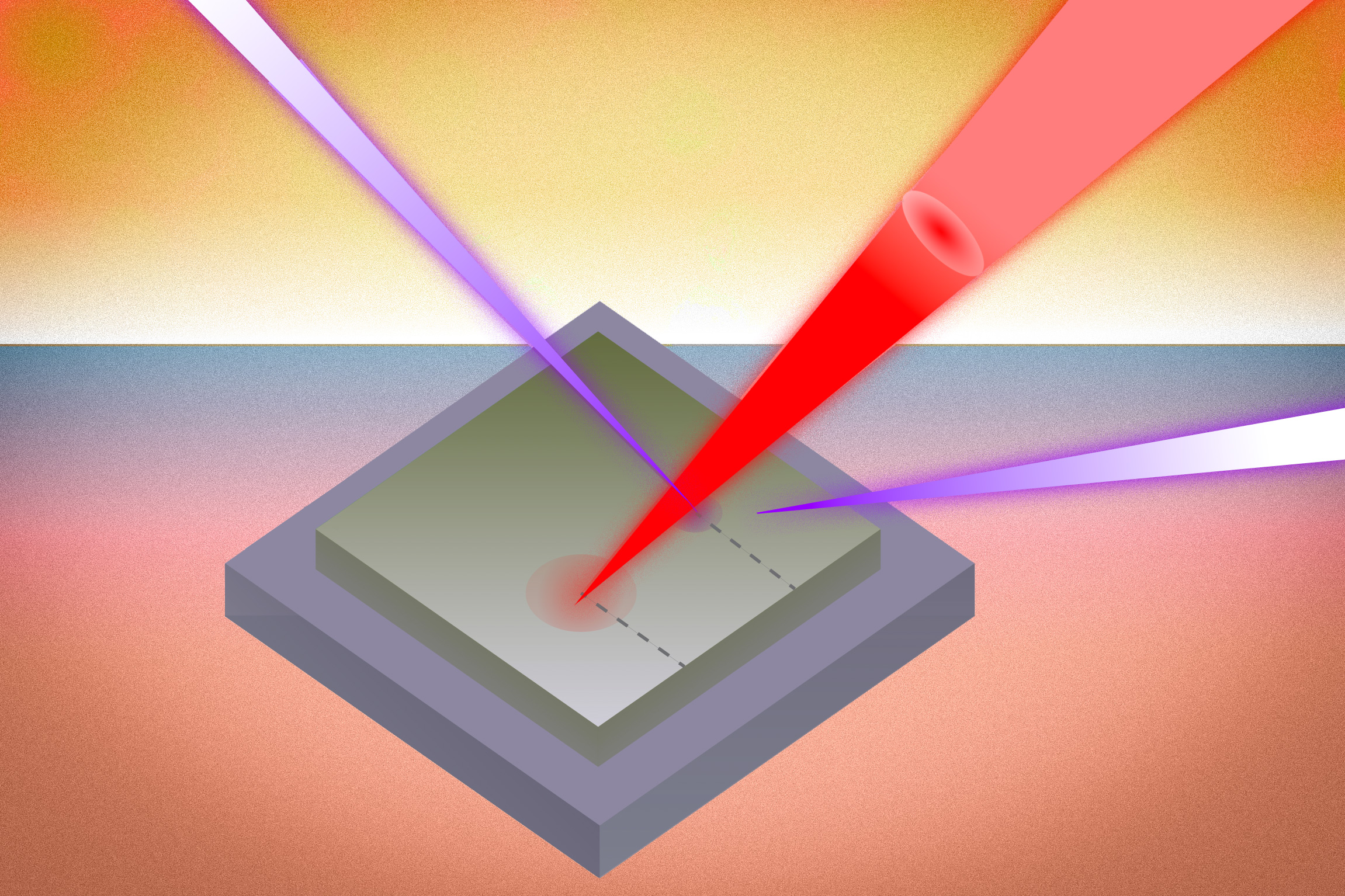
Now, MIT researchers have come up with a new way to actually see heat moving through computer chips at a level of detail that wasn't possible before. Their method combines powerful X-rays with laser pulses to watch heat travel through multilayered materials — the kind of stacked, complicated electronics found in everything from phones to data centers.
The technique is so precise that the researchers could spot the effect of a single defect smaller than the width of a human hair in a device. At that tiny flaw, they discovered the material's ability to move heat dropped by a surprising four times. The defect also caused heat to spread unevenly, moving more easily in one direction than another — a problem that could lead to dangerous hotspots in real devices.
"I think overheating has become the real bottleneck in device performance," said Mingda Li, an associate professor of nuclear science and engineering at MIT who co-led the work. "When using traditional techniques, they couldn't get down to the micro- or nanometer scale. But eventually, they'd like to understand exactly what causes failure, in order to design better devices. This approach is a step in that direction."
Previous methods for studying heat flow had big limitations. One common technique called time domain thermal reflectance uses light, which means it can't see through different layers of a device. Real electronics can have five or more layers stacked together. Other methods like infrared cameras can't capture changes fast enough to be useful at small scales.
The new approach takes advantage of one of the brightest X-ray sources in the world, which allows researchers to focus an X-ray beam with incredibly fine resolution. A laser heats the sample while the X-ray scans and shows how heat dissipates in real time.
The team believes this could help companies build more powerful electronics for artificial intelligence, wearable devices like smartwatches, and clean energy systems. Understanding exactly where heat builds up and why could lead to better designs that manage heat more effectively from the start.
The research was published in the journal Nature Communications.