When Saransh Sharma and his team at MIT held up their new ingestible sensor beside a blueberry, the two were nearly indistinguishable—one a fruit, the other a breakthrough in medical monitoring, just 6 millimeters in diameter. This tiny device, no wider than a pencil eraser, can now measure core body temperature from inside the gastrointestinal tract, sending real-time updates every second without the risks associated with larger capsules. For patients undergoing chemotherapy, recovering from surgery, or tracking fertility, this advance could mean earlier detection of infection, safer anesthesia recovery, and more precise physiological insights—all from a pill-sized marvel developed in Cambridge.
Core body temperature is a vital sign, yet traditional methods like oral or forehead thermometers often fall short. They can be influenced by external factors—like drinking a hot beverage or stepping out of the cold—making them less reliable. Internal temperature, by contrast, offers a truer picture of what’s happening in the body. Existing ingestible sensors have been bulky, about the size of a multivitamin, raising concerns about gastrointestinal blockage. The MIT team, led by mechanical engineer Giovanni Traverso and MIT provost Anantha Chandrakasan, set out to change that by reimagining every component: the circuit, the antenna, and the power source.
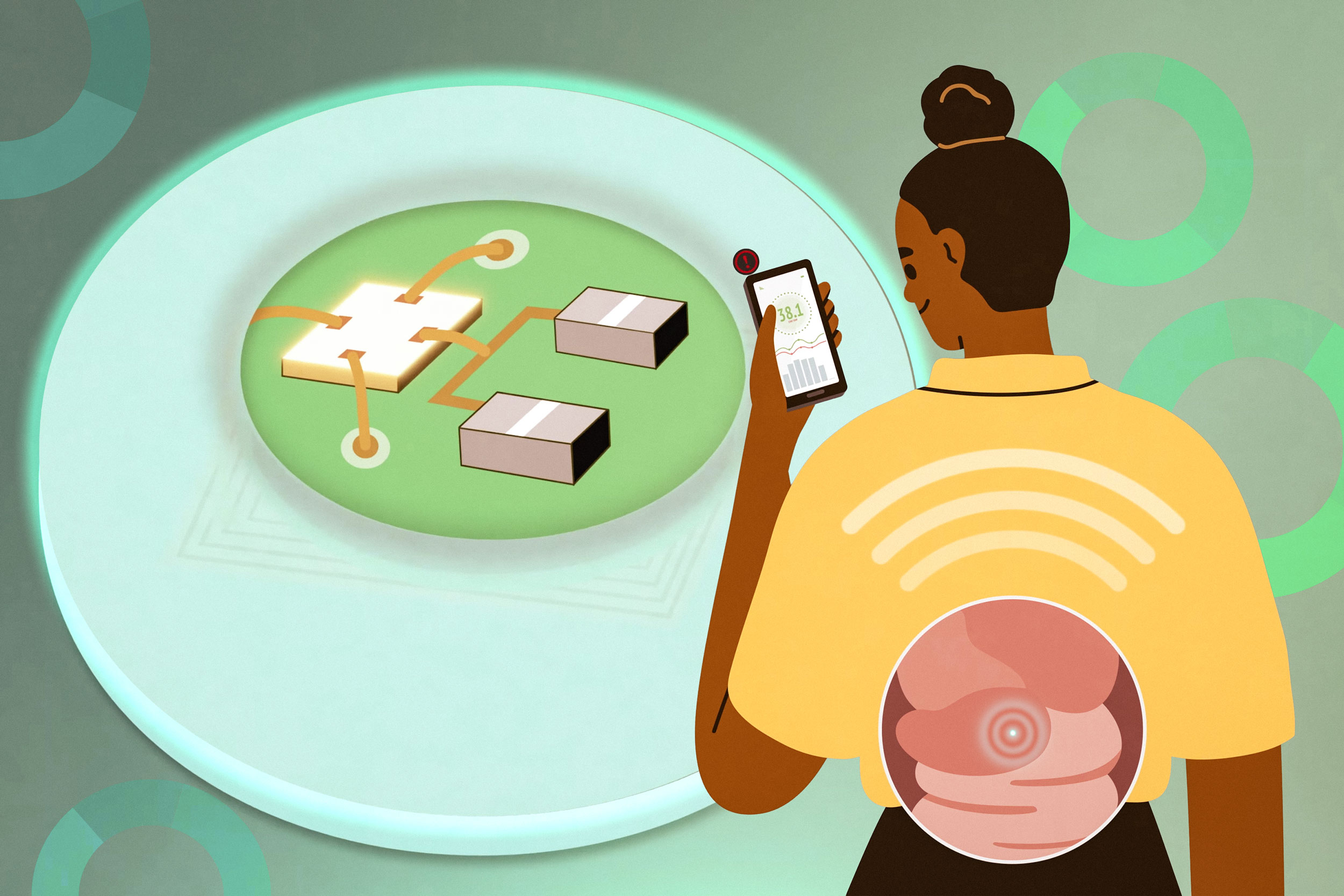
Their solution is as elegant as it is efficient. A custom silicon chip, just 1 square millimeter in size, uses leakage current—an often-ignored trickle of energy in off-state circuits—to power a temperature-sensitive oscillator. This innovation slashes energy needs to a mere 10 nanowatts, allowing the sensor to run on a 1.55-volt coin cell battery barely larger than the chip itself. Communication happens through backscattering: an external antenna emits radio waves that the sensor modulates and reflects back, carrying temperature data with minimal power draw. The result? A capsule so small and safe that the risk of obstruction is dramatically reduced, while accuracy reaches within 0.01 degrees Celsius.
In animal trials, the sensor proved reliable under anesthesia, a time when body temperature regulation falters and hypothermia can set in unnoticed. But the applications stretch far beyond the operating room. Immunocompromised patients could be monitored at home for early fever spikes. Athletes in extreme conditions, soldiers in the field, or parents tracking a child’s fever might one day rely on this kind of continuous, internal data. For fertility tracking, where basal temperature shifts are key, the sensor could offer unprecedented precision.
“This gives us the ability to monitor infections and identify them early,” says Traverso, whose dual role as engineer and gastroenterologist bridges lab and clinic. As the team looks ahead, they’re exploring how to integrate additional sensors for pH, pressure, and even specific biomarkers. For now, the blueberry-sized capsule stands as a quiet revolution—one that fits in the palm of your hand and, soon, might save lives from within.