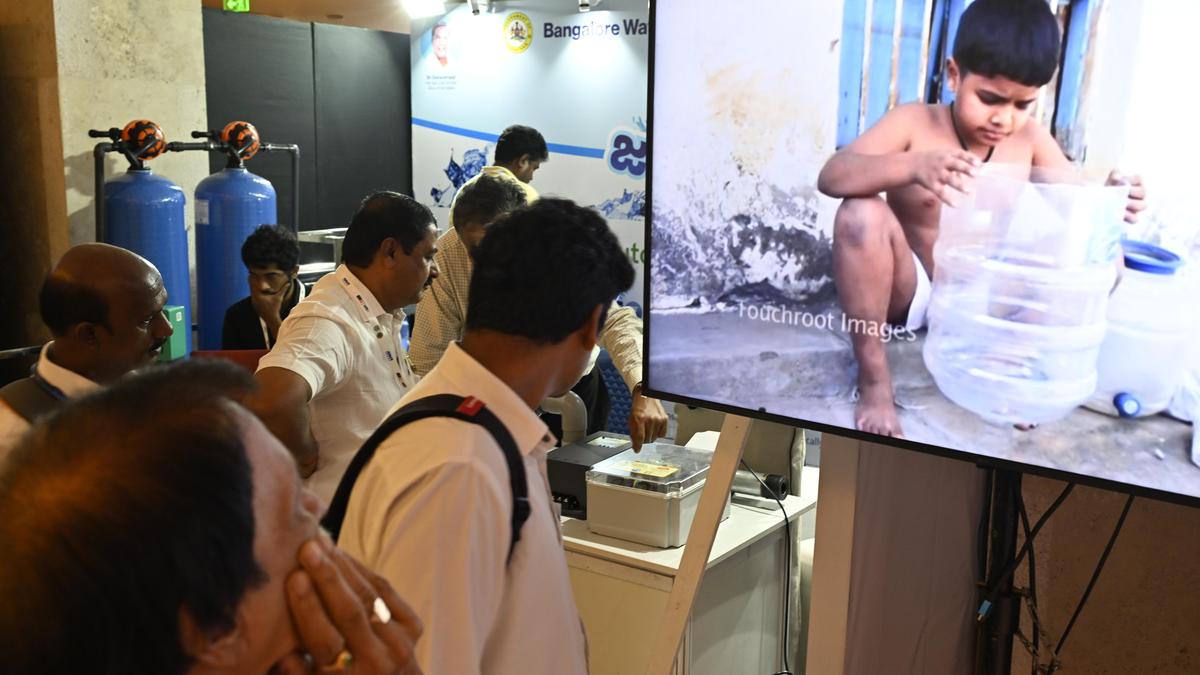
At India's first National AI and Digital Water Summit 2026, held in Bengaluru this week, a vision took shape: artificial intelligence transforming urban water systems not as a luxury, but as essential infrastructure for survival. Karnataka's Chief Secretary Shalini Rajneesh made clear that the pressure is mounting—climate change, rapid urbanisation, groundwater depletion, and ageing infrastructure are converging on cities like Bengaluru, Mysuru, Mangaluru, Dharwad, and Belagavi. The state is positioning itself as a national leader in AI-driven water governance, and the numbers backing that ambition are striking.
The Bangalore Water Supply and Sewerage Board (BWSSB), serving more than 14 million citizens, has become a living case study in what intelligent systems can achieve. Over the past years, the board reduced Non-Revenue Water—the industry term for leakage—from over 50 per cent to nearly 26.5 per cent. That single shift saves nearly 200 million litres of water per day, a difference that feels almost abstract until you consider what that means for a city parched by climate stress. But the impact extends beyond water itself. AI-driven energy optimisation across BWSSB's pumping systems has identified ₹42 crore worth of avoidable annual electricity expenditure. "AI is not about dashboards," said BWSSB Chairman V. Ram Prasath Manohar. "It is about predictive governance, accountability, and measurable outcomes."
What makes this moment significant is the recognition that technology alone cannot deliver transformation. Tushar Giri Nath, Additional Chief Secretary of Karnataka's Urban Development Department, stressed that AI systems succeed only when paired with institutional frameworks, government mechanisms, and human cooperation. The parallel is instructive: Israel, once plagued by severe water scarcity, overcame it not through a single innovation but through coordinated action—governments, academic institutions, startups, industries, and local bodies working in concert. Orli Weitzman, Israel's Consul General in Bengaluru, pointed to the results: today Israel recycles 90 per cent of its wastewater and has brought water leakages to an absolute minimum through efficient use of AI and smart water grids. Israel, she indicated, stands ready to share both technology and experience with Karnataka and BWSSB.
The timing feels urgent. Cities worldwide are grappling with the same pressures that have pushed Bengaluru and its peers to innovate. Real-time monitoring, predictive analytics, demand forecasting, and data-driven governance are no longer innovations—they are rapidly becoming the baseline for any utility claiming to manage water responsibly. As Shalini Rajneesh said, "AI and digital intelligence are no longer optional tools for urban utilities."
For Bengaluru, a city that has weathered multiple water crises and still faces acute scarcity during dry seasons, the move toward intelligent governance represents both necessity and opportunity. The board's success in reducing leakage and cutting energy waste suggests that the hardest part may not be the technology itself, but the institutional will to deploy it systematically. With international partners offering proven models and a state government committed to the vision, Karnataka's experiment could offer lessons for cities across India and beyond—a template for how digital water governance can stretch scarce resources further and serve millions more equitably.