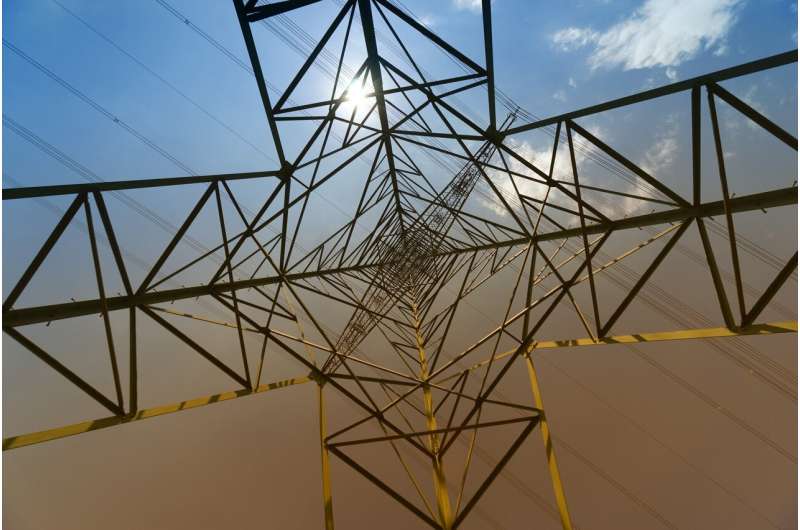
When a hillside shifts just meters from a power transmission tower, the warning signs are often invisible to the naked eye—until it’s too late. But now, a new AI system developed by researchers including Jiangyi Wu is detecting those subtle shifts years before failure, using nothing more than satellite and drone images. In tests, the technology identified landslide risks near critical energy infrastructure with unprecedented accuracy, offering a lifeline to power grids in geologically unstable regions across the globe.
Landslides pose a growing threat to electricity networks, especially as climate change intensifies rainfall and erosion. Yet traditional monitoring has relied on sporadic field inspections or reactive responses after damage occurs. Remote sensing offers a solution, but earlier AI models struggled to distinguish real threats from seasonal noise—like a tree swaying in the wind or leaves changing with the seasons. The breakthrough here lies in precision: the new system doesn’t just see change—it understands it.
At the heart of the innovation is a twin-network architecture, where two AI models work in tandem to compare images of the same location taken at different times. Paired with a visual foundation model pretrained on vast libraries of remote-sensing data, the system recognizes terrain patterns like slopes, drainage lines, and soil disturbances. But its most powerful feature is an attention-based alignment module, which acts like a spotlight, filtering out irrelevant fluctuations—such as vegetation cycles or shadows—and focusing only on structural changes that signal danger. This allows it to detect ground movement as subtle as a few centimeters, long before a slope gives way.
When tested against real-world disaster datasets, the framework outperformed recent change-detection methods, marking a turning point in how utilities can protect infrastructure. For power operators in landslide-prone areas—from the Pacific Northwest to the Himalayas—this means the potential to inspect hundreds of towers remotely, prioritize high-risk sites, and reinforce or reroute lines before disaster strikes.
The implications stretch far beyond one technology. As extreme weather tests the resilience of global energy systems, AI-powered early warning could become standard practice, turning passive observation into proactive protection. With further integration into utility monitoring platforms, this system may soon help keep the lights on—simply by watching the ground beneath our feet.