In a laboratory at RWTH Aachen University in Germany, Moritz Schütte and his team opened up 120 battery cells and peered inside with X-rays, searching for secrets hidden in metals and chemistry. What they found could reshape the future of electric vehicles and power storage: sodium-ion batteries made by HiNa, a company spun off from the Chinese Academy of Sciences, are performing at a level that rivals Tesla's vaunted lithium-ion batteries—at a fraction of the raw material cost.
The implications are profound. Lithium, the cornerstone of modern battery technology, is scarce and geographically concentrated, creating supply chain vulnerabilities and driving up costs. Sodium, by contrast, is abundant everywhere on Earth. If sodium-ion batteries can deliver comparable performance, the barriers to affordable electric vehicles and grid-scale energy storage could crumble.
The research, published in May in Cell Press's journal Physical Science, tested HiNa batteries under rigorous real-world conditions. Schütte's team measured uniformity across cells, tested performance at temperatures ranging from minus 20 degrees Celsius to 45 degrees Celsius, and examined the batteries' internal structures and electrode compositions. What emerged was striking: the sodium-ion cells matched most of Tesla's performance parameters and production quality. The HiNa design even mirrors Tesla's advanced tabless architecture with a double-aluminum current collector—a configuration that reduces resistance and distributes heat evenly.
"We were positively surprised by how uniform the cells are," Schütte observed. The batteries also demonstrated unexpectedly strong high-power performance, suggesting that early commercial sodium-ion products are already reaching maturity faster than many expected.
Yet the technology is not without limits. Sodium-ion batteries struggle in certain scenarios: their energy density lags behind the best lithium-ion cells, and they are slower to charge in freezing temperatures. This matters for some applications—a driver making a long winter journey might find the lower energy density frustrating. But for stationary power storage systems, grid services, shorter-range vehicles, or commercial fleets, the trade-offs may be worth celebrating. In these use cases, sodium-ion batteries offer the decisive advantage of cost and resource security with no compromise on durability or safety in extreme cold.
Researchers also uncovered an intriguing anomaly: unexpectedly high, unevenly distributed levels of copper in certain regions of the cathode. This discovery raises fresh questions about copper's role in battery performance and aging—territory ripe for future investigation.
The path forward is clear. Schütte's team is now focusing on improving low-temperature charging, a known weakness that requires either thermal management or smarter operating strategies to overcome. They are also exploring next-generation sodium-ion designs free of nickel and copper, while pushing energy density higher still. Advances in hard-carbon anodes and new electrolyte formulations appear especially promising.
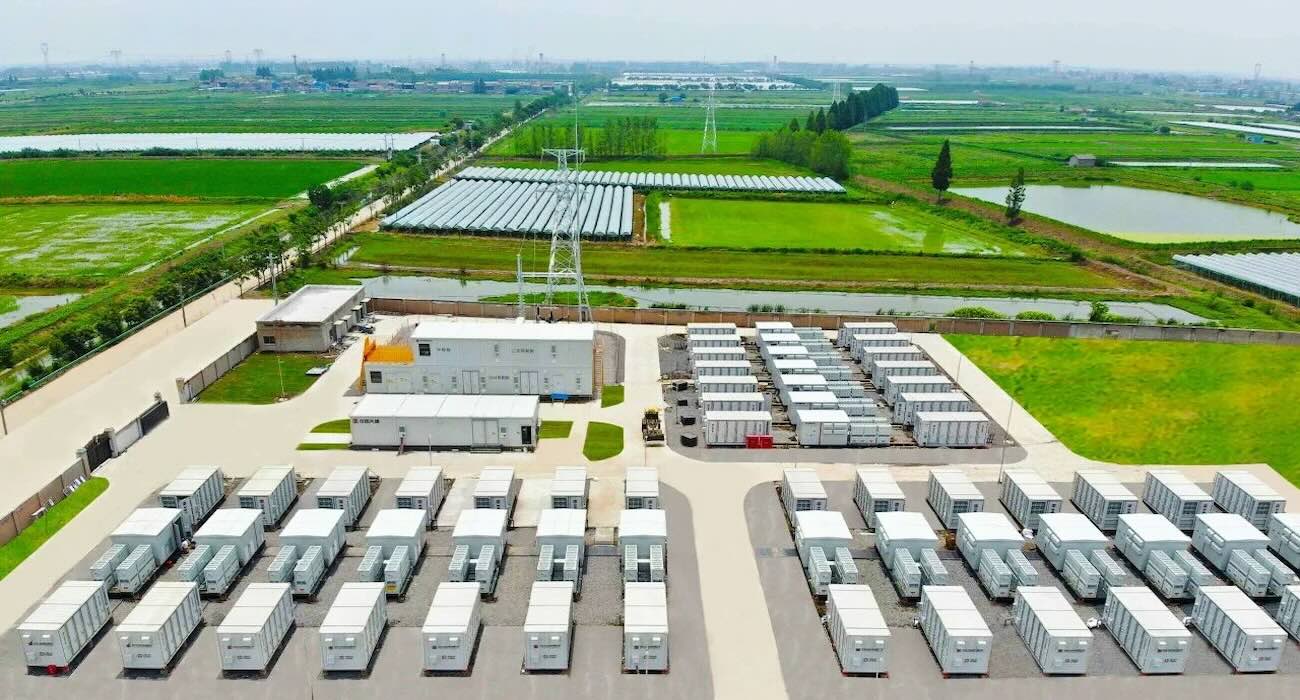
What began in a German laboratory has practical urgency. As electric vehicles proliferate globally and renewable energy demands grid-scale batteries, the availability and cost of raw materials will determine who leads and who lags. Sodium-ion batteries, already deployed in Chinese cars and large-scale storage systems, offer a glimpse of a future where the energy transition is not constrained by the geology of rare metals. The work was supported by Germany's Federal Ministry of Research, Technology, and Space and its Federal Ministry for Economic Affairs and Energy—a signal that Europe views this research as strategically vital.