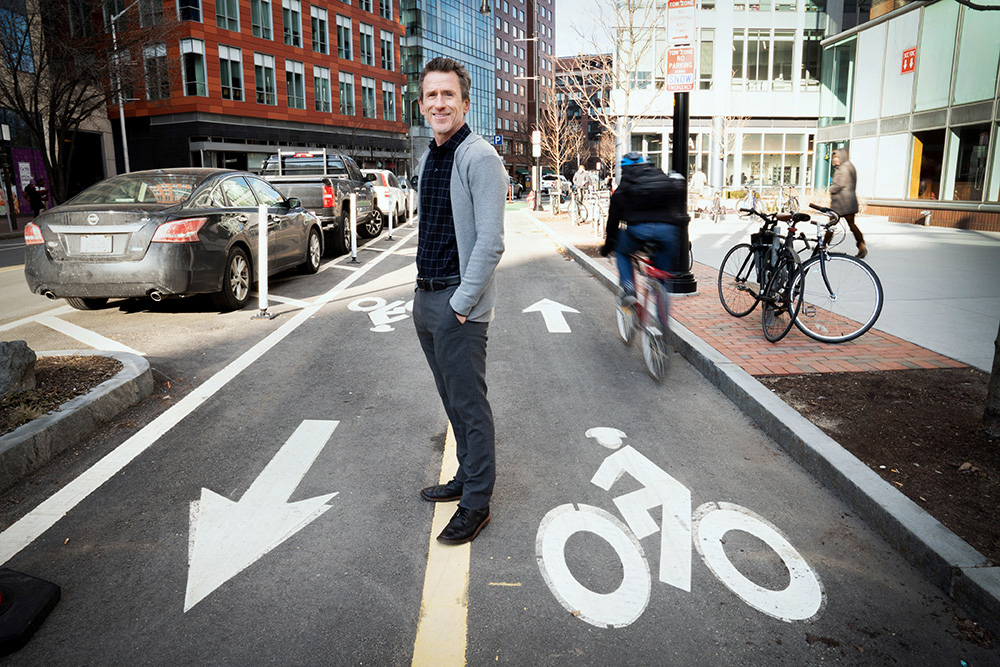
Chris Zegras, an MIT professor who spent a decade shepherding autonomous vehicles through Singapore's streets and building the computational tools to understand how cities actually move, has just been named the first permanent leader of the Singapore-MIT Alliance for Research and Technology—MIT's only research center operating outside the United States.
The appointment matters because SMART, established in 2007 in collaboration with Singapore's National Research Foundation, has become something rare in global research: a genuine meeting point where American and Asian institutions don't just exchange ideas but build them together. When universities plant research centers abroad, they often become outposts—extensions of home. SMART has done something different. It's structured as six interdisciplinary research groups, each led by MIT faculty but embedded in Singapore's innovation ecosystem, tackling problems from antimicrobial resistance to personalized cell-based medicine to the governance challenges posed by artificial intelligence. The center has already spun off companies, launched Singapore's first autonomous vehicle trials, and deployed urban simulation systems now used for real city planning decisions.
Zegras takes the helm on September 1, succeeding Bruce Tidor, who served as interim director since January. A professor of mobility and urban planning who has headed MIT's Department of Urban Studies and Planning since 2020, Zegras arrives with something rare: genuine hands-on experience with SMART's work. From 2010 to 2020, he was a principal investigator in SMART's Future Urban Mobility research group, eventually serving as its lead. He wasn't studying Singapore's transportation challenges from Cambridge—he was in the city, building the sensors and software that let researchers understand how millions of people actually move through dense urban spaces.
"Having experienced firsthand what this distinctive model can achieve, I look forward to building on this strong foundation to deepen collaboration, strengthen our innovation ecosystem, and accelerate the translation of research into meaningful real-world impact," Zegras said in a statement. The language is careful, but the record speaks louder. Under his research leadership, the mobility group didn't just publish papers. It spearheaded autonomous vehicle trials, developed visualization systems now used in actual urban planning, and generated research that evolved into spinoff companies—the kind of translation from theory to practice that makes research matter.
MIT's provost, Anantha Chandrakasan, framed the appointment as a reaffirmation of the university's commitment to SMART at a moment when international collaboration in research faces growing scrutiny. "His appointment reinforces MIT's commitment to the alliance, which has advanced innovation and driven global impact, and which remains as important as ever in a time of accelerating technological and global change," Chandrakasan said.
SMART itself is structured around that principle of staying relevant. Beyond the six research groups, it houses the SMART Innovation Center, designed to move laboratory discoveries into real-world applications—not as an afterthought, but as part of the research design from the start. The current research agenda spans some of the most pressing technological and social challenges of the coming decades: how to combat antibiotic resistance, how to govern AI responsibly, how to feed growing populations with new agricultural technologies, how to monitor human health with wearable ultrasound imaging and 3D sensing systems.
Zegras' appointment suggests SMART is doubling down on this model—not retreating to safer, narrower collaboration, but deepening the experiment in what happens when world-class research institutions genuinely commit to solving problems alongside partners in other regions, on equal footing.