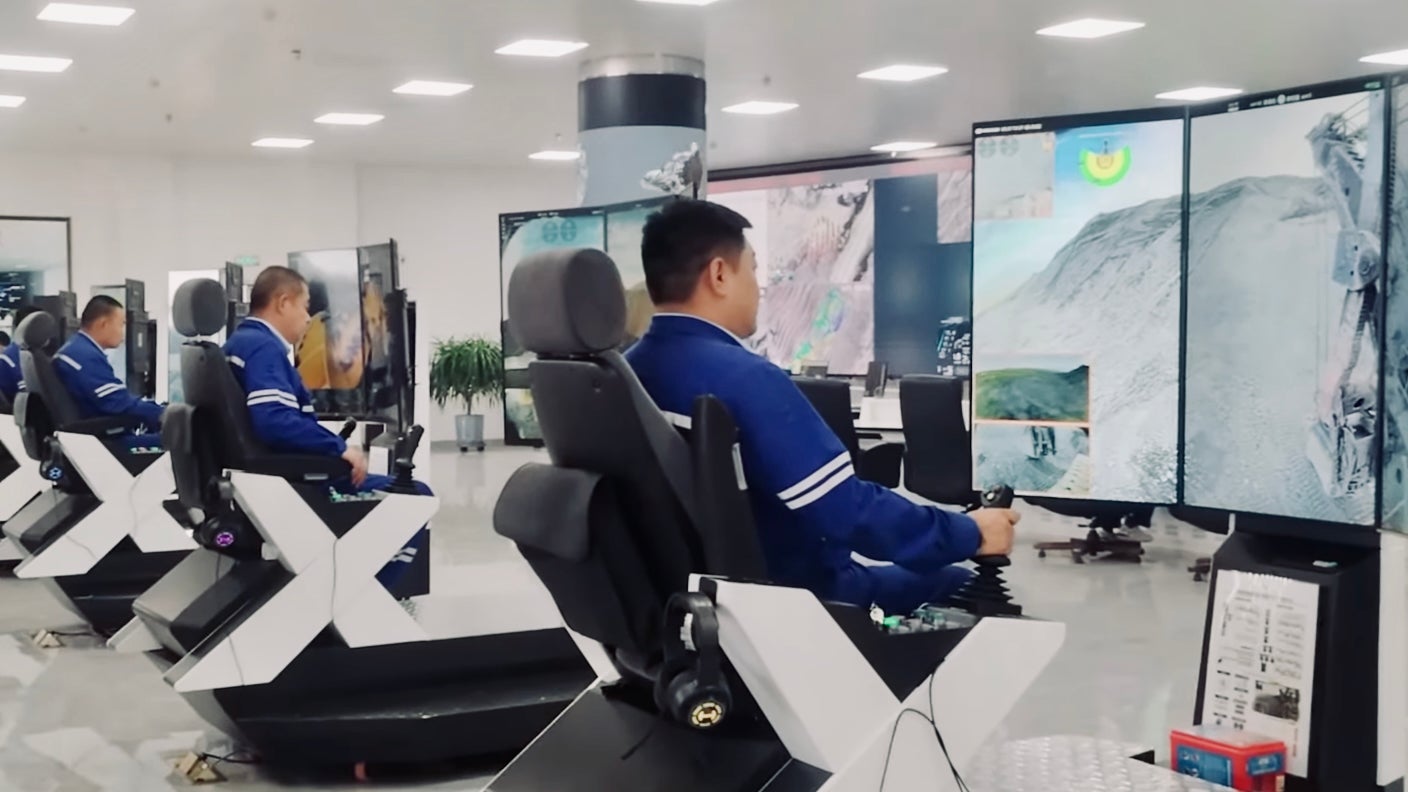
In Xinjiang, China, where the world's largest deposit of potassium sulfate sits in dust clouds so thick workers once had to drive heavy machinery by feel alone, something remarkable has changed. Operators now guide excavators and loaders from air-conditioned offices hundreds or even thousands of miles away, sipping tea in break rooms, coming home clean at the end of their shift.
The technology making this possible is called teleoperation, and BuilderX Robotics is leading the charge. Founded in 2018 by Shaolong Sui, a Stanford-educated mechanical engineer, the company emerged from a simple observation: labor shortages were straining construction across Asia, and young workers especially had little interest in jobs that were dusty and dangerous. Rather than chase the buzzier goal of full robotic autonomy, Sui saw a clearer path—moving human operators out of harsh environments entirely.
Today, BuilderX offers teleoperation for 14 different industrial machines, from excavators to bulldozers. The system uses cameras that function like night vision for dusty warehouses, paired with video-game-like control stations. All an operator needs is a 5G or satellite connection. The transformation in daily life is striking. In one demonstration, a Japanese woman who pilots an excavator remotely showed off her elaborate nail art—something she couldn't maintain while working in the field. "Not only is this a much safer workplace, but the lifestyle benefits are that you can sit in an air-conditioned space, enjoy your tea, and when you go home, you're still clean," Sui said.
The implications extend beyond convenience. Workers previously locked out of the industry—seniors, people with disabilities—can now operate heavy machinery through the same interface. The brutal realities of industrial work, where chronic bronchitis lurks in potassium dust clouds, give way to something resembling an office job, with break rooms and toilets down the hall.
This model is gaining traction elsewhere too. In Japan, over 300 convenience stores are already being restocked by robots monitored by workers in the Philippines. Düsseldorf airport has tested remote-operated shuttles. A surgeon in France once performed a teleoperated procedure on a patient in India.
Mark Graham, a professor of internet geography at the University of Oxford, notes that teleoperation pushes the logic of remote work into territory once considered "stubbornly local." For now, BuilderX keeps its operations domestic—none of its customers offshore work to overseas operators. But Sui is clear about his mission. "These workers deserve a better life," he said. The technology isn't just about efficiency; it's about who gets to do the work, and under what conditions.